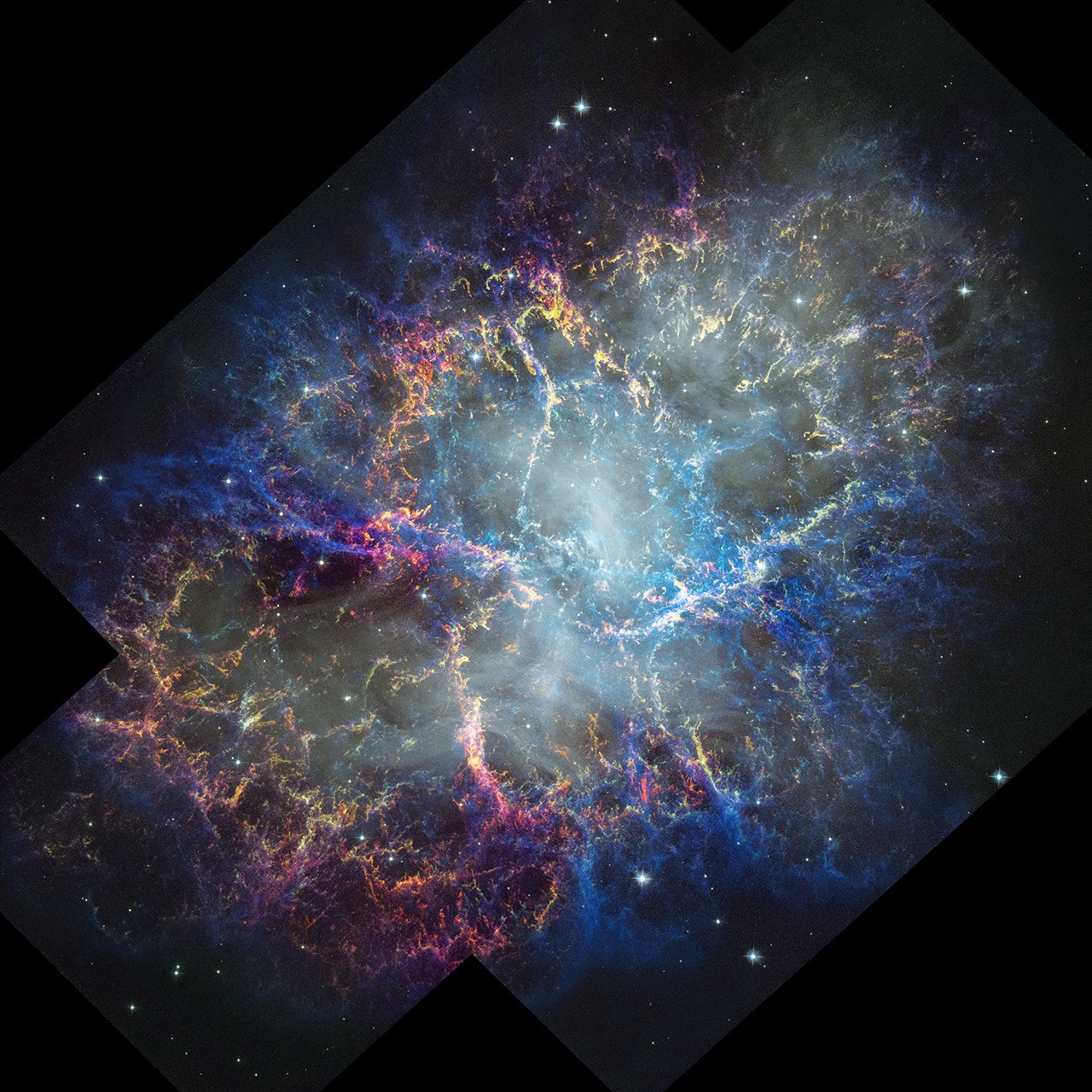
Hubble Revisits Crab Nebula, Tracks 25 Years of Supernova Remnant Expansion
The Gist
Hubble's new images reveal detailed expansion and structural changes in the Crab Nebula over 25 years.
Explain Like I'm Five
"Imagine a star exploded a long time ago. Hubble, a super-powered telescope, took new pictures of the leftovers and we can see how they've changed over 25 years!"
Deep Intelligence Analysis
*Transparency Disclosure: This analysis was conducted by an AI model to provide a concise summary of the provided article. The AI model has been trained to avoid generating false or misleading information. The information presented is based solely on the content of the article.*
_Context: This intelligence report was compiled by the DailyOrbitalWire Strategy Engine. Verified for Art. 50 Compliance._
Impact Assessment
Hubble's long-term observations provide valuable insights into supernova remnant evolution. The data helps astronomers understand the complex dynamics and 3D structure of the Crab Nebula.
Read Full Story on NASA Breaking NewsKey Details
- ● Hubble revisited the Crab Nebula 25 years after its first observations.
- ● The nebula is expanding at a rate of 3.4 million miles per hour.
- ● Hubble's Wide Field Camera 3 captured detailed filamentary structure and movement.
- ● The Crab Nebula is 6,500 light-years from Earth in the constellation Taurus.
Optimistic Outlook
Continued Hubble observations will further refine our understanding of supernova remnants. Future telescopes may build upon this data to reveal even more detailed information about stellar evolution.
Pessimistic Outlook
Hubble's aging instruments may eventually limit its observational capabilities. The loss of Hubble would hinder long-term monitoring of dynamic astronomical phenomena.

The Signal, Not
the Noise|
Get the week's top 1% of space-tech intelligence synthesized into a 5-minute read. Join 25,000+ aerospace insiders.
Unsubscribe anytime. No spam, ever.