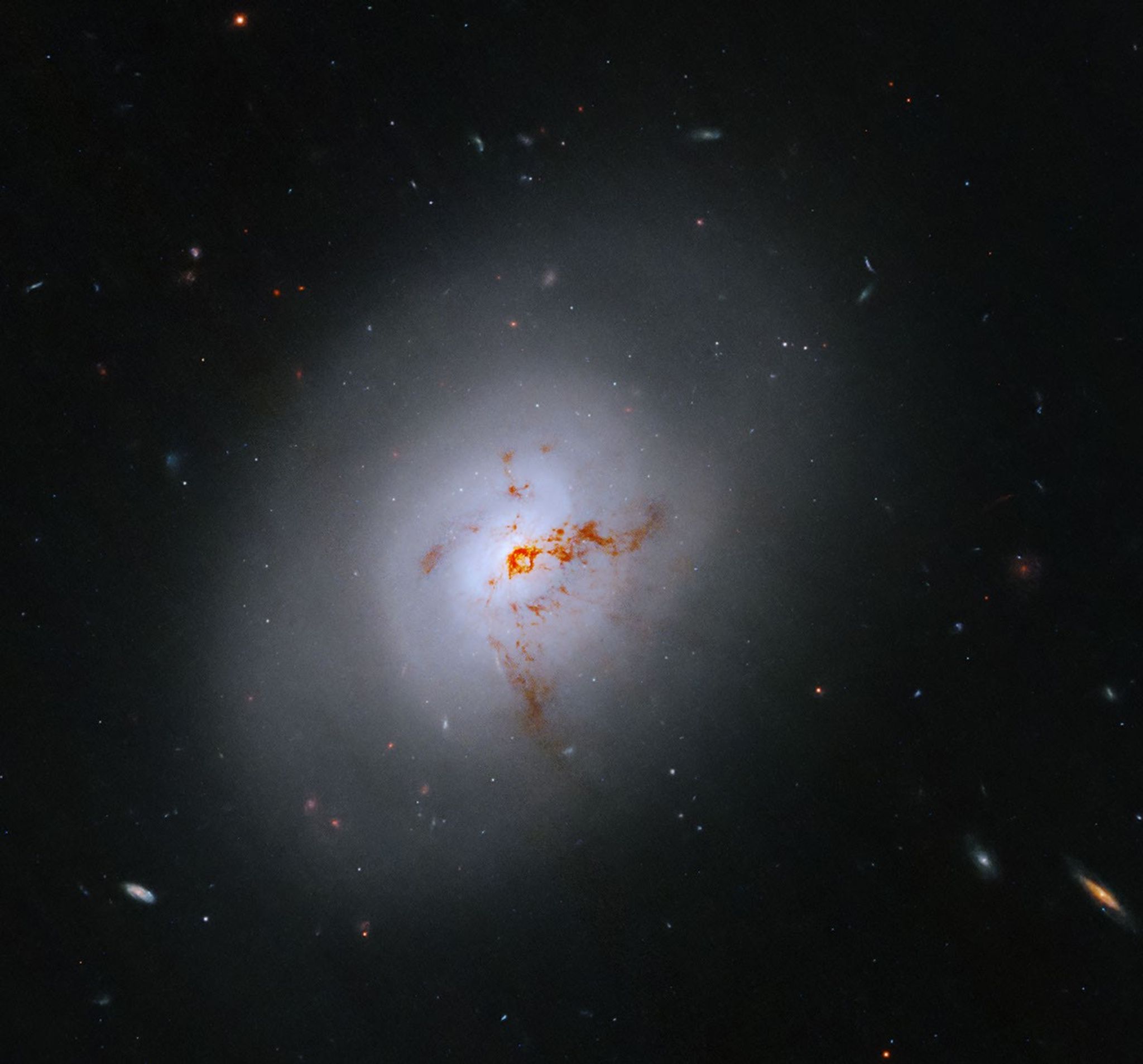
Hubble Telescope Captures Galaxy in Transition
The Gist
Hubble captures image of NGC 1266, a lenticular galaxy transitioning between spiral and elliptical forms.
Explain Like I'm Five
"Imagine a galaxy changing its shape like a ball of clay! The Hubble telescope saw one that's in between a spiral and a round shape."
Deep Intelligence Analysis
_Context: This intelligence report was compiled by the DailyOrbitalWire Strategy Engine. Verified for Art. 50 Compliance._
Impact Assessment
Observing galaxies like NGC 1266 helps astronomers understand galactic evolution. Studying these transitional forms provides insights into how galaxies change over cosmic time.
Read Full Story on NASA Breaking NewsKey Details
- ● NGC 1266 is a lenticular galaxy 100 million light-years away.
- ● Lenticular galaxies are transitional between spirals and ellipticals.
- ● Lenticulars have a bulge and disk like spirals, but no spiral arms.
Optimistic Outlook
Continued observation of transitional galaxies will refine models of galactic evolution. Future telescopes may reveal more details about the processes driving these transformations.
Pessimistic Outlook
The faintness and distance of these galaxies make detailed observation challenging. Limited data may hinder a complete understanding of their evolution.

The Signal, Not
the Noise|
Get the week's top 1% of space-tech intelligence synthesized into a 5-minute read. Join 25,000+ aerospace insiders.
Unsubscribe anytime. No spam, ever.