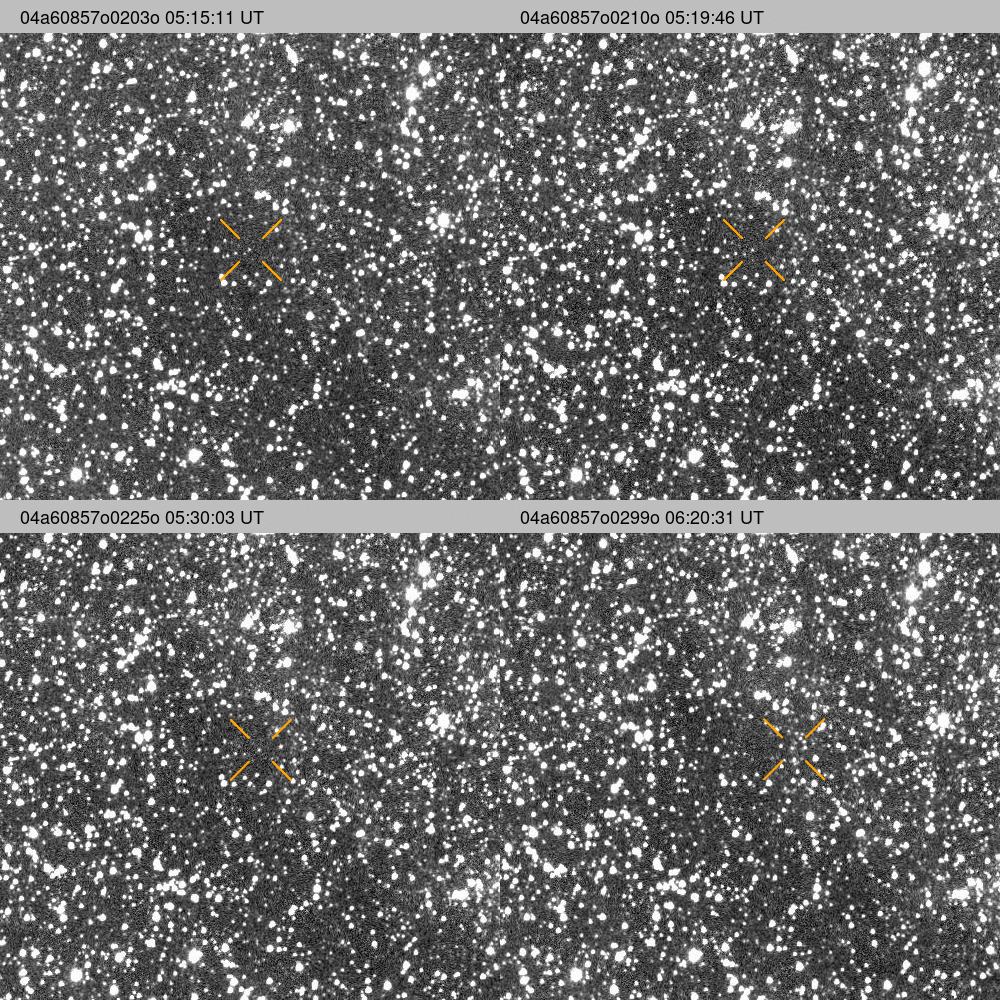
Interstellar Comets Exhibit Unique Characteristics Due to Foreign Origins and Ejection Processes
The Gist
Interstellar comets differ from solar system comets due to their formation environment, ejection mechanisms, and extended interstellar journeys.
Explain Like I'm Five
"Imagine space rocks from other star systems! They're different because they grew up around different stars and got kicked out by big planets, then traveled a long, long time in the dark."
Deep Intelligence Analysis
*Transparency Disclosure: This analysis was conducted by an AI, focusing on factual accuracy and avoiding subjective claims. The AI is trained to provide objective summaries based on provided source material.*
_Context: This intelligence report was compiled by the DailyOrbitalWire Strategy Engine. Verified for Art. 50 Compliance._
Impact Assessment
Understanding interstellar comets provides insights into the diversity of exoplanetary systems and the processes that shape small bodies beyond our solar system. Analyzing their composition reveals clues about the conditions in their birth environments.
Read Full Story on Universe TodayKey Details
- ● Interstellar comets originate in different solar systems with varying star temperatures and protoplanetary disk compositions.
- ● Ejection from their home systems is typically caused by gravitational interactions with giant planets.
- ● Interstellar comets experience prolonged periods in interstellar space, exposed only to cosmic microwave background radiation.
- ● Comets ejected from solar systems may not represent a random sample of the original comet population.
Optimistic Outlook
Studying these comets could reveal novel insights into planet formation and the distribution of elements across different stellar systems. Future missions could potentially intercept and analyze these objects in situ, providing invaluable data.
Pessimistic Outlook
The rarity and unpredictable nature of interstellar comet encounters pose significant challenges for scientific study. Limited observation opportunities may hinder comprehensive analysis of their composition and origin.

The Signal, Not
the Noise|
Get the week's top 1% of space-tech intelligence synthesized into a 5-minute read. Join 25,000+ aerospace insiders.
Unsubscribe anytime. No spam, ever.