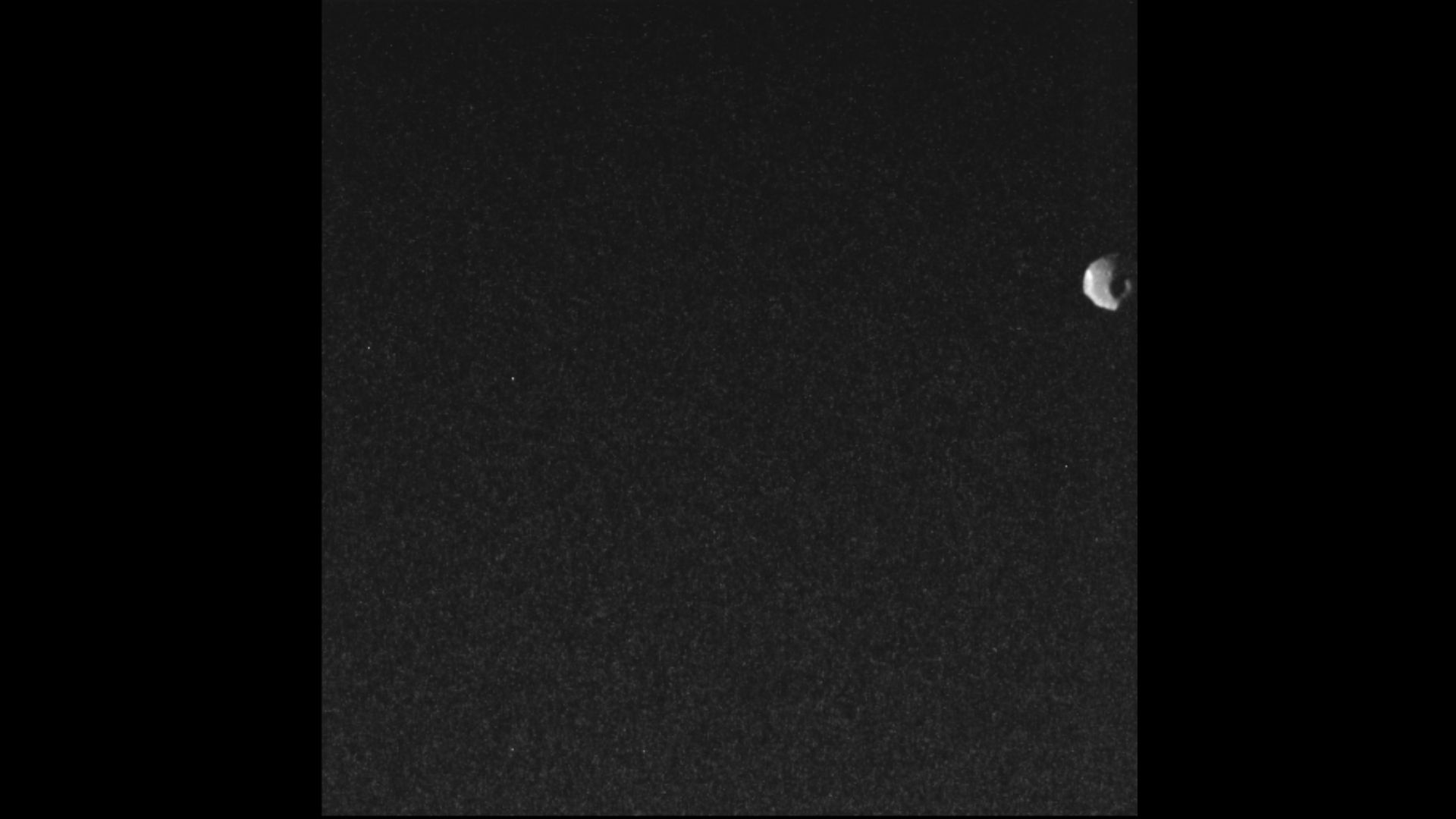
Juno Captures Close-Up of Jupiter's Moon Thebe
The Gist
NASA's Juno spacecraft imaged Jupiter's moon Thebe from a distance of 3,100 miles.
Explain Like I'm Five
"Imagine a spaceship taking a close-up picture of a tiny moon around a giant planet, like taking a selfie in space!"
Deep Intelligence Analysis
The SRU, initially designed for star field imaging to aid Juno's navigation, has demonstrated its versatility by capturing high-quality images of Jupiter's moons. This repurposing of existing instruments highlights the ingenuity of mission engineers in maximizing scientific output. The Juno mission, launched in 2011, has already provided groundbreaking data on Jupiter's atmosphere, magnetic field, and internal structure. Its extended mission focuses on exploring Jupiter's moons, offering valuable insights into their formation and evolution.
However, the reliance on repurposed instruments also presents limitations. While the SRU provides valuable images, it may not offer the same level of detail or spectral information as dedicated instruments designed specifically for lunar observation. Furthermore, the aging Juno spacecraft faces potential hardware challenges that could impact future observations. Despite these limitations, the Juno mission continues to be a valuable asset for planetary science, providing unique perspectives on Jupiter and its diverse collection of moons. The mission's success underscores the importance of adaptability and resourcefulness in space exploration, maximizing the scientific return from existing missions.
_Context: This intelligence report was compiled by the DailyOrbitalWire Strategy Engine. Verified for Art. 50 Compliance._
Impact Assessment
Close-up images of Thebe provide valuable data about Jupiter's inner moons. The SRU's extended functionality demonstrates resourceful use of existing spacecraft instruments for additional scientific discovery.
Read Full Story on Space.comKey Details
- ● Juno imaged Thebe on May 1, 2026, using its Stellar Reference Unit (SRU).
- ● Thebe is the second largest of Jupiter's inner moons.
- ● Thebe was discovered in 1980 by Voyager 1.
- ● Juno launched in 2011 and has been exploring Jupiter and its moons.
Optimistic Outlook
Continued exploration of Jupiter's moons by Juno could reveal new insights into the formation and evolution of planetary systems. The SRU's adaptability suggests potential for similar repurposing of instruments on other missions, maximizing scientific return.
Pessimistic Outlook
Reliance on repurposed instruments may limit the scope of scientific investigations compared to dedicated mission objectives. The aging Juno spacecraft faces potential hardware degradation, which could curtail future observations.

The Signal, Not
the Noise|
Get the week's top 1% of space-tech intelligence synthesized into a 5-minute read. Join 25,000+ aerospace insiders.
Unsubscribe anytime. No spam, ever.