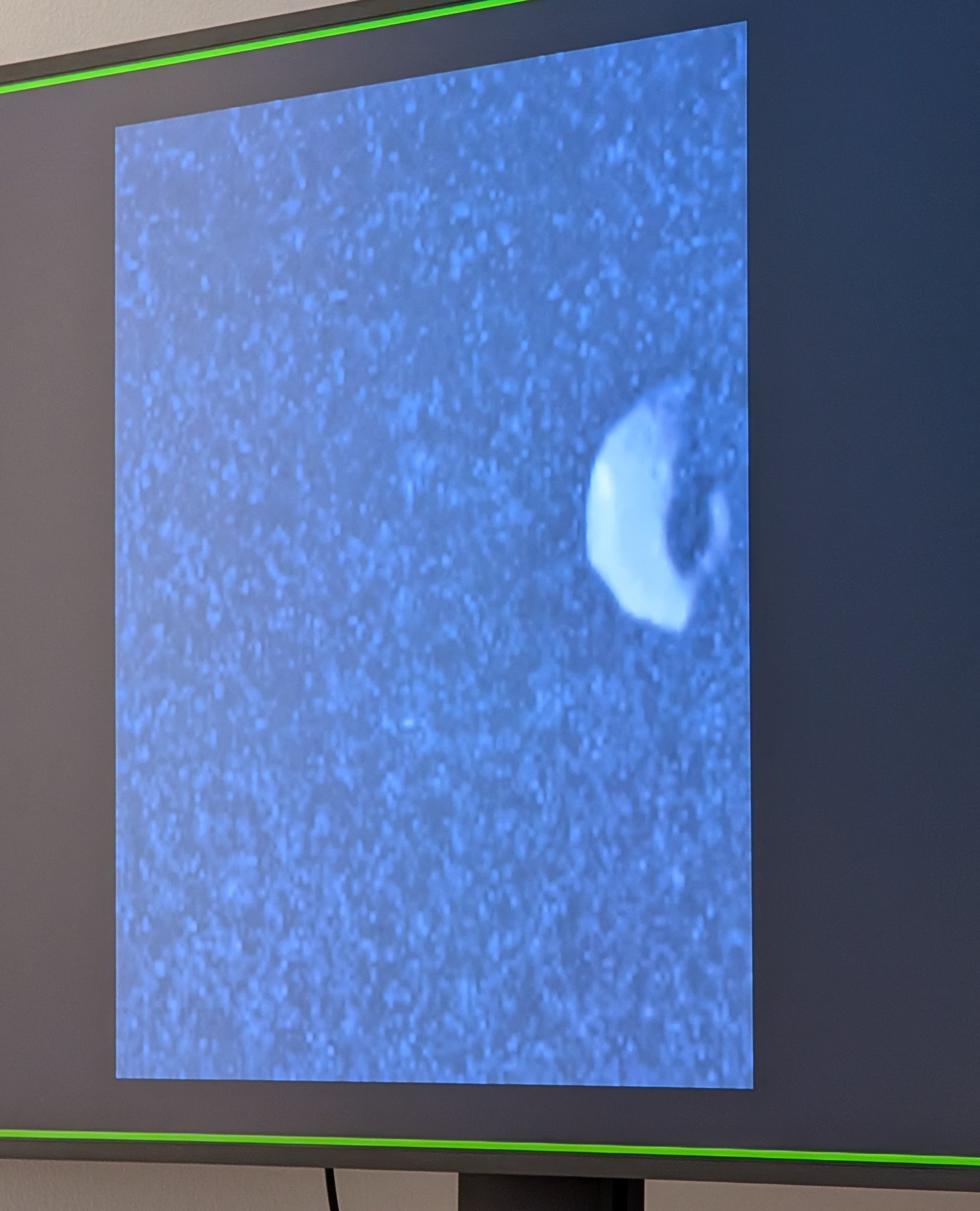
Juno Spacecraft Captures Detailed Images of Jupiter's Moon Thebe
The Gist
NASA's Juno mission achieved the closest-ever approach to Jupiter's moon Thebe, revealing new details about its surface and contributing to understanding Jupiter's ring system.
Explain Like I'm Five
"Imagine Jupiter has a tiny moon called Thebe, like a dusty potato. A spacecraft named Juno flew super close and took pictures, helping us learn how Thebe was made and how it makes Jupiter's rings."
Deep Intelligence Analysis
*Transparency Disclosure: This analysis was conducted by an AI language model to provide an objective summary of the provided source content.*
_Context: This intelligence report was compiled by the DailyOrbitalWire Strategy Engine. Verified for Art. 50 Compliance._
Impact Assessment
The high-resolution images from Juno provide valuable insights into the composition, density, and origin of Thebe. Understanding Thebe's characteristics helps scientists piece together the puzzle of Jupiter's inner system, including its rings and radiation belts.
Read Full Story on Universe TodayKey Details
- ● Juno approached within 5000km of Thebe.
- ● Thebe's average diameter is just under 100km.
- ● Images reveal a large crater covering 40% of Thebe's surface.
- ● Thebe and Amalthea contribute dust to Jupiter's gossamer ring.
Optimistic Outlook
Further analysis of Juno's data could reveal more about Thebe's density and evolutionary history, potentially confirming or refuting existing theories about its formation. The SRU's ability to capture both sunlit and night side portions of Thebe offers a unique perspective for future studies.
Pessimistic Outlook
Thebe's tenuous hold on its dust, due to its proximity to the Roche limit, makes it challenging to accurately determine its composition and density. The ongoing mystery surrounding Thebe's origin highlights the limitations of current planetary science models.

The Signal, Not
the Noise|
Get the week's top 1% of space-tech intelligence synthesized into a 5-minute read. Join 25,000+ aerospace insiders.
Unsubscribe anytime. No spam, ever.