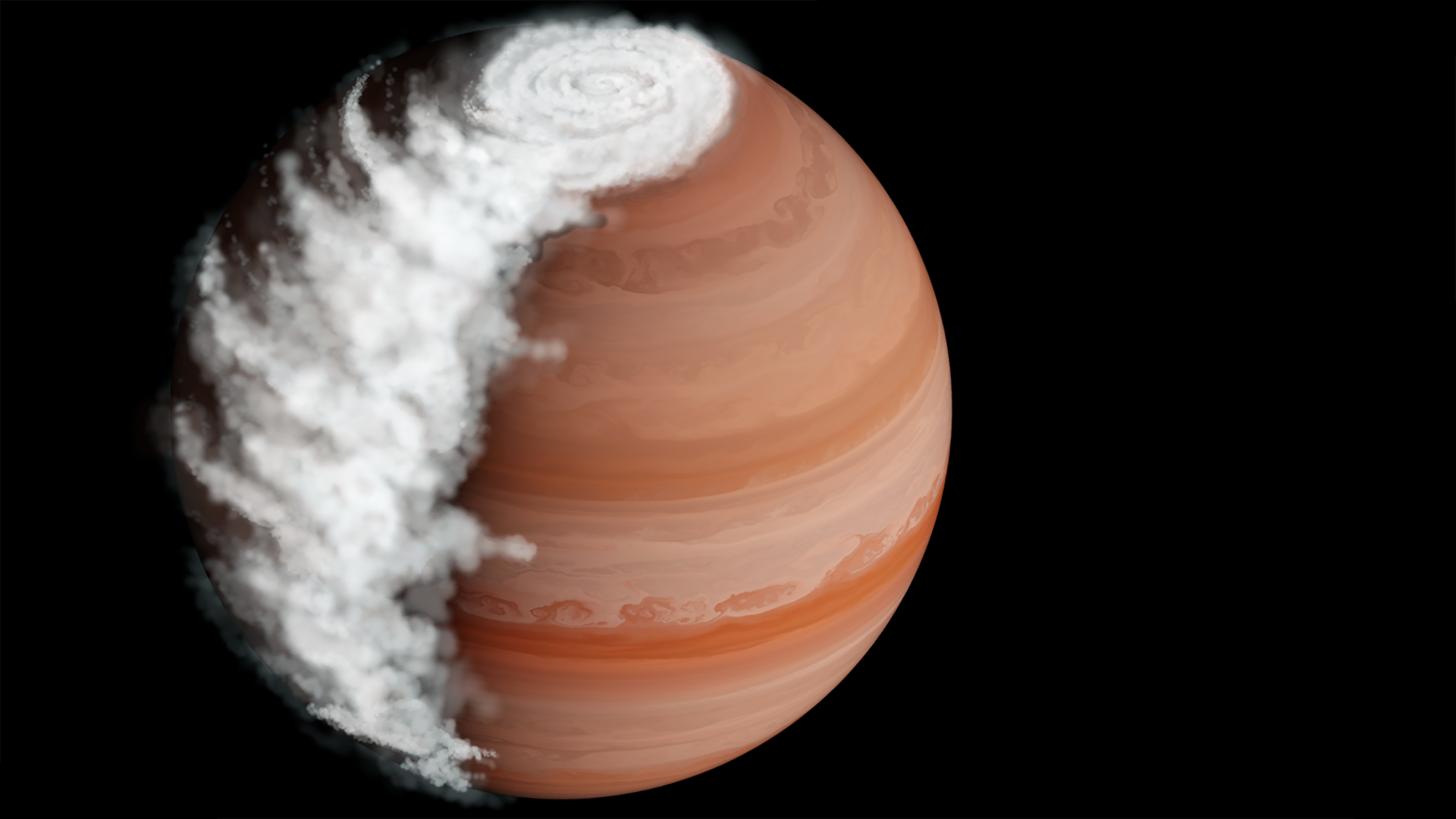
JWST Spots Sandy Skies on Exoplanet WASP-94Ab
The Gist
JWST observes daily weather cycle on hot Jupiter WASP-94Ab, revealing sandy clouds and clear evening skies.
Explain Like I'm Five
"Imagine a planet with sandstorms instead of rain! The James Webb telescope helped us see that on a faraway planet."
Deep Intelligence Analysis
_Context: This intelligence report was compiled by the DailyOrbitalWire Strategy Engine. Verified for Art. 50 Compliance._
Impact Assessment
This observation marks the first time a daily weather cycle has been observed on a hot Jupiter. The clear evening sky allowed for a more accurate assessment of the exoplanet's atmospheric composition.
Read Full Story on Space.comKey Details
- ● WASP-94Ab is 690 light-years from Earth.
- ● The exoplanet orbits its star every four days.
- ● WASP-94Ab's temperature exceeds 2,200 degrees Fahrenheit (1,200 degrees Celsius).
- ● Clouds on WASP-94Ab are composed of vaporized magnesium silicate.
- ● JWST found oxygen and carbon levels five times more abundant than on Jupiter.
Optimistic Outlook
JWST's ability to penetrate exoplanet cloud cover opens new avenues for atmospheric analysis. This could lead to a better understanding of exoplanet formation and composition, and potentially identify habitable worlds.
Pessimistic Outlook
The extreme conditions on hot Jupiters limit the possibility of finding life. Cloud interference remains a challenge for observing many exoplanets, hindering comprehensive atmospheric studies.

The Signal, Not
the Noise|
Get the week's top 1% of space-tech intelligence synthesized into a 5-minute read. Join 25,000+ aerospace insiders.
Unsubscribe anytime. No spam, ever.