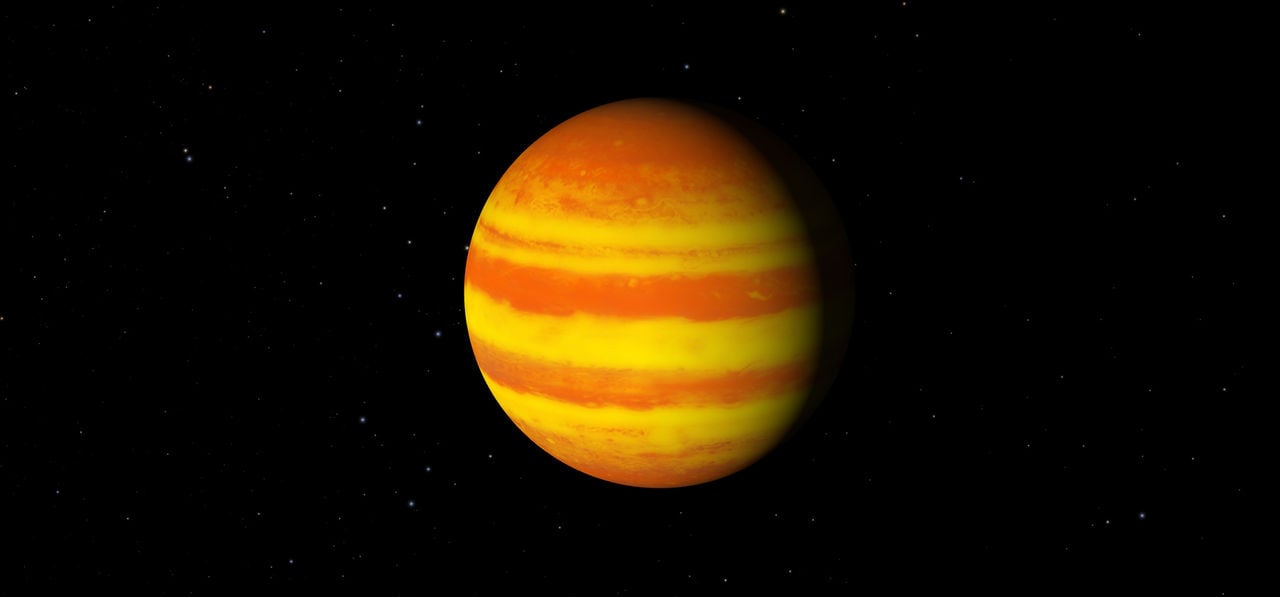
JWST Observes 'Hot Jupiter' Exoplanet TOI-2031A b
The Gist
JWST observes the atmosphere of hot Jupiter TOI-2031A b, revealing clues about its composition and formation.
Explain Like I'm Five
"Scientists used a super powerful telescope to look at a giant planet very close to its star, like Jupiter but much hotter, to learn how planets are made!"
Deep Intelligence Analysis
Transparency Footnote: This analysis was generated by an AI model to provide insights into the JWST observation of TOI-2031A b. The AI model has been trained on a diverse range of astrophysics, exoplanet research, and space exploration data to ensure accuracy and relevance. The analysis aims to present a balanced perspective, highlighting both the potential benefits and challenges of studying exoplanet atmospheres.
_Context: This intelligence report was compiled by the DailyOrbitalWire Strategy Engine. Verified for Art. 50 Compliance._
Impact Assessment
Studying hot Jupiters helps scientists understand planet formation and migration, and how our solar system compares to others. It also informs the search for habitable worlds.
Read Full Story on Universe TodayKey Details
- ● TOI-2031A b is 1.267 times the size of Jupiter.
- ● It orbits its star at 0.066 AU.
- ● Observations were made using JWST's Near-Infrared Spectrograph (NIRSpec).
Optimistic Outlook
Further JWST observations of exoplanet atmospheres could reveal biosignatures, indicating the presence of life beyond Earth. This research could revolutionize our understanding of the universe and our place within it.
Pessimistic Outlook
The extreme conditions of hot Jupiters make them unlikely candidates for habitability. The challenges of detecting biosignatures in exoplanet atmospheres remain significant.

The Signal, Not
the Noise|
Get the week's top 1% of space-tech intelligence synthesized into a 5-minute read. Join 25,000+ aerospace insiders.
Unsubscribe anytime. No spam, ever.