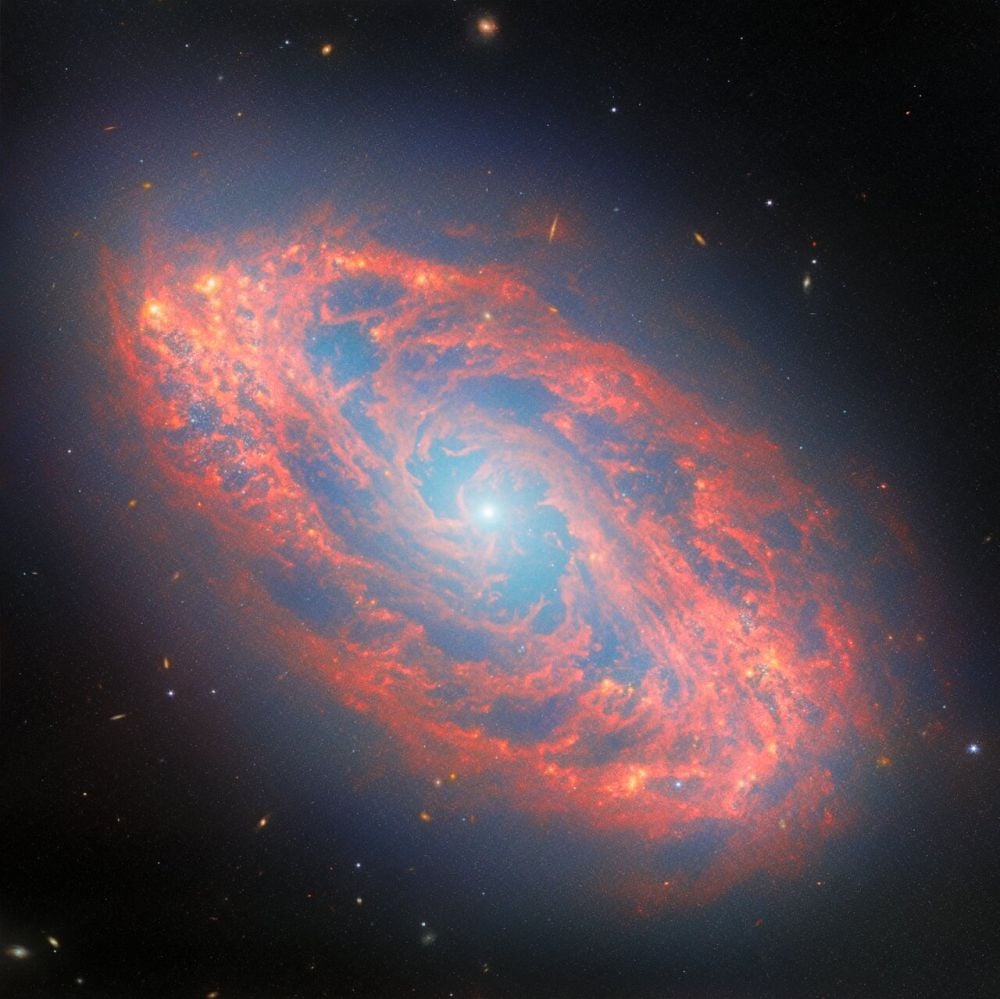
JWST Reveals Intricate Details of Star Formation in Spiral Galaxies
The Gist
JWST's observations are enhancing our understanding of star formation within spiral galaxies by peering through dust.
Explain Like I'm Five
"Imagine a galaxy is like a giant pizza, and stars are the toppings. JWST helps us see how the toppings are made, even when they're hiding under a blanket of flour!"
Deep Intelligence Analysis
*Transparency Disclosure: This analysis was conducted by an AI model to provide a concise summary of the provided text. The AI model has been trained to avoid generating false or misleading information.*
_Context: This intelligence report was compiled by the DailyOrbitalWire Strategy Engine. Verified for Art. 50 Compliance._
Impact Assessment
Understanding star formation in galaxies helps us understand galactic evolution. JWST's unique capabilities provide critical data for refining models of these processes.
Read Full Story on Universe TodayKey Details
- ● PHANGS is a multiwavelength survey of nearby spiral galaxies.
- ● JWST can see inside dust better than other telescopes, revealing earlier stages of star formation.
- ● NGC 5134 is a spiral galaxy 65 million light-years away, imaged by JWST.
- ● Density waves compress gas in spiral arms, triggering star formation.
Optimistic Outlook
JWST's ability to penetrate dust clouds promises more detailed observations of star formation. This will lead to a deeper understanding of galactic dynamics and stellar evolution, potentially refining our understanding of the universe's history.
Pessimistic Outlook
Data analysis from JWST requires significant computational resources and expertise. Delays in processing and interpreting the data could slow down scientific progress in this field.

The Signal, Not
the Noise|
Get the week's top 1% of space-tech intelligence synthesized into a 5-minute read. Join 25,000+ aerospace insiders.
Unsubscribe anytime. No spam, ever.