BREAKING: Awaiting the latest intelligence wire...
Back to Wire
LIGO Detects Potential Primordial Black Hole Signal
Satellites

LIGO Detects Potential Primordial Black Hole Signal

Source: Universe Today Original Author: Mark Thompson Intelligence Analysis by Gemini

The Gist

LIGO detected a gravitational wave signal potentially from a primordial black hole, challenging stellar evolution models.

Explain Like I'm Five

"Imagine the universe squishing some stuff into tiny black holes right after it was born, before stars even existed! Scientists might have heard one bumping into another, which could help us understand what dark matter is."

Deep Intelligence Analysis

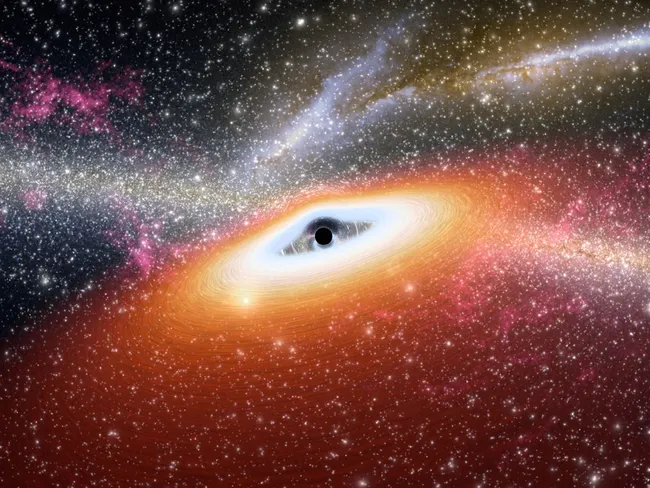
The recent detection by LIGO of a gravitational wave signal has sparked considerable interest in the possibility of primordial black holes. Unlike black holes formed from stellar collapse, primordial black holes are theorized to have originated in the early universe due to extreme density fluctuations shortly after the Big Bang. The detected signal's characteristics, particularly the low mass of the object, defy conventional astrophysical explanations, leading researchers to propose the primordial black hole hypothesis. The team modeled the expected frequency of such events and found encouraging alignment with the observed rare occurrence. If confirmed, this discovery would have profound implications for cosmology, potentially resolving the long-standing mystery of dark matter, which constitutes a significant portion of the universe's mass. Future missions, such as LISA and Cosmic Explorer, promise to enhance the search for these elusive objects, pushing the boundaries of our understanding of the universe's origins and composition. However, it is important to note that the current evidence is suggestive but not conclusive, requiring further observations to solidify the primordial black hole interpretation. The detection and study of primordial black holes could revolutionize our understanding of the universe's earliest moments and the nature of dark matter. This research highlights the importance of advanced gravitational wave detectors in probing the universe's most enigmatic phenomena. The potential confirmation of primordial black holes would represent a paradigm shift in cosmology, opening new avenues for research and exploration.

_Context: This intelligence report was compiled by the DailyOrbitalWire Strategy Engine. Verified for Art. 50 Compliance._

Impact Assessment

Detection of primordial black holes could revolutionize cosmology and potentially explain dark matter. Future detectors like LISA will enhance the search for these elusive objects.

Read Full Story on Universe Today

Key Details

  • LIGO detected a signal from an object with a mass potentially less than a single solar mass.
  • The signal lacks conventional astrophysical explanations.
  • A study suggests the signal is consistent with a primordial black hole.
  • LISA, the Laser Interferometer Space Antenna, launching in 2035, will aid in the search.

Optimistic Outlook

If confirmed, primordial black holes could solve the dark matter mystery and open new avenues in cosmology. Future detectors promise more sensitive searches.

Pessimistic Outlook

The signal remains unconfirmed, and more events are needed to validate the theory. The existence of primordial black holes is still speculative.

DailyOrbitalWire Logo

The Signal, Not
the Noise|

Get the week's top 1% of space-tech intelligence synthesized into a 5-minute read. Join 25,000+ aerospace insiders.

Unsubscribe anytime. No spam, ever.

```