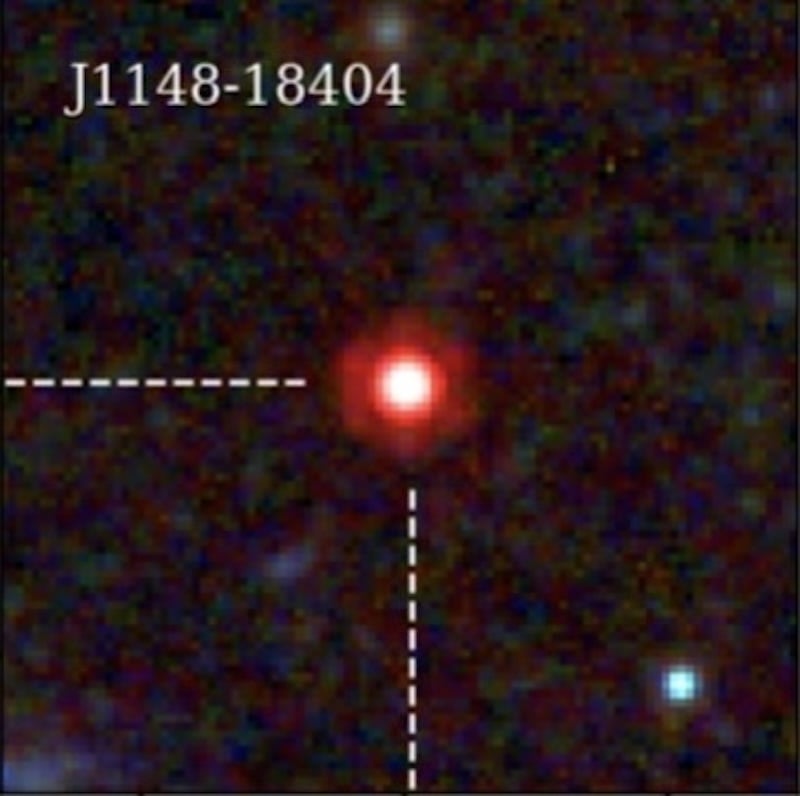
Astronomers Crack the Mystery of the 'Little Red Dots' Using Webb and Chandra
The Gist
Astronomers have identified 'little red dots' as supermassive black holes consuming gas, with X-ray emissions revealing a transition phase.
Explain Like I'm Five
"Imagine a hungry monster (black hole) hiding under a blanket (gas cloud). Sometimes, the monster peeks out for a second, and we can see a flash of light (X-rays) before it hides again. That's what's happening with these 'little red dots'!"
Deep Intelligence Analysis
*Transparency Disclosure: This analysis was composed by an AI model. While efforts have been made to ensure accuracy, the interpretation and synthesis of information may contain errors or biases. Consult with a human expert for critical decisions.*
_Context: This intelligence report was compiled by the DailyOrbitalWire Strategy Engine. Verified for Art. 50 Compliance._
Impact Assessment
This discovery provides crucial insight into the early universe and the evolution of supermassive black holes. It highlights the power of combining data from different telescopes to unravel cosmic mysteries.
Read Full Story on Universe TodayKey Details
- ● Little red dots are faint, reddish objects 12 billion light years away.
- ● They are believed to be supermassive black holes devouring material.
- ● Object 3DHST-AEGIS-12014 is an X-ray dot that looks like a little red dot.
- ● Chandra detected flickering X-ray signals from the black hole breaking free.
Optimistic Outlook
Understanding the formation and evolution of supermassive black holes can shed light on galaxy formation. Future observations may reveal more transitional black holes, providing a more complete picture of their lifecycle.
Pessimistic Outlook
The rarity of X-ray emitting little red dots suggests that this transitional phase is short-lived. It may be challenging to find enough examples to fully understand the process.

The Signal, Not
the Noise|
Get the week's top 1% of space-tech intelligence synthesized into a 5-minute read. Join 25,000+ aerospace insiders.
Unsubscribe anytime. No spam, ever.