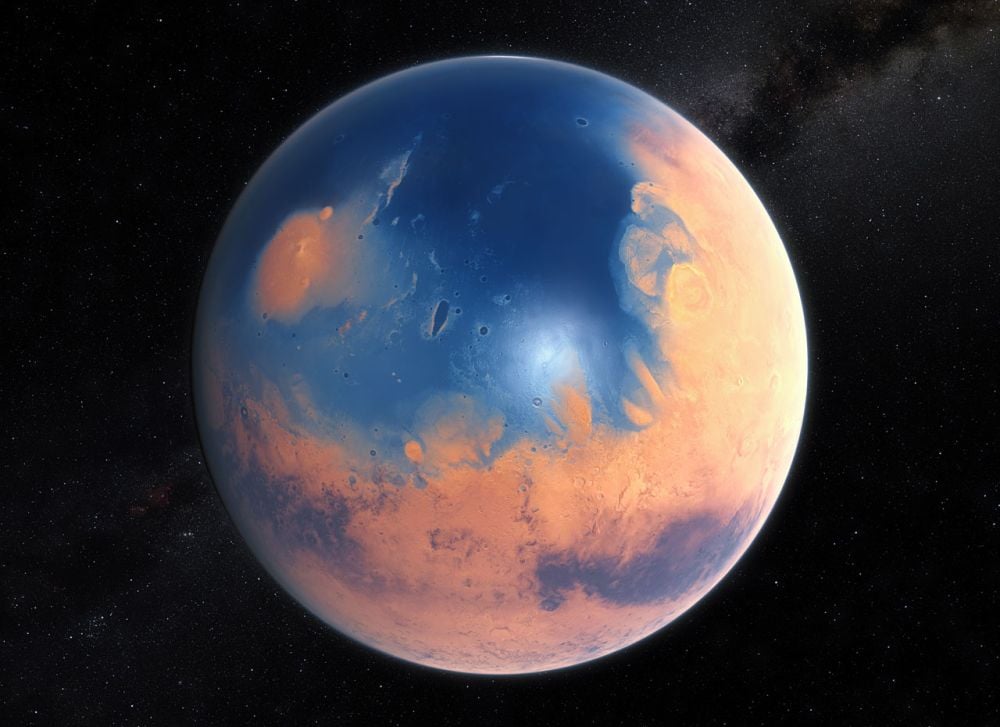
Mars as a Key to Understanding Exoplanet Habitability
The Gist
Studying Mars' transition to an uninhabitable state can inform our understanding of exoplanet habitability.
Explain Like I'm Five
"Mars used to be more like Earth, but changed. Studying Mars helps us understand if planets far away could be good for life."
Deep Intelligence Analysis
_Context: This intelligence report was compiled by the DailyOrbitalWire Strategy Engine. Verified for Art. 50 Compliance._
Impact Assessment
Understanding Mars' evolution provides insights into the factors that determine a planet's long-term habitability, crucial for exoplanet research.
Read Full Story on Universe TodayKey Details
- ● Mars transitioned from a potentially habitable warm and wet state to a cold and dry one.
- ● Research uses Mars to understand the climates, volatile budgets, and long-term habitability of exoplanets.
- ● Mars' formation stalled at a sub-Earth mass, making it a 'stranded planetary embryo'.
Optimistic Outlook
Improved understanding of planetary evolution could lead to the discovery of potentially habitable exoplanets.
Pessimistic Outlook
The unique conditions that led to Mars' current state may not be easily extrapolated to other exoplanets.

The Signal, Not
the Noise|
Get the week's top 1% of space-tech intelligence synthesized into a 5-minute read. Join 25,000+ aerospace insiders.
Unsubscribe anytime. No spam, ever.