NASA's GUARDIAN Detects Tsunami Faster Using Satellite Signals
The Gist
NASA's GUARDIAN uses satellite signal distortions to detect tsunamis, providing earlier warnings than traditional methods.
Explain Like I'm Five
"Imagine NASA using satellites to feel the ocean's hiccups after an earthquake, giving people more time to run to safety before a big wave arrives."
Deep Intelligence Analysis
GUARDIAN's cost-effectiveness is another key advantage. It leverages existing data from GPS and other Global Navigation Satellite System constellations, making it a more affordable alternative to deploying and maintaining expensive ocean-floor sensors. The system's reliance on AI-powered detection algorithms allows it to process vast amounts of data in real-time, identifying subtle anomalies that could indicate an impending tsunami.
While GUARDIAN shows great promise, it is not without limitations. The system currently requires trained analysts to interpret its findings, which could hinder its widespread adoption. Further development is needed to automate the analysis process and make the system more accessible to emergency management agencies. Additionally, the system's reliance on satellite infrastructure makes it vulnerable to disruptions in satellite service or data availability. Despite these limitations, GUARDIAN represents a valuable addition to the global tsunami early warning system and has the potential to significantly improve disaster preparedness.
*Transparency Disclosure: This analysis was composed by an AI model. While efforts have been made to ensure accuracy, the information should be verified with domain experts before use in critical applications.*
_Context: This intelligence report was compiled by the DailyOrbitalWire Strategy Engine. Verified for Art. 50 Compliance._
Impact Assessment
GUARDIAN offers a cost-effective way to augment existing tsunami warning systems, potentially saving lives by providing crucial extra minutes for evacuation. Its ability to leverage existing satellite data makes it a valuable tool for disaster preparedness.
Read Full Story on NASA Breaking NewsKey Details
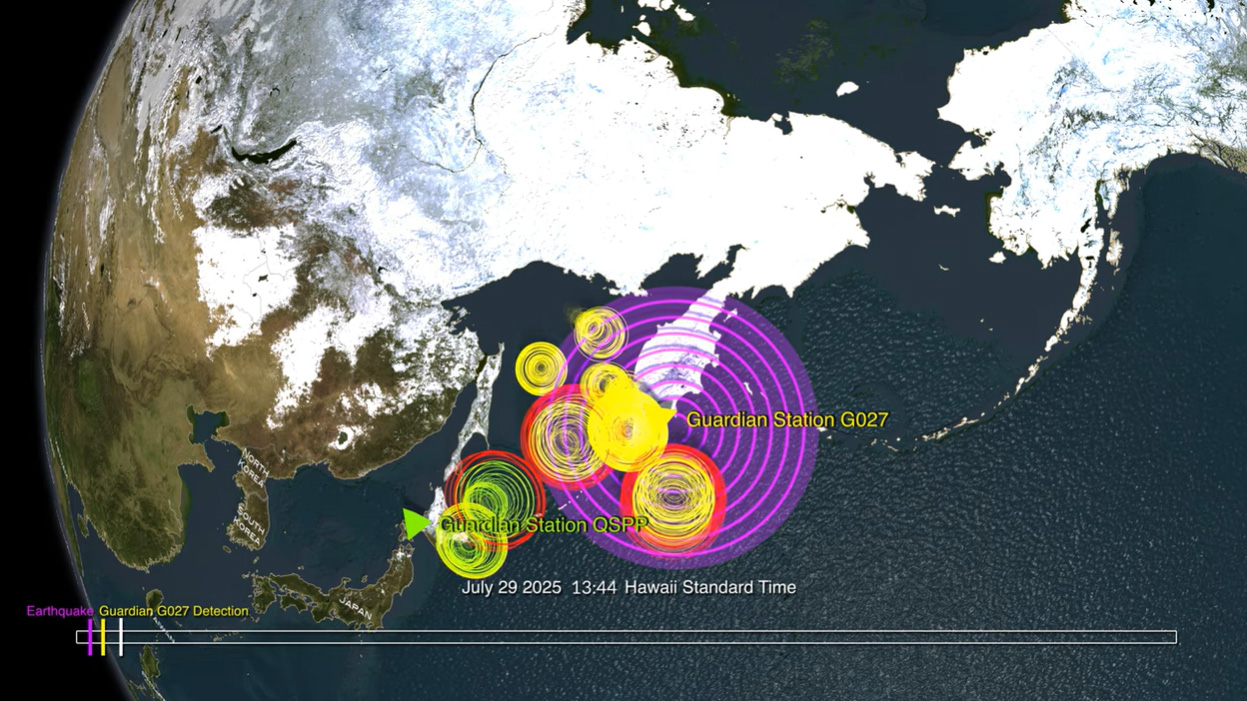
- ● GUARDIAN detected the Kamchatka tsunami 8 minutes after the earthquake.
- ● It flagged the tsunami off Kauai 32 minutes before tide gauges.
- ● GUARDIAN monitors data from over 350 GNSS ground stations around the Pacific Ring of Fire.
- ● The system uses disturbances in satellite navigation signals to spot hazards.
Optimistic Outlook
GUARDIAN's AI-powered detection algorithms could be expanded to monitor other natural disasters like volcanic eruptions and earthquakes. Further development could lead to a global early warning system, providing timely alerts to vulnerable communities worldwide.
Pessimistic Outlook
The system currently requires trained analysts to interpret its findings, limiting its accessibility. Dependence on existing satellite infrastructure also makes it vulnerable to disruptions in satellite service or data availability.

The Signal, Not
the Noise|
Get the week's top 1% of space-tech intelligence synthesized into a 5-minute read. Join 25,000+ aerospace insiders.
Unsubscribe anytime. No spam, ever.