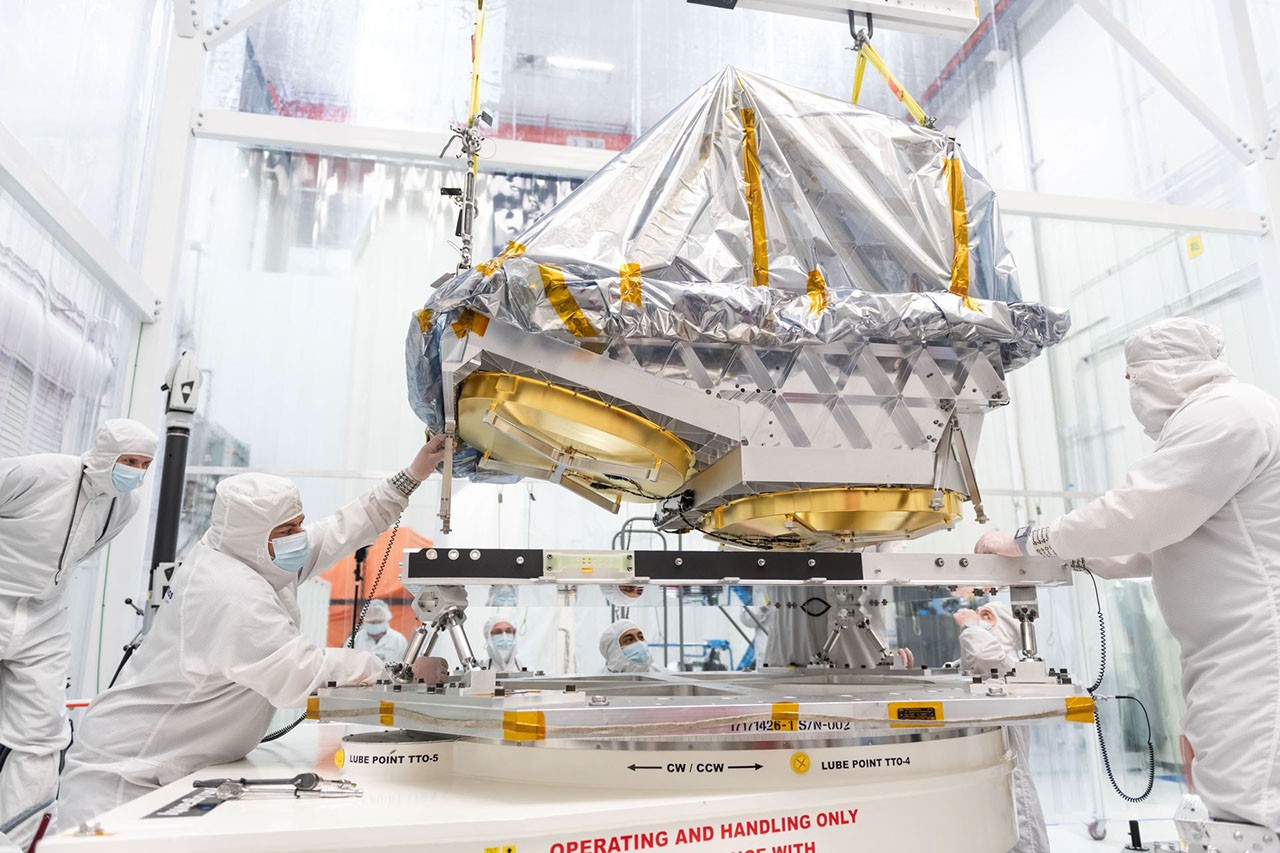
NASA's NEO Surveyor Space Telescope Undergoing Integration, Launching 2027
The Gist
NASA's Near-Earth Object (NEO) Surveyor, an infrared space telescope designed to discover potentially hazardous asteroids, is undergoing integration and testing for a planned 2027 launch.
Explain Like I'm Five
"Imagine a special telescope in space that uses heat vision to find sneaky asteroids that could come close to Earth, helping us protect our planet!"
Deep Intelligence Analysis
The mission's deployment to the Sun-Earth L1 Lagrange point provides a stable and unobstructed vantage point for continuous observation of the inner solar system. The telescope's design incorporates advanced features such as a large sunshade to block glare from the Sun and highly sensitive infrared detectors to measure the temperature and size of NEOs.
The data collected by NEO Surveyor will be used to refine our understanding of the NEO population and to assess the risk of potential impacts with Earth. This information will be critical for developing strategies to mitigate any identified threats, such as deflecting or disrupting potentially hazardous objects. The modular approach to construction, with components being integrated and tested at various facilities across the United States, highlights the collaborative nature of this important scientific endeavor. The mission's success is vital for safeguarding our planet from potential asteroid impacts.
_Context: This intelligence report was compiled by the DailyOrbitalWire Strategy Engine. Verified for Art. 50 Compliance._
Impact Assessment
NEO Surveyor aims to identify potentially hazardous near-Earth objects (NEOs) that are difficult to detect with ground-based telescopes. By detecting infrared emissions, it can find dark or small objects, providing critical data for planetary defense.
Read Full Story on Hacker News SpaceKey Details
- ● NEO Surveyor is scheduled to launch no earlier than September 2027.
- ● The telescope will operate from the Sun-Earth L1 Lagrange point, 1 million miles from Earth.
- ● The instrument enclosure is 12 feet (3.7 meters) long.
- ● The camera uses two 16-megapixel detector arrays to image in two infrared bands.
- ● The spacecraft features a 20-foot (6-meter) sunshade.
Optimistic Outlook
The NEO Surveyor's unique infrared capabilities promise a more comprehensive survey of potentially hazardous asteroids, enhancing Earth's planetary defense capabilities. Its deployment to the L1 point ensures continuous scanning, maximizing the chances of early detection and mitigation of threats.
Pessimistic Outlook
A 2027 launch is still years away, and delays are possible, potentially leaving Earth vulnerable to undetected NEOs. The mission's success hinges on the proper functioning of its complex infrared detectors and sunshade in the harsh space environment.

The Signal, Not
the Noise|
Get the week's top 1% of space-tech intelligence synthesized into a 5-minute read. Join 25,000+ aerospace insiders.
Unsubscribe anytime. No spam, ever.