NASA's 'Shock Detectives' Project Seeks Volunteers to Study Solar Wind
The Gist
NASA's 'Shock Detectives' project invites volunteers to analyze solar wind data and its impact on Earth's magnetosphere.
Explain Like I'm Five
"The Sun sends out a lot of stuff, like a windy day in space! This wind bumps into Earth's shield, and NASA needs your help to understand what happens when they crash!"
Deep Intelligence Analysis
The potential benefits of this research are significant. Disruptions in GPS signals, communications, and power grids can be caused by chaotic plasma from the solar wind. By improving our understanding of the conditions that lead to these disruptions, scientists can develop better forecasting models and mitigation strategies. Furthermore, the knowledge gained from studying the Earth-Sun bow shock can be applied to understanding the interaction of solar winds with other planets.
However, the project also faces challenges. The accuracy and reliability of volunteer data analysis are critical to the success of the project. NASA must implement quality control measures to minimize biases and inconsistencies. The complexity of plasma physics may also limit the effectiveness of non-expert contributions. Nevertheless, 'Shock Detectives' offers a valuable opportunity for the public to engage in cutting-edge scientific research and contribute to our understanding of space weather.
*Transparency Disclosure: This analysis was composed by an AI Large Language Model. Human oversight ensures factual accuracy and editorial integrity. The AI model is trained on a diverse range of publicly available information and is continuously updated to improve performance.*
_Context: This intelligence report was compiled by the DailyOrbitalWire Strategy Engine. Verified for Art. 50 Compliance._
Impact Assessment
Understanding the solar wind's interaction with Earth's magnetosphere is crucial for mitigating disruptions to GPS, communications, and power grids. This project extends knowledge of how solar winds impact planets beyond Earth.
Read Full Story on NASA Breaking NewsKey Details
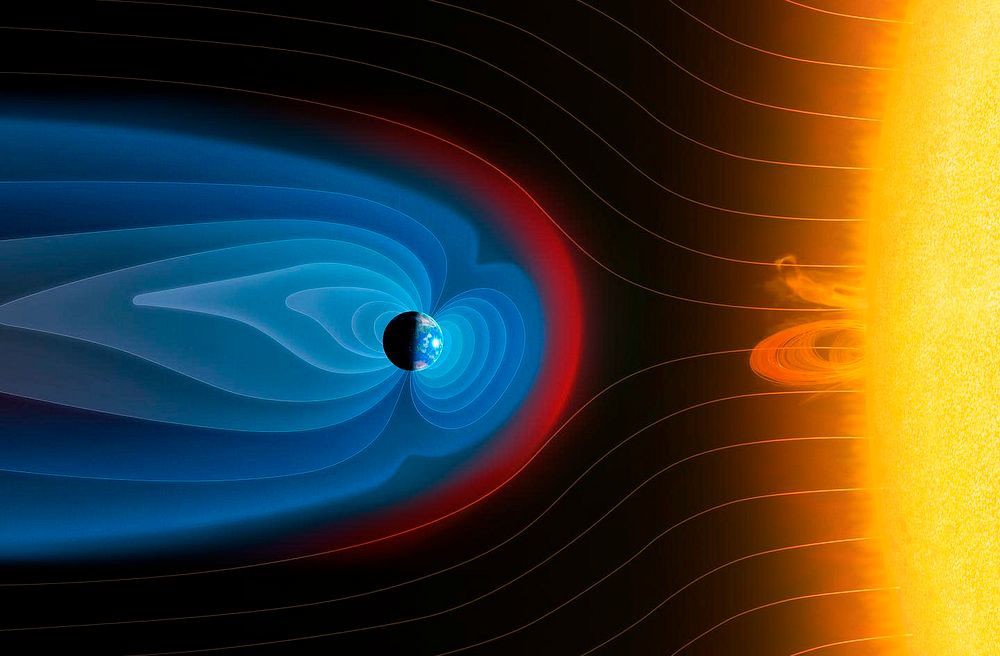
- ● The solar wind collides with Earth's magnetic field approximately 56,000 miles (90,000 kilometers) from Earth.
- ● The Magnetospheric Multiscale (MMS) mission has collected over ten years of data on the Earth-Sun bow shock.
- ● The 'bow shock' is a long-lasting shock wave stretching hundreds of thousands of miles.
Optimistic Outlook
Volunteer contributions to 'Shock Detectives' can accelerate the analysis of MMS data, leading to a better understanding of space weather. Improved space weather forecasting can enhance the resilience of critical infrastructure.
Pessimistic Outlook
The reliance on volunteer data analysis may introduce biases or inconsistencies in the results. The complexity of plasma physics may limit the effectiveness of non-expert contributions.

The Signal, Not
the Noise|
Get the week's top 1% of space-tech intelligence synthesized into a 5-minute read. Join 25,000+ aerospace insiders.
Unsubscribe anytime. No spam, ever.