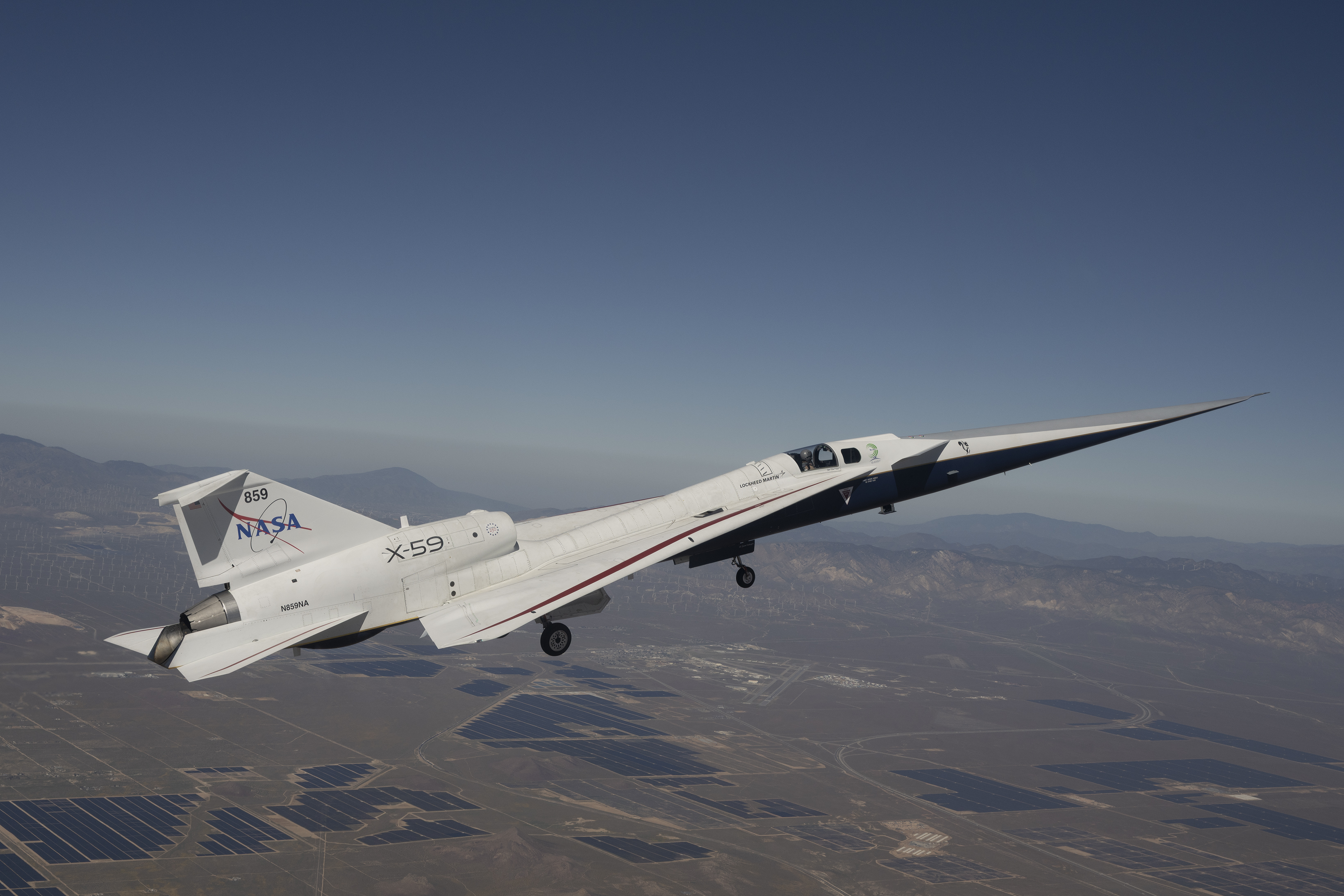
NASA's X-59 Supersonic Aircraft Conducts Second Test Flight
The Gist
NASA's X-59, designed for quiet supersonic flight, completed its second test flight, gathering data for future tests despite a technical issue.
Explain Like I'm Five
"Imagine a plane that flies super fast but doesn't make a loud boom, just a quiet thump. NASA is testing a plane called X-59 to make this happen so we can fly places much faster!"
Deep Intelligence Analysis
The Quesst mission, with the X-59 as its centerpiece, aims to demonstrate the feasibility of quiet supersonic flight and gather data to inform regulatory changes. The planned envelope expansion in 2026 will gradually push the aircraft to its performance limits, testing its airworthiness and supersonic capabilities. Success in this endeavor could pave the way for a new era of faster air travel, potentially transforming global connectivity and reducing travel times significantly.
However, challenges remain. Technical issues, regulatory hurdles, and public acceptance of supersonic flight over land are all factors that could impact the program's success. The economic viability of commercial supersonic flight also needs to be considered, as the development and operation of such aircraft are likely to be more expensive than conventional subsonic airliners. The environmental impact, including fuel consumption and emissions, will also be subject to scrutiny. The X-59 program is a high-risk, high-reward endeavor with the potential to reshape the future of air travel.
_Context: This intelligence report was compiled by the DailyOrbitalWire Strategy Engine. Verified for Art. 50 Compliance._
Impact Assessment
The X-59 is central to NASA's Quesst mission, aiming to enable commercial supersonic flight over land by reducing sonic booms to quiet thumps. Successful testing is crucial for regulatory changes and the future of faster air travel.
Read Full Story on NASA AeronauticsKey Details
- ● The X-59 took off from Edwards Air Force Base at 10:54 a.m. PDT.
- ● The flight was cut short due to a vehicle system warning, landing at 11:03 a.m. PDT.
- ● Testing is set to accelerate in 2026 with envelope expansion.
Optimistic Outlook
Continued testing and data collection will refine the X-59's design and performance, potentially leading to a breakthrough in quiet supersonic flight. This could revolutionize air travel, opening new routes and reducing travel times.
Pessimistic Outlook
Technical issues, like the one encountered during the second flight, could delay the testing schedule and increase development costs. Regulatory hurdles and public acceptance of supersonic flight over land remain significant challenges.

The Signal, Not
the Noise|
Get the week's top 1% of space-tech intelligence synthesized into a 5-minute read. Join 25,000+ aerospace insiders.
Unsubscribe anytime. No spam, ever.