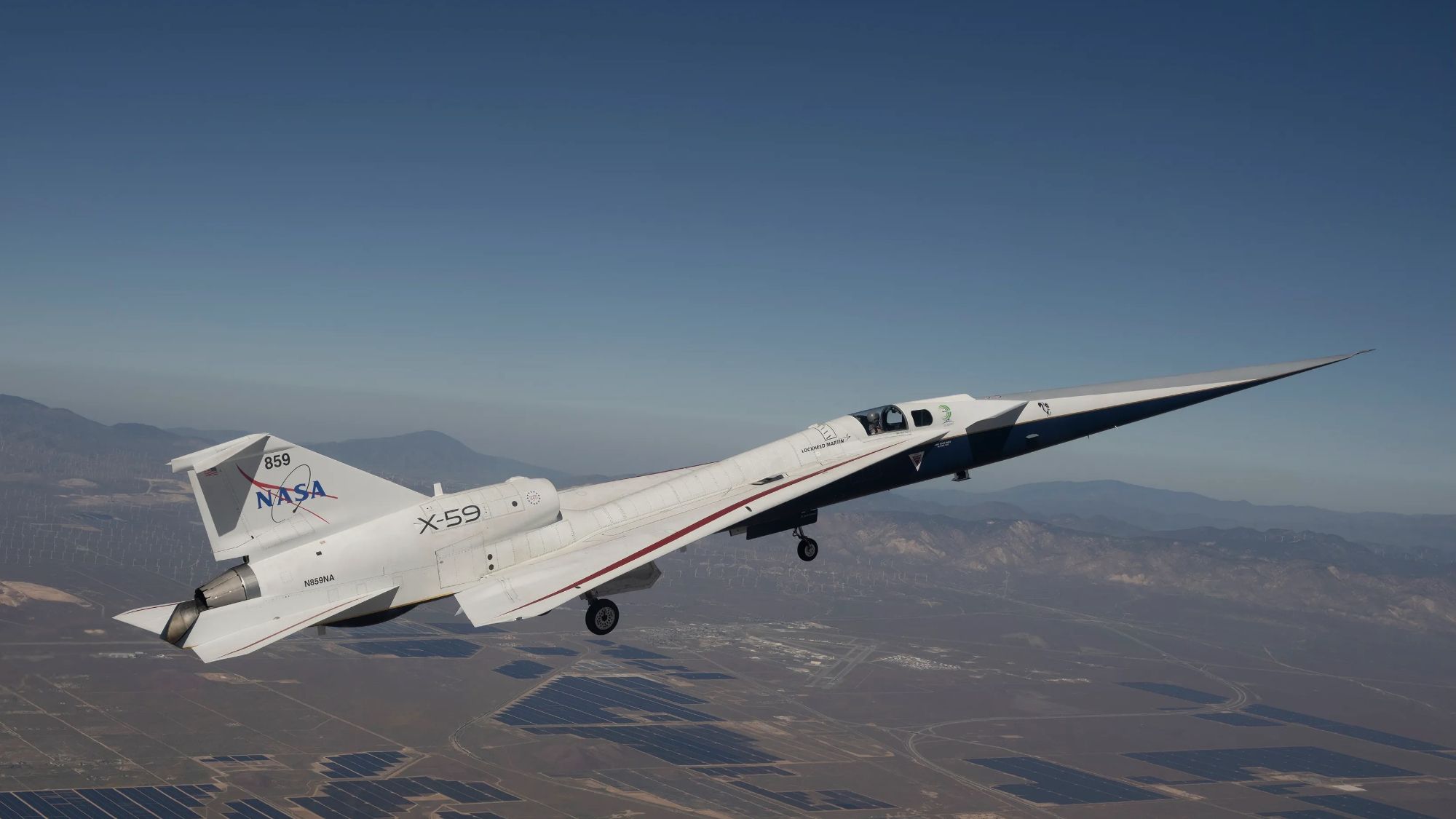
NASA's X-59 Supersonic Jet's Second Test Flight Cut Short
The Gist
NASA's X-59 supersonic jet's second test flight was cut short due to a warning light.
Explain Like I'm Five
"Imagine a plane that flies super fast but quietly. NASA is testing a new plane called X-59, but it had to land early because of a warning light. They still learned some things and will try again soon!"
Deep Intelligence Analysis
The X-59's success is crucial for NASA's Quesst mission, which aims to overturn the decades-long ban on supersonic flight over land. By reducing the sonic boom to a less disruptive thump, the X-59 could pave the way for a new era of commercial supersonic travel. However, achieving this goal requires not only technological advancements but also regulatory changes and public acceptance.
The economic implications of supersonic flight are significant, potentially creating new markets for faster cargo and passenger transport. However, the environmental impact, including noise pollution and fuel consumption, must be carefully considered. The X-59's development represents a delicate balance between technological innovation and societal responsibility. The incident underscores the need for rigorous testing and transparent communication throughout the program's lifecycle.
Transparency Statement: This analysis was generated by an AI model to provide an objective perspective on the provided news article. The AI model has been trained to avoid bias and provide factual information. However, the user is advised to use their own judgment and seek professional advice before making any decisions based on this analysis.
_Context: This intelligence report was compiled by the DailyOrbitalWire Strategy Engine. Verified for Art. 50 Compliance._
Impact Assessment
The X-59 is central to NASA's Quesst mission, aiming to establish acceptable noise thresholds for supersonic flight over land. Successful development could open new commercial cargo and passenger markets for faster-than-sound air travel.
Read Full Story on Space.comKey Details
- ● The X-59 landed nine minutes after takeoff on its second test flight.
- ● The first flight on Oct 29, 2025, lasted 67 minutes.
- ● The X-59 is designed to reduce sonic booms to mere thumps.
- ● The X-59 is 100 feet long (30.5 meters).
Optimistic Outlook
If the issues are resolved quickly, the X-59 program could proceed as planned, potentially revolutionizing air travel by enabling supersonic flight over land. Further data collection from future flights will refine the aircraft's design and validate its low-boom technology.
Pessimistic Outlook
Delays and further technical issues could significantly impact the Quesst mission's timeline and budget. Public acceptance of supersonic flight will depend on the X-59's ability to demonstrably minimize noise pollution.

The Signal, Not
the Noise|
Get the week's top 1% of space-tech intelligence synthesized into a 5-minute read. Join 25,000+ aerospace insiders.
Unsubscribe anytime. No spam, ever.