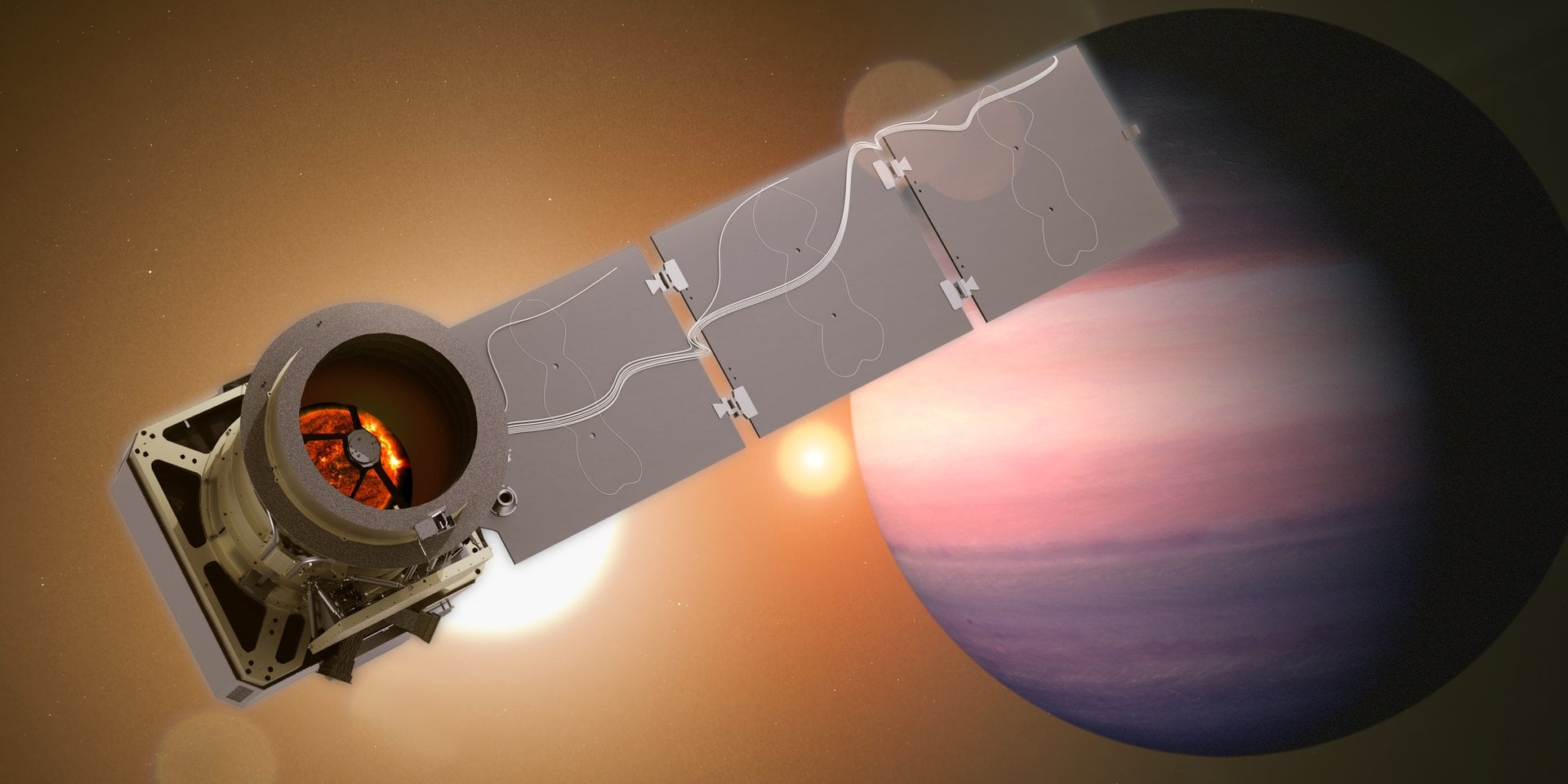
Pandora Exoplanet Mission Delivers First Engineering Images
The Gist
Pandora, a NASA Astrophysics Pioneers Program mission, has transmitted its first engineering images after launching on a SpaceX Falcon 9.
Explain Like I'm Five
"Imagine a special telescope in space, called Pandora, that takes pictures of planets around other stars. It just sent back its first pictures, showing it's working well! Pandora will help us learn if these planets have water or air like Earth."
Deep Intelligence Analysis
*Transparency Statement: This analysis was conducted by an AI language model. While efforts have been made to ensure accuracy and objectivity, the interpretation and synthesis of information may be subject to limitations inherent in AI technology. This analysis is for informational purposes only and should not be considered definitive or exhaustive.*
_Context: This intelligence report was compiled by the DailyOrbitalWire Strategy Engine. Verified for Art. 50 Compliance._
Impact Assessment
Pandora's simultaneous visible and IR observations will help scientists distinguish false stellar signals and potentially identify water and hydrogen-rich atmospheres on exoplanets. The mission will also refine variability and transit times for target exoplanets, contributing to NASA's Exoplanet Watch initiative.
Read Full Story on Universe TodayKey Details
- ● Pandora launched on January 11th on a SpaceX Falcon 9 from Vandenberg Space Force Base.
- ● The mission will observe 20 known transiting exoplanets, taking 10 transit measurements per target.
- ● Pandora includes the CODA, VISDA, and NIRDA instruments; NIRDA is a repurposed backup of JWST's NIRCam instrument.
- ● The mission is designed to operate for a minimum of one year.
Optimistic Outlook
The successful initial images suggest Pandora's instruments are functioning as expected, paving the way for valuable exoplanet observations. Its ability to operate in both visible and infrared wavelengths could lead to breakthroughs in understanding exoplanetary atmospheres and stellar activity.
Pessimistic Outlook
The mission's success hinges on maintaining pointing stability during 24-hour observation periods. Any unforeseen technical issues or operational challenges could limit the amount and quality of data collected during its one-year nominal mission.

The Signal, Not
the Noise|
Get the week's top 1% of space-tech intelligence synthesized into a 5-minute read. Join 25,000+ aerospace insiders.
Unsubscribe anytime. No spam, ever.