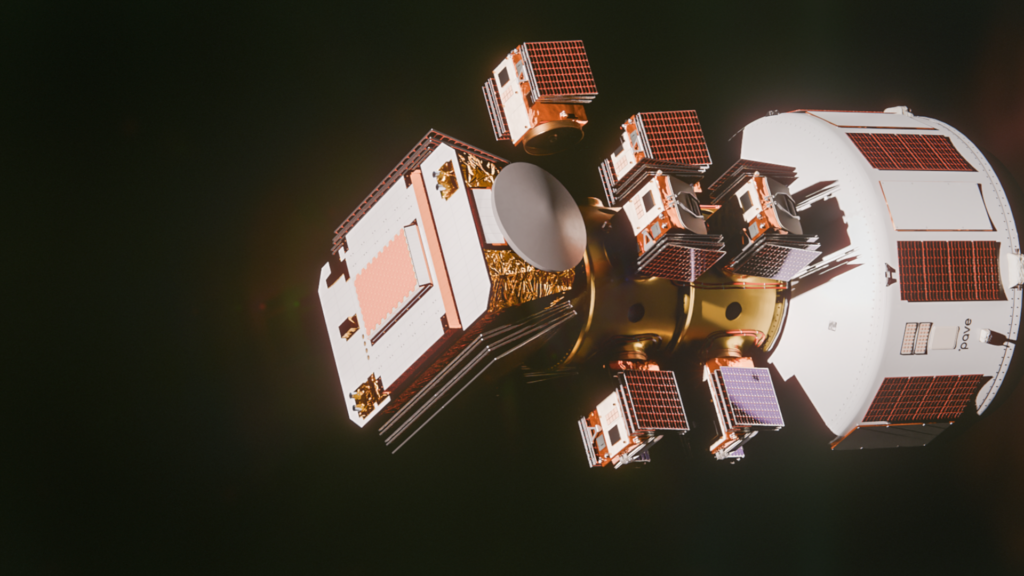
PAVE Space Secures $40M for In-Space Propulsion Tech
The Gist
PAVE Space raised $40M to develop storable bipropellant propulsion systems for in-space mobility.
Explain Like I'm Five
"PAVE Space got money to build special engines that help satellites move around in space more easily and cheaply!"
Deep Intelligence Analysis
The company's vision is to make space more accessible and dynamic, potentially disrupting the traditional satellite deployment and on-orbit services markets. The planned hotfire test, in-space demonstration of the avionics system, and qualification of the in-space mobility platform are crucial milestones for validating their technology.
However, PAVE Space faces significant challenges in bringing its technology to market. The development and qualification of new propulsion systems are inherently complex and require rigorous testing. Market adoption will depend on demonstrating the reliability and cost-effectiveness of their solutions compared to existing options. The company's success will also hinge on its ability to attract and retain top engineering talent and navigate the regulatory landscape of the space industry.
_Context: This intelligence report was compiled by the DailyOrbitalWire Strategy Engine. Verified for Art. 50 Compliance._
Impact Assessment
PAVE's technology aims to reduce the cost of accessing higher orbits and enable dynamic in-space operations. This could significantly impact satellite deployment and on-orbit services.
Read Full Story on Payload SpaceKey Details
- ● PAVE Space raised $40M in seed funding.
- ● The funding will support development of LYOBA and IBEX propulsion systems.
- ● LYOBA is a 45 kN kick-stage engine.
- ● IBEX is a ~200 kg payload-agnostic platform.
Optimistic Outlook
Successful development of PAVE's propulsion systems could lower the barrier to entry for GEO and cislunar missions. The storable propellant technology may simplify launch operations and reduce costs.
Pessimistic Outlook
The company faces technical challenges in developing and qualifying its new propulsion systems. Market adoption will depend on demonstrating reliability and cost-effectiveness.

The Signal, Not
the Noise|
Get the week's top 1% of space-tech intelligence synthesized into a 5-minute read. Join 25,000+ aerospace insiders.
Unsubscribe anytime. No spam, ever.