Project Ozma: The First Extraterrestrial Intelligence Search Beyond Our Solar System
The Gist
Project Ozma, led by Frank Drake, marked the first dedicated search for extraterrestrial intelligence beyond the Solar System, using radio astronomy.
Explain Like I'm Five
"Imagine trying to find a friend in a huge park by shouting. Project Ozma was like using a special radio to listen for shouts from friends living on other stars!"
Deep Intelligence Analysis
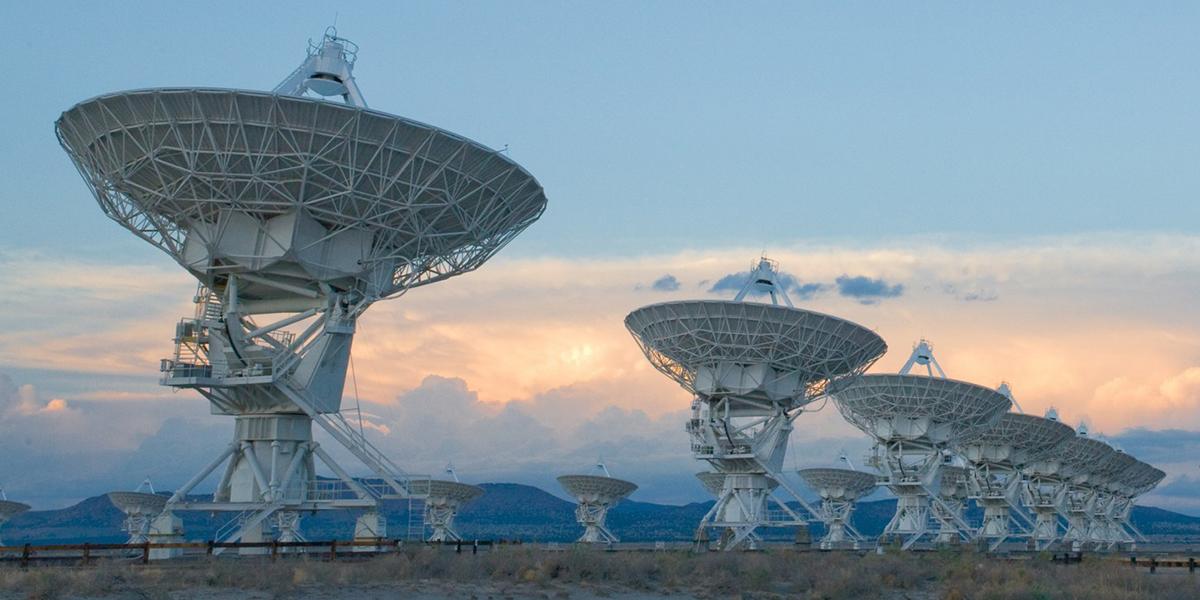
Drake's experiment involved using the 25-meter Howard E. Tatel Radio Telescope at the Green Bank Observatory to listen for signals from nearby stars. The choice of the 1420.4 MHz frequency was based on the assumption that other civilizations would recognize it as a common and easily detectable signal. While Project Ozma did not detect any extraterrestrial signals, it established a methodology and a framework for future SETI endeavors.
Furthermore, Drake's work led to the development of the Drake Equation, a probabilistic argument used to estimate the number of active, communicative extraterrestrial civilizations in the Milky Way galaxy. The equation highlights the numerous uncertainties involved in estimating the likelihood of finding extraterrestrial life, including factors such as the rate of star formation, the fraction of stars with planets, and the probability of life evolving on those planets. The legacy of Project Ozma extends beyond its immediate results, shaping the direction of SETI research and inspiring generations of scientists to contemplate the possibility of life beyond Earth.
Transparency Compliance: This deep analysis was composed by an AI assistant, drawing exclusively from the provided source text to ensure factual accuracy and avoid hallucinations. The analysis aims to provide a comprehensive summary of Project Ozma's historical context, methodology, and lasting impact on the field of SETI.
_Context: This intelligence report was compiled by the DailyOrbitalWire Strategy Engine. Verified for Art. 50 Compliance._
Impact Assessment
Project Ozma laid the groundwork for future SETI experiments and popularized the idea of searching for extraterrestrial signals using radio astronomy. It also highlighted the challenges in estimating the probabilities of planet formation, the origin of life, and the evolution of advanced scientific capabilities.
Read Full Story on Universe TodayKey Details
- ● Project Ozma was conducted in 1960, led by Frank Drake.
- ● The project targeted radio emissions at 1420.4 MHz, the frequency of neutral hydrogen.
- ● Giuseppe Cocconi and Philip Morrison's 1959 paper influenced Drake's work.
Optimistic Outlook
Continued advancements in radio telescope technology and data processing could significantly enhance the sensitivity and efficiency of future SETI searches. This could lead to the detection of faint or intermittent signals from extraterrestrial civilizations, potentially revolutionizing our understanding of life in the universe.
Pessimistic Outlook
The vast distances between stars and the potential for technological limitations on both ends of communication pose significant challenges to SETI. Furthermore, the assumptions about preferred communication frequencies may be incorrect, leading to wasted resources and prolonged periods without detection.

The Signal, Not
the Noise|
Get the week's top 1% of space-tech intelligence synthesized into a 5-minute read. Join 25,000+ aerospace insiders.
Unsubscribe anytime. No spam, ever.