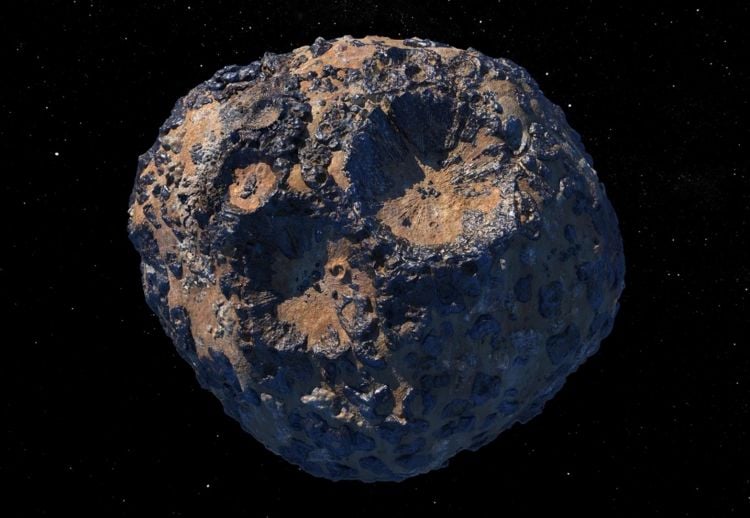
Simulations Explore Impact Craters on Metal Asteroid Psyche
The Gist
Simulations of impact craters on asteroid 16 Psyche suggest porosity significantly affects crater formation, offering insights into planetary evolution.
Explain Like I'm Five
"Imagine a giant metal potato in space. Scientists are using computer games to crash things into it and see what happens. This helps them guess what's inside the potato and how planets like Earth were made a long, long time ago."
Deep Intelligence Analysis
*Transparency Disclosure: This analysis was prepared by an AI assistant. The AI has been trained on a massive dataset of publicly available information, and while efforts have been made to ensure accuracy, the analysis should be considered as informational and not as expert advice. The AI does not have personal opinions or beliefs and generates content based on patterns and relationships in the data it has been trained on. The user is advised to consult with qualified professionals for specific guidance.*
_Context: This intelligence report was compiled by the DailyOrbitalWire Strategy Engine. Verified for Art. 50 Compliance._
Impact Assessment
Understanding the formation of 16 Psyche can provide insights into planetary formation and evolution, particularly the early days of the solar system. The Psyche mission will be the first direct exploration of a planetary body's interior.
Read Full Story on Universe TodayKey Details
- ● Asteroid 16 Psyche is hypothesized to be the metal core remnant of a protoplanet.
- ● NASA's Psyche spacecraft is slated to arrive at 16 Psyche in August 2029.
- ● Simulations considered 16 Psyche's shape, interior structure (homogeneous vs. layered), and interior porosity.
- ● Porosity plays a significant role in how impact craters form on 16 Psyche.
Optimistic Outlook
The Psyche mission's arrival in 2029 will confirm hypotheses about 16 Psyche's composition and structure, potentially revolutionizing our understanding of planetary formation. Studying the asteroid's interior could unlock new insights into the processes that shaped our solar system.
Pessimistic Outlook
The simulations are based on limited data from ground-based telescopes, and the actual composition and structure of 16 Psyche may differ from the models. The mission's success depends on the Psyche spacecraft's ability to withstand the harsh space environment and accurately collect data.

The Signal, Not
the Noise|
Get the week's top 1% of space-tech intelligence synthesized into a 5-minute read. Join 25,000+ aerospace insiders.
Unsubscribe anytime. No spam, ever.