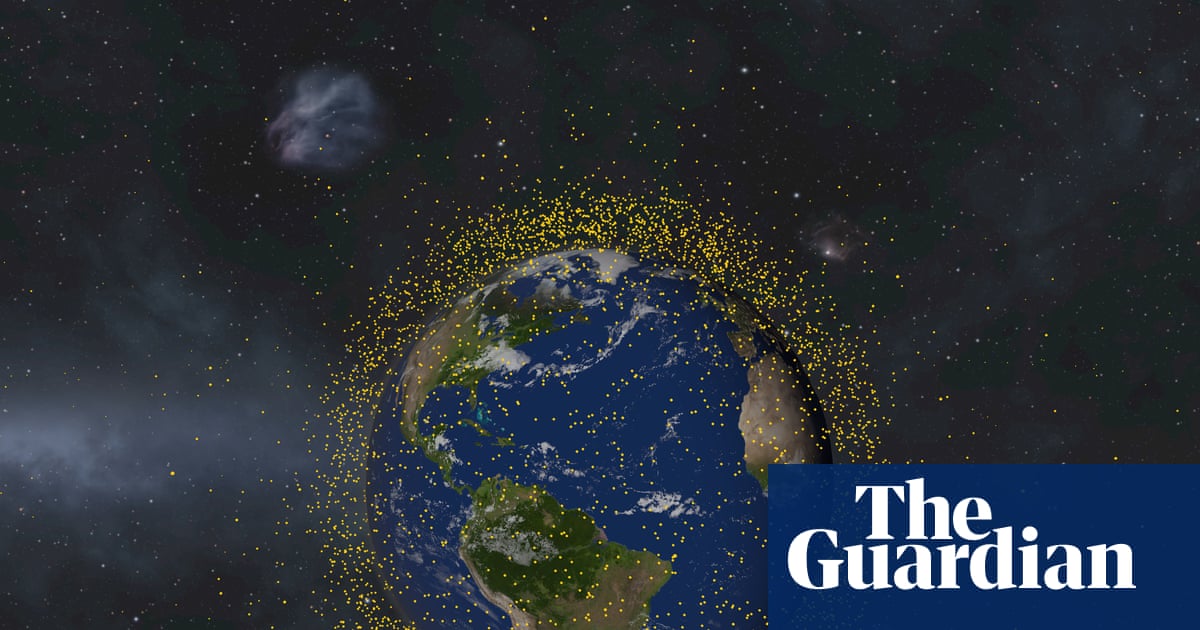
Orbital Congestion: Satellite Collisions Could Trigger Chain Reaction
The Gist
Increased orbital activity raises collision risks, potentially leading to a debris cascade that could hinder space access.
Explain Like I'm Five
"Imagine space is like a highway, and satellites are cars. If too many cars crash, the road gets blocked with junk, making it hard for anyone to drive there anymore. We need to clean up the junk so everyone can use the space highway safely."
Deep Intelligence Analysis
Currently, satellite operators rely on constant monitoring and maneuvering to avoid collisions. However, this system is fragile and dependent on consistent cooperation. The development and deployment of active debris removal technologies are crucial to mitigating the long-term risk. Furthermore, international agreements and regulations are needed to ensure responsible behavior in space and prevent the further accumulation of debris. The economic and strategic implications of losing access to certain orbits are substantial, underscoring the urgency of addressing this issue.
Jonathan McDowell's perspective, based on decades of tracking orbital objects, lends credibility to the concerns raised. His assessment that the current danger level is 'sort of tolerable' but 'fragile' emphasizes the need for proactive measures to prevent a catastrophic scenario. The article's methodology, relying on data from reputable sources like Space-Track.org and CelesTrak, strengthens its factual basis.
_Context: This intelligence report was compiled by the DailyOrbitalWire Strategy Engine. Verified for Art. 50 Compliance._
Impact Assessment
Uncontrolled orbital debris poses a significant threat to current and future space operations. A cascade effect could render certain orbits unusable, impacting communication, navigation, and scientific research.
Read Full Story on Hacker News SpaceKey Details
- ● There could be over 60,000 active satellites by the end of the decade.
- ● A 2009 collision between a US satellite and a defunct Russian satellite created thousands of debris fragments.
- ● Satellite operators currently move their craft daily to avoid collisions.
Optimistic Outlook
Active debris removal technologies, such as nets, robotic arms, and lasers, are being tested to mitigate the risk. Improved international cooperation and traffic management could also help maintain a sustainable space environment.
Pessimistic Outlook
Failure to address the growing debris problem could lead to a self-sustaining cascade, severely limiting or preventing space launches. Lack of cooperation or a single major collision could trigger this scenario.

The Signal, Not
the Noise|
Get the week's top 1% of space-tech intelligence synthesized into a 5-minute read. Join 25,000+ aerospace insiders.
Unsubscribe anytime. No spam, ever.