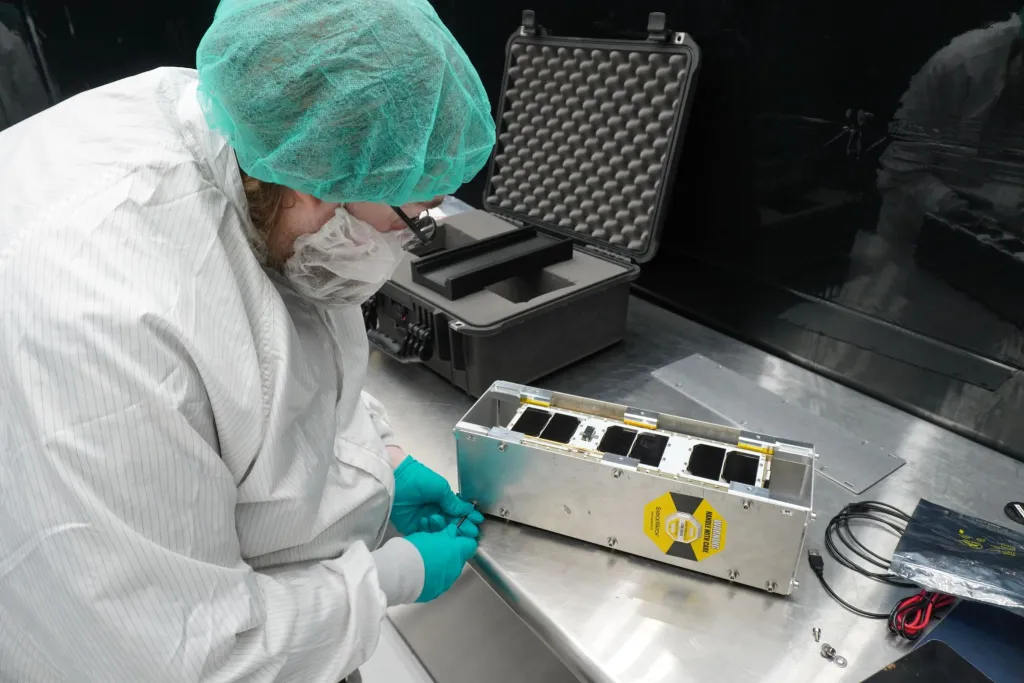
SNAPPY CubeSat Launches to Test Space-Based Neutrino Detection
The Gist
SNAPPY CubeSat launched May 3rd, 2026, to test neutrino detection in space, potentially enabling less constrained and expensive detectors.
Explain Like I'm Five
"Scientists launched a tiny satellite to try and catch tiny particles from the sun in space, which could help us learn more about the universe!"
Deep Intelligence Analysis
_Context: This intelligence report was compiled by the DailyOrbitalWire Strategy Engine. Verified for Art. 50 Compliance._
Impact Assessment
Successful space-based neutrino detection could revolutionize astrophysics and our understanding of fundamental particles.
Read Full Story on Universe TodayKey Details
- ● SNAPPY launched on a Falcon 9 rocket from Vandenberg Space Force Base on May 3rd, 2026.
- ● The mission is a technology demonstrator for space-based neutrino detection.
- ● The CubeSat contains a prototype solar neutrino detector weighing about half a pound.
- ● SNAPPY was funded by NASA's NIAC program.
Optimistic Outlook
If SNAPPY succeeds, it could lead to larger, more capable space-based neutrino observatories, unlocking new insights into the universe.
Pessimistic Outlook
The mission is a technology demonstrator, and success is not guaranteed; noise reduction in space is a significant challenge.

The Signal, Not
the Noise|
Get the week's top 1% of space-tech intelligence synthesized into a 5-minute read. Join 25,000+ aerospace insiders.
Unsubscribe anytime. No spam, ever.