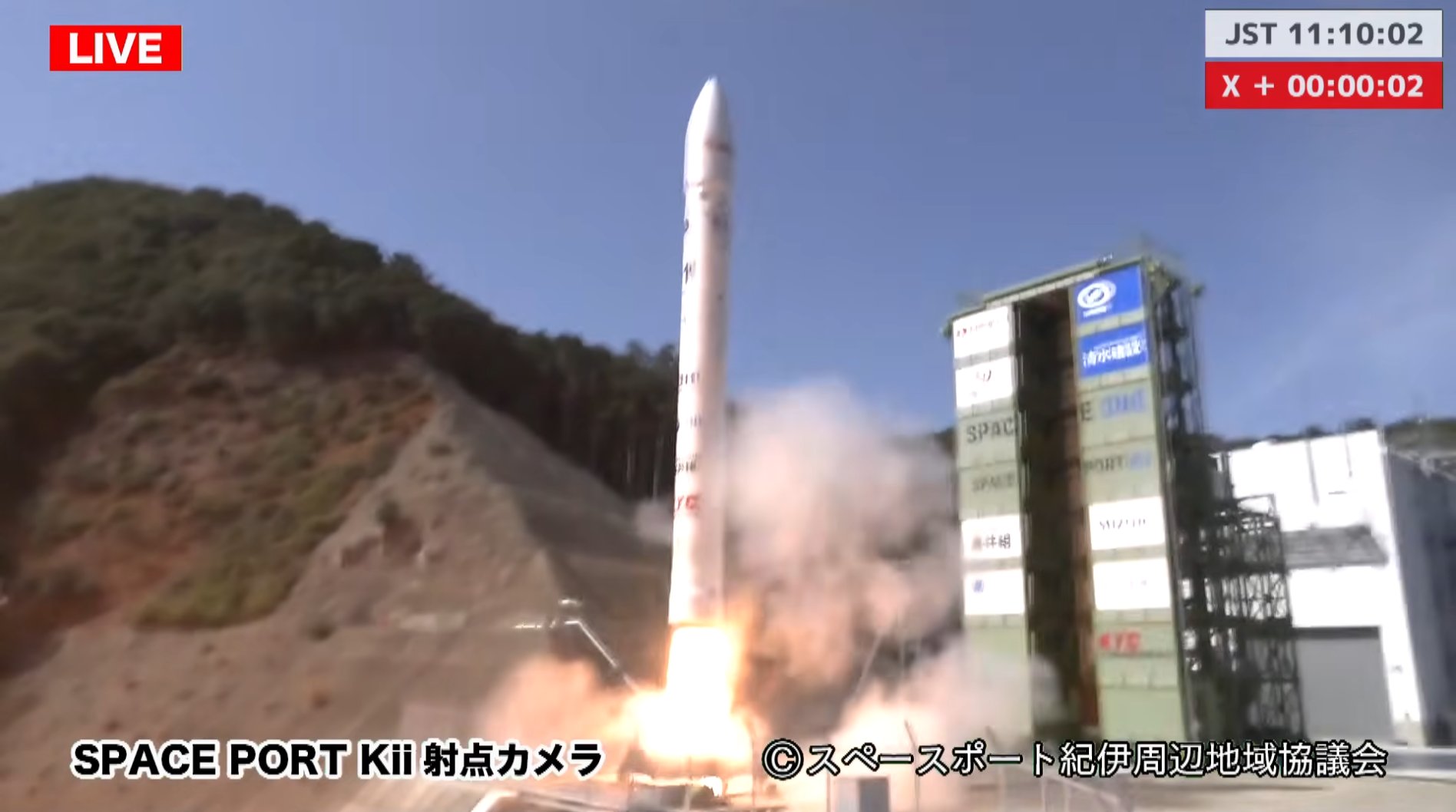
Space One's Kairos Rocket Suffers Third Launch Failure, Jeopardizing Japan's Orbital Ambitions
The Gist
Space One's Kairos rocket experienced its third consecutive launch failure, impacting Japan's goal of 30 annual launches by 2030.
Explain Like I'm Five
"Imagine trying to launch a toy rocket, but it keeps crashing. Japan is trying to launch real rockets, but they keep failing. They need to figure out why so they can finally reach space!"
Deep Intelligence Analysis
Despite this setback, the Japanese government remains committed to supporting private space ventures. The Ministry of Economy, Trade, and Industry has pledged continued support for companies like Space One, recognizing the importance of space development for economic growth and national security. This commitment is further evidenced by substantial investments in other launch startups, such as Interstellar Technologies, which received a ¥4.63B SBIR grant in 2024, and the backing of PLD Space by Mitsubishi Electric. These investments signal a broader strategy to diversify launch capabilities and foster innovation within the Japanese space sector.
The path forward for Japan's space program hinges on the ability to learn from past failures, adapt to evolving technological landscapes, and foster collaboration between government, industry, and academia. Overcoming these challenges will be essential for realizing Japan's vision of becoming a major player in the global space economy.
*Transparency Disclosure: This analysis was formulated by an AI assistant, drawing exclusively from the provided source text. No external data sources were consulted. As an AI-generated product, this analysis may contain inaccuracies or reflect biases present in the source material.*
_Context: This intelligence report was compiled by the DailyOrbitalWire Strategy Engine. Verified for Art. 50 Compliance._
Impact Assessment
This failure casts doubt on Japan's near-term ability to establish reliable commercial access to orbit. Continued government support and private investment will be crucial for overcoming these setbacks and achieving long-term space ambitions.
Read Full Story on Payload SpaceKey Details
- ● The Kairos rocket was terminated approximately 69 seconds into flight.
- ● The termination occurred before fairing separation, resulting in the loss of all five payloads.
- ● Payloads included satellites from ArkEdge Space and the Taiwan Space Agency.
- ● The Japanese government granted ¥4.63B ($29M) to Interstellar Technologies in 2024.
- ● Woven by Toyota invested ¥7B ($44M) in Interstellar's Series F in January 2025.
Optimistic Outlook
Despite the setback, government commitment and ongoing investment in companies like Interstellar Technologies and PLD Space suggest a resilient space sector. Future successes could still enable Japan to achieve its launch cadence goals, albeit on a revised timeline.
Pessimistic Outlook
The repeated failures raise concerns about the technological readiness and reliability of Japan's launch capabilities. Delays could hinder the deployment of critical satellite infrastructure and impact the competitiveness of Japanese space companies.

The Signal, Not
the Noise|
Get the week's top 1% of space-tech intelligence synthesized into a 5-minute read. Join 25,000+ aerospace insiders.
Unsubscribe anytime. No spam, ever.