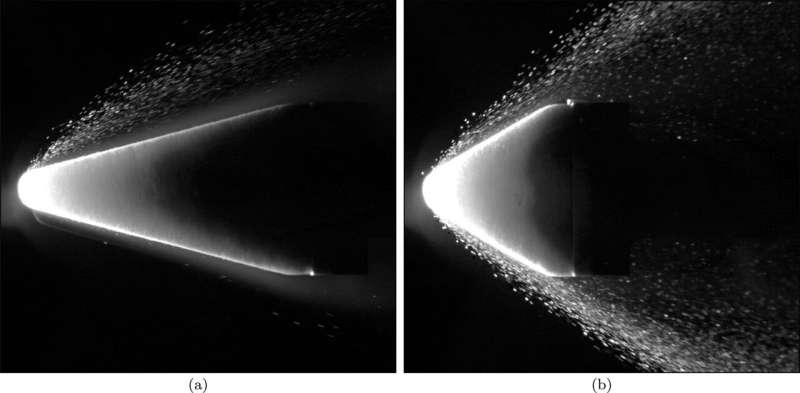
Spacecraft Heat Shields May 'Burst' in Alien Atmospheres
The Gist
New research indicates heat shields can violently shed material (spallation) in oxygen-deprived atmospheres, impacting spacecraft design.
Explain Like I'm Five
"Imagine your spaceship's shield is like a cookie. Usually, it slowly melts when it gets hot. But in some places, like Titan, it can explode into crumbs! Scientists are trying to figure out how to stop that."
Deep Intelligence Analysis
Transparency: This analysis is based on a news report about research conducted at the University of Illinois Urbana-Champaign. The AI identified the key findings of the research, its implications for spacecraft design, and potential avenues for future research. No external data sources were consulted.
_Context: This intelligence report was compiled by the DailyOrbitalWire Strategy Engine. Verified for Art. 50 Compliance._
Impact Assessment
Understanding spallation is crucial for missions to planets and moons with thin or oxygen-deprived atmospheres, like Titan. This research highlights the need for improved heat shield designs to ensure spacecraft survival.
Read Full Story on Universe TodayKey Details
- ● Spallation is a heat shield degradation mechanism involving violent material bursts.
- ● PICA (Phenolic Impregnated Carbon Ablator) is a successful heat shield material.
- ● UIUC researchers tested PICA in nitrogen plasma, observing unsteady particle release.
- ● Lack of oxygen causes dramatic changes in heat shield performance during atmospheric entry.
- ● Historically, spallation has been approximated with a simple mathematical multiplier.
Optimistic Outlook
Developing new materials and designs that account for spallation could enable safer and more reliable missions to diverse planetary environments. Improved modeling of spallation could lead to more efficient heat shield designs, reducing weight and cost.
Pessimistic Outlook
Unpredictable spallation events could lead to catastrophic heat shield failure and mission loss. The complexity of modeling spallation may hinder the development of effective mitigation strategies.

The Signal, Not
the Noise|
Get the week's top 1% of space-tech intelligence synthesized into a 5-minute read. Join 25,000+ aerospace insiders.
Unsubscribe anytime. No spam, ever.