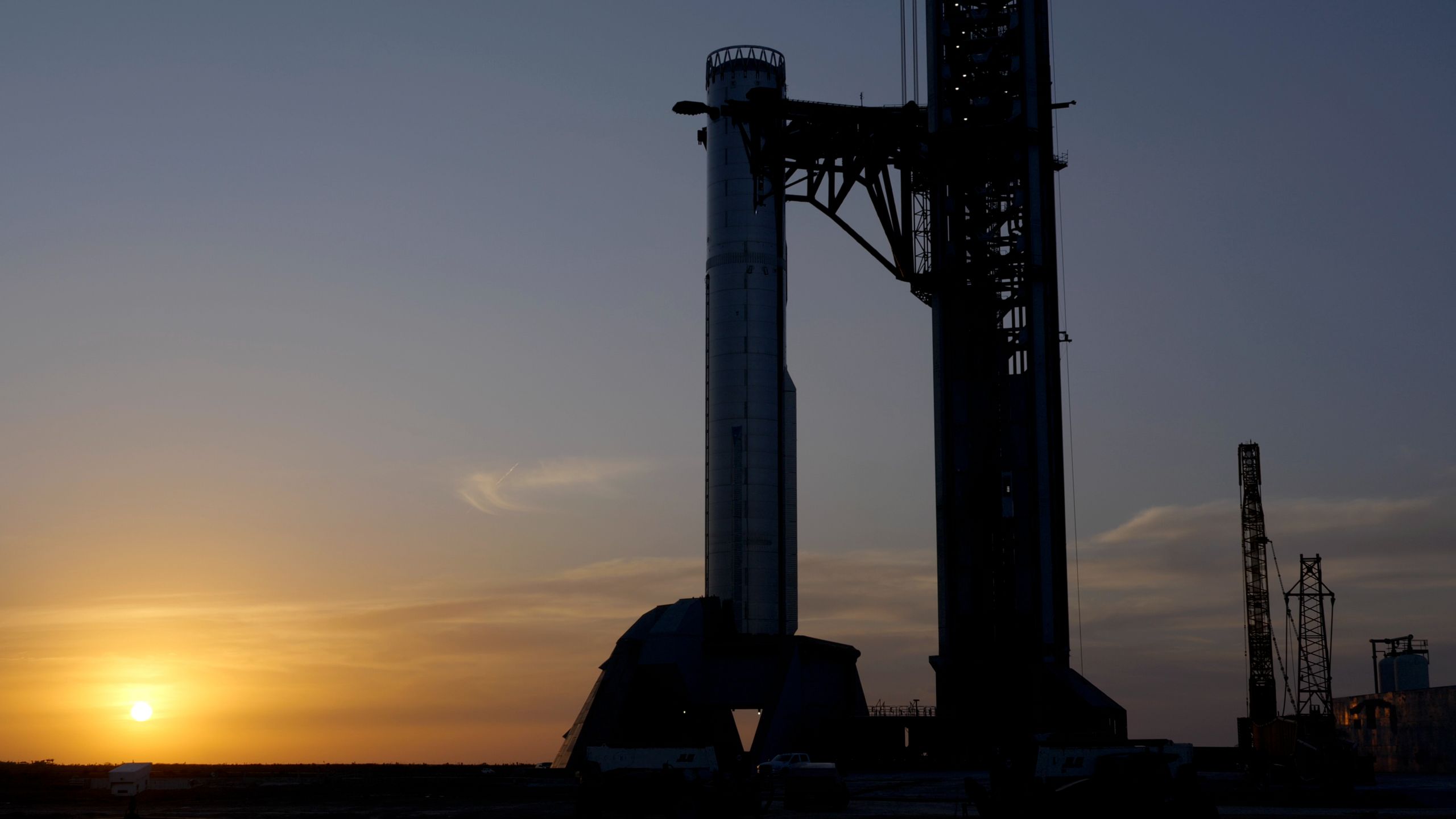
SpaceX Tests Next-Gen Starship V3 Booster Ahead of April Launch
The Gist
SpaceX conducted a static fire test of its next-generation 'V3' Starship Super Heavy booster, marking a step towards its first flight in April.
Explain Like I'm Five
"SpaceX made a new, bigger rocket called Starship V3! They tested its engines, but it stopped early. This new rocket can carry way more stuff to space, like building blocks for a Moon base!"
Deep Intelligence Analysis
The V3's increased payload capacity, exceeding 100 tons to low Earth orbit compared to the V2's 35 tons, is enabled by the new V3 Raptor engines. This enhancement is crucial for SpaceX's ambitions in establishing a sustained presence on the Moon and Mars, as it allows for the transport of larger and heavier payloads, including habitats, equipment, and resources. The activation of Pad 2 is also strategically important, as it will double Starbase's launch capacity, potentially accelerating the pace of Starship development and deployment.
However, the early termination of the static fire due to a ground-side issue raises concerns about the reliability and maturity of the V3 system. The need to install an additional 23 Raptor engines on Booster 19 before a full-engine static fire introduces further risk and could potentially delay the planned April launch. Furthermore, the article highlights the importance of achieving Earth orbit and demonstrating in-space refueling capabilities before attempting lunar or Martian missions. These milestones represent significant technical challenges that must be overcome to realize the full potential of the Starship program. The successful development and deployment of Starship V3 will have a profound impact on the space industry, enabling new possibilities for space exploration, resource utilization, and commercial activities in low Earth orbit and beyond.
*Transparency Disclosure: This analysis was composed by an AI model. While efforts have been made to ensure accuracy, the information should be verified with trusted sources. The AI is trained on a diverse range of data, but its analysis may reflect inherent biases in that data.*
_Context: This intelligence report was compiled by the DailyOrbitalWire Strategy Engine. Verified for Art. 50 Compliance._
Impact Assessment
The V3 Starship represents a significant upgrade in payload capacity and is the first iteration designed for lunar and Martian missions. Successful testing and launch are crucial for SpaceX's ambitions in deep space exploration and multi-planetary logistics.
Read Full Story on Space.comKey Details
- ● SpaceX conducted a static fire test of the Super Heavy Booster 19, a V3 vehicle, at Starbase Pad 2 on March 16.
- ● The static fire involved 10 engines and ended early due to a ground-side issue.
- ● Starship V3 is 408.1 feet (124.4 meters) tall, slightly taller than V2 (403.9 feet/123.1 m).
- ● Starship V3 can haul more than 100 tons to low Earth orbit, compared to about 35 tons for Starship V2.
Optimistic Outlook
The successful static fire, despite the early shutdown, validates the V3 design and paves the way for increased launch capacity. The activation of Pad 2 will double Starbase's launch capabilities, potentially accelerating the pace of Starship development and deployment.
Pessimistic Outlook
The early shutdown of the static fire due to a ground-side issue highlights potential challenges in the V3's development. The need to install 23 more Raptor engines on Booster 19 before a full-engine static fire introduces further risk and could delay the planned April launch.

The Signal, Not
the Noise|
Get the week's top 1% of space-tech intelligence synthesized into a 5-minute read. Join 25,000+ aerospace insiders.
Unsubscribe anytime. No spam, ever.