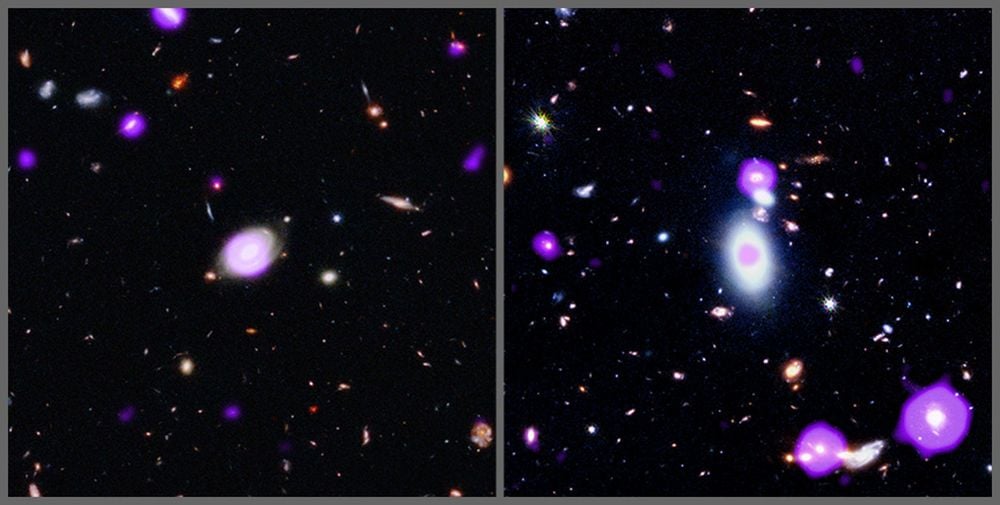
Supermassive Black Hole Growth Slowing Down: A Cosmic Mystery
The Gist
Supermassive black holes (SMBH) grew much faster in the early universe (Cosmic Noon) than they do today due to the availability of cold gas.
Explain Like I'm Five
"Imagine black holes in the middle of galaxies used to eat a lot more when the universe was young. Now they're not as hungry because their favorite food (cold gas) is harder to find."
Deep Intelligence Analysis
_Context: This intelligence report was compiled by the DailyOrbitalWire Strategy Engine. Verified for Art. 50 Compliance._
Impact Assessment
Understanding SMBH growth helps scientists understand galaxy evolution, as SMBH mass correlates with host galaxy properties. The slowdown in SMBH growth presents a puzzle in understanding the co-evolution of galaxies and their central black holes.
Read Full Story on Universe TodayKey Details
- ● SMBH growth peaked approximately 9.5 to 10.5 billion years ago (z ≈ 1.5–2).
- ● Modern SMBH accretion rates are limited by the availability of cold gas.
- ● Researchers analyzed observations of 1.3 million galaxies and 8,000 SMBH using Chandra, XMM-Newton, and eROSITA.
Optimistic Outlook
Advanced X-ray telescopes like Chandra are providing crucial data to unravel the mystery of SMBH growth. Future research may reveal new insights into the interplay between SMBHs and their host galaxies.
Pessimistic Outlook
The limited availability of cold gas poses a fundamental constraint on SMBH growth, potentially impacting galaxy formation. The slowdown may indicate a future decline in galactic activity.

The Signal, Not
the Noise|
Get the week's top 1% of space-tech intelligence synthesized into a 5-minute read. Join 25,000+ aerospace insiders.
Unsubscribe anytime. No spam, ever.