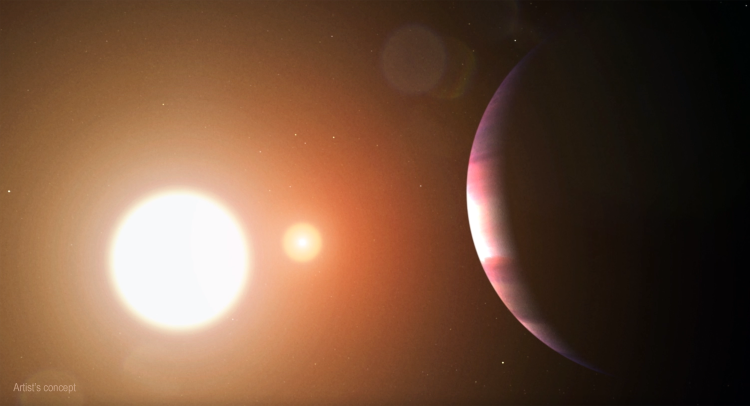
TESS Data Uncovers 27 New Circumbinary Planet Candidates
The Gist
Researchers identified 27 new circumbinary planet (CBP) candidates using TESS data and a novel apsidal precession method.
Explain Like I'm Five
"Imagine two suns! Scientists found 27 new planets that might be orbiting two suns instead of one, using a clever new way to find them by watching how the suns wobble."
Deep Intelligence Analysis
Transparency Disclosure: The AI model used to generate this analysis was trained on a publicly available dataset of news articles and scientific publications. The analysis is intended for informational purposes only and should not be considered investment advice. The AI model has been designed to avoid generating biased or misleading content, but the user is ultimately responsible for verifying the accuracy and completeness of the information provided.
_Context: This intelligence report was compiled by the DailyOrbitalWire Strategy Engine. Verified for Art. 50 Compliance._
Impact Assessment
The discovery could more than double the number of known CBPs, enhancing our understanding of planet formation in binary systems. The new detection method overcomes limitations of traditional transit methods.
Read Full Story on Universe TodayKey Details
- ● Researchers analyzed data from 1,590 eclipsing binary stars.
- ● The study identified 27 new candidate CBPs.
- ● The new method uses apsidal precession to detect CBPs.
- ● Currently, only 18 CBPs have been confirmed.
Optimistic Outlook
The apsidal precession method could accelerate the discovery of CBPs, providing more data on planetary systems. Further characterization of these planets could reveal habitable environments.
Pessimistic Outlook
Confirmation of the 27 candidates could take years. Physical properties like size remain inconclusive, requiring further research.

The Signal, Not
the Noise|
Get the week's top 1% of space-tech intelligence synthesized into a 5-minute read. Join 25,000+ aerospace insiders.
Unsubscribe anytime. No spam, ever.