BREAKING: • Webb & Hubble Find Massive Star Clusters Emerge Faster • Kamchatka's Shiveluch Volcano Shows Continued Activity in 2026 • Contextualizing the Probability of Near-Earth Object Impacts • Constraints on Extraterrestrial Radio Broadcasts from Inhabited Galaxies • AI-Powered Detection of Lensed Gravitational Waves in Millihertz Band
Webb & Hubble Find Massive Star Clusters Emerge Faster
Satellites May 06
ESA News // 2026-05-06

Webb & Hubble Find Massive Star Clusters Emerge Faster

THE GIST: Massive star clusters clear their gas shrouds faster, illuminating galaxies earlier, according to Webb and Hubble data.

IMPACT: Understanding star cluster evolution is crucial for unlocking secrets of galactic evolution and star formation at a galactic scale. This research provides insights into how star formation impacts the broader galactic environment, influencing where and how planets can form.
Optimistic
Pessimistic
ELI5
Deep Dive // Full Analysis
Kamchatka's Shiveluch Volcano Shows Continued Activity in 2026
Satellites May 06
NASA Breaking News // 2026-05-06

Kamchatka's Shiveluch Volcano Shows Continued Activity in 2026

THE GIST: Landsat 9 captured images of Shiveluch volcano's ongoing activity, including lava dome growth and thermal anomalies, in April 2026.

IMPACT: Monitoring Shiveluch's activity is crucial for understanding volcanic processes and mitigating potential hazards. Satellite imagery provides valuable data for tracking changes in the volcano's behavior and assessing risks to surrounding areas.
Optimistic
Pessimistic
ELI5
Deep Dive // Full Analysis
Contextualizing the Probability of Near-Earth Object Impacts
Defense & Policy May 06
arXiv Earth & Planetary // 2026-05-06

Contextualizing the Probability of Near-Earth Object Impacts

THE GIST: The probability of a large NEO impact is compared to other preventable causes of death.

IMPACT: Understanding the relative risk of NEO impacts informs resource allocation for planetary defense and mitigation strategies.
Optimistic
Pessimistic
ELI5
Deep Dive // Full Analysis
Constraints on Extraterrestrial Radio Broadcasts from Inhabited Galaxies
Satellites May 06
arXiv Instrumentation // 2026-05-06

Constraints on Extraterrestrial Radio Broadcasts from Inhabited Galaxies

THE GIST: Limits are set on artificial radio broadcasts from galaxies, constraining the abundance of Kardashev Type III civilizations.

IMPACT: Understanding the prevalence of extraterrestrial broadcasts helps refine SETI strategies and provides insights into the potential distribution of advanced civilizations.
Optimistic
Pessimistic
ELI5
Deep Dive // Full Analysis
AI-Powered Detection of Lensed Gravitational Waves in Millihertz Band
Satellites May 06
arXiv Instrumentation // 2026-05-06

AI-Powered Detection of Lensed Gravitational Waves in Millihertz Band

THE GIST: A new AI network, DCL-xLSTM, efficiently detects lensed gravitational waves in the millihertz band for space-based detectors.

IMPACT: Efficient detection of lensed gravitational waves can provide new insights into cosmology and fundamental physics. This AI-driven approach accelerates candidate event screening for space-based GW detectors.
Optimistic
Pessimistic
ELI5
Deep Dive // Full Analysis
Artificial Precision Timing Array for DeciHertz Gravitational Wave Detection
Satellites May 06
arXiv Instrumentation // 2026-05-06

Artificial Precision Timing Array for DeciHertz Gravitational Wave Detection

THE GIST: A proposed solar system array of satellites with atomic clocks could detect decihertz gravitational waves.

IMPACT: Detecting decihertz gravitational waves could reveal insights into black hole mergers and the early universe. APTA offers a novel approach, leveraging advancements in atomic clock technology for space-based gravitational wave detection.
Optimistic
Pessimistic
ELI5
Deep Dive // Full Analysis
Public Dataset Released for Developing Exoplanetary Atmosphere Data Reduction Pipelines
Satellites May 06
arXiv Instrumentation // 2026-05-06

Public Dataset Released for Developing Exoplanetary Atmosphere Data Reduction Pipelines

THE GIST: A public dataset of Ariel simulated observations is released to aid in developing and benchmarking data reduction pipelines for exoplanetary atmosphere studies.

IMPACT: Detecting and characterizing exoplanet atmospheres is challenging due to faint signals and instrumental noise. This dataset provides a valuable resource for developing robust data reduction methods.
Optimistic
Pessimistic
ELI5
Deep Dive // Full Analysis
AnomalyMatch AI Discovers 58 Gravitational Lenses in JWST Data
Satellites May 06
arXiv Instrumentation // 2026-05-06

AnomalyMatch AI Discovers 58 Gravitational Lenses in JWST Data

THE GIST: AnomalyMatch, a semi-supervised learning method, identified 58 gravitational lenses in JWST NIRCam data, including 37 previously uncatalogued lenses.

IMPACT: Gravitational lenses provide a unique tool to probe cosmology and astrophysics at high redshift. This discovery demonstrates the potential of AI for large-scale searches in JWST archives.
Optimistic
Pessimistic
ELI5
Deep Dive // Full Analysis
Gaia's 'First Look' System Monitors Data Quality and Instrument Health with Early Warnings
Satellites May 06
arXiv Instrumentation // 2026-05-06

Gaia's 'First Look' System Monitors Data Quality and Instrument Health with Early Warnings

THE GIST: The Gaia First Look (FL) system monitors data quality and instrument health, providing early warnings for potential issues during the ESA Gaia mission.

IMPACT: Consistent data quality is crucial for the 10+ year Gaia mission. The First Look system ensures early detection and mitigation of potential problems, safeguarding the mission's scientific output.
Optimistic
Pessimistic
ELI5
Deep Dive // Full Analysis
AI Pipeline Automates Satellite Streak Detection in Astronomical Images
Satellites May 06
arXiv Instrumentation // 2026-05-06

AI Pipeline Automates Satellite Streak Detection in Astronomical Images

THE GIST: StreakMind, an AI pipeline, automates the detection and analysis of satellite streaks in astronomical images, integrating results into a database.

IMPACT: Automated detection and characterization of satellite streaks are crucial for data quality control and monitoring objects in Earth orbit. This system contributes to improved space situational awareness by reliably detecting faint streaks.
Optimistic
Pessimistic
ELI5
Deep Dive // Full Analysis
GPU-Class AI Compute Race Heats Up in Orbit
Satellites May 05
Hacker News Space // 2026-05-05

GPU-Class AI Compute Race Heats Up in Orbit

THE GIST: The race to deploy GPU-class AI compute in orbit intensifies with competing approaches for radiation hardening and neuromorphic processing.
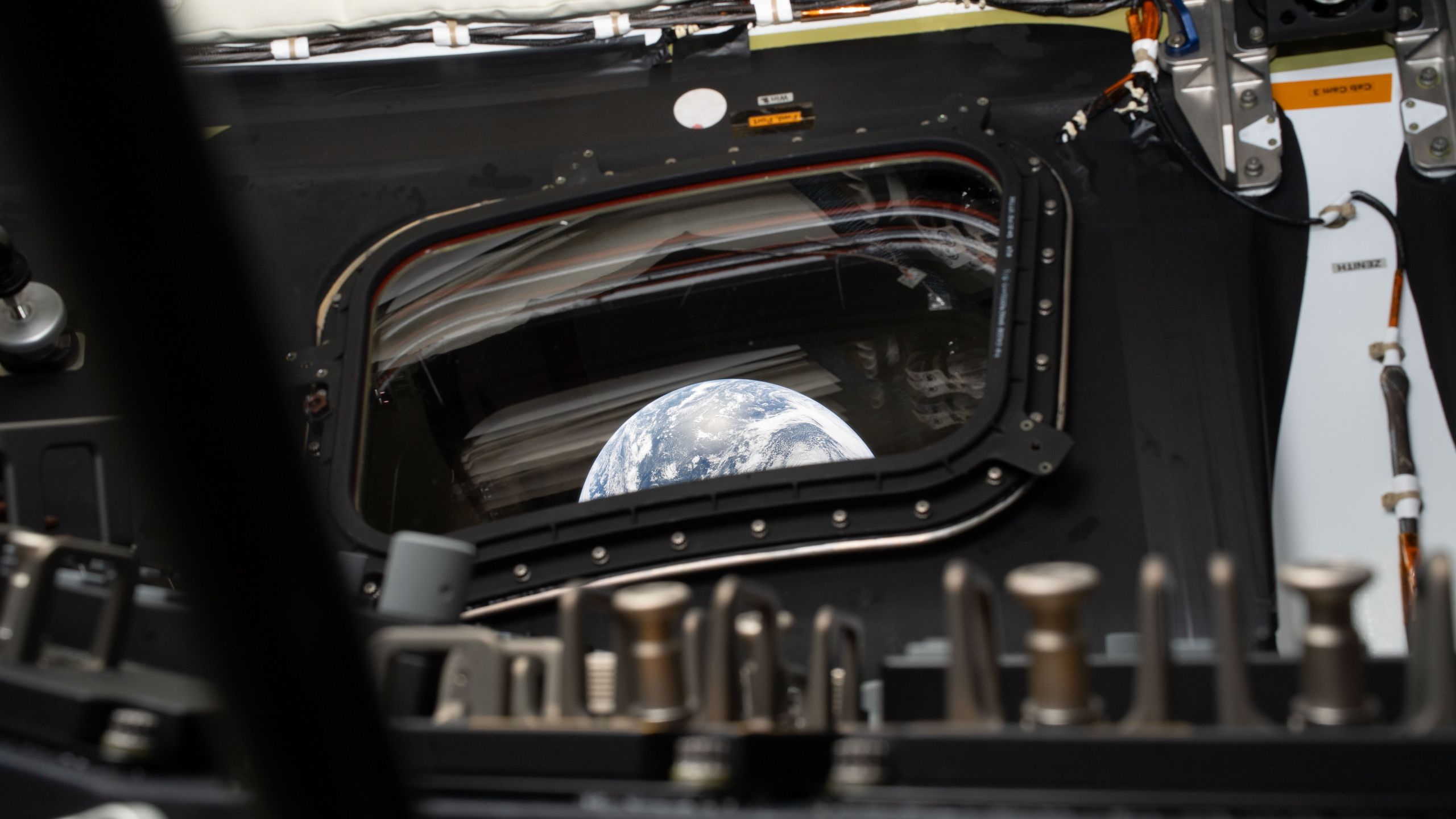
IMPACT: Onboard AI processing reduces latency and bandwidth requirements for satellite operations. This competition will drive innovation in rad-hardened computing and enable new space-based applications.
Optimistic
Pessimistic
ELI5
Deep Dive // Full Analysis
NASA Releases Stunning Artemis 2 Mission Photos
Satellites May 05
Space.com // 2026-05-05

NASA Releases Stunning Artemis 2 Mission Photos

THE GIST: NASA released over 12,000 photos from the Artemis 2 mission, showcasing Earth, the Moon, and the astronaut's unique perspective.

IMPACT: These images provide a unique perspective on space travel and the beauty of our solar system. They inspire future generations of explorers and highlight the achievements of the Artemis program.
Optimistic
Pessimistic
ELI5
Deep Dive // Full Analysis
Previous
Page 34 of 134
Next
```