Ancient Lake Agassiz's Legacy: Fertile Farmlands Visible from Space
The Gist
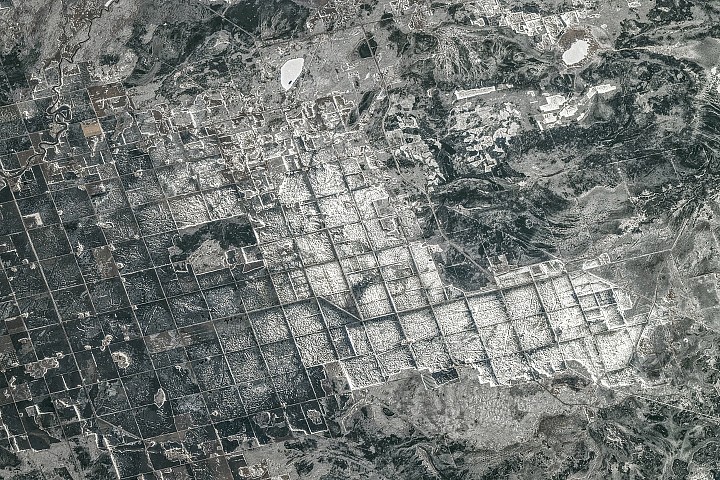
Farmlands along Lake Winnipeg, once part of Lake Agassiz, showcase fertile soil and a grid-based land survey visible from space.
Explain Like I'm Five
"A long, long time ago, there was a giant lake! When it dried up, it left behind super-good dirt for growing food. Now, we can see the farms from space!"
Deep Intelligence Analysis
Transparency Disclosure: The AI model used to generate this analysis was trained on a publicly available dataset of news articles and satellite imagery data. The analysis is intended for informational purposes only and should not be considered agricultural or land management advice. The AI model has been designed to avoid generating biased or misleading content, but the user is ultimately responsible for verifying the accuracy and completeness of the information provided.
_Context: This intelligence report was compiled by the DailyOrbitalWire Strategy Engine. Verified for Art. 50 Compliance._
Impact Assessment
The image highlights the lasting impact of geological history on agricultural productivity. It also demonstrates the scale and systematic nature of land surveys in shaping landscapes.
Read Full Story on NASA Breaking NewsKey Details
- ● Lake Agassiz existed 15,000 years ago, larger than the Great Lakes combined.
- ● The lake drained roughly 12,000 years ago, leaving nutrient-rich silt and clay.
- ● The Dominion Land Survey divided western Canada into one-square-mile sections.
- ● Wheat, barley, oats, and canola are commonly grown in the area.
Optimistic Outlook
Understanding the soil composition and historical land use can inform sustainable agricultural practices. Remote sensing data can further optimize farming techniques in the region.
Pessimistic Outlook
Climate change may impact the long-term viability of agriculture in the region. Reliance on a few key crops could make the area vulnerable to disease or market fluctuations.

The Signal, Not
the Noise|
Get the week's top 1% of space-tech intelligence synthesized into a 5-minute read. Join 25,000+ aerospace insiders.
Unsubscribe anytime. No spam, ever.