Antarctic Telescope Yields Exoplanet Insights
The Gist
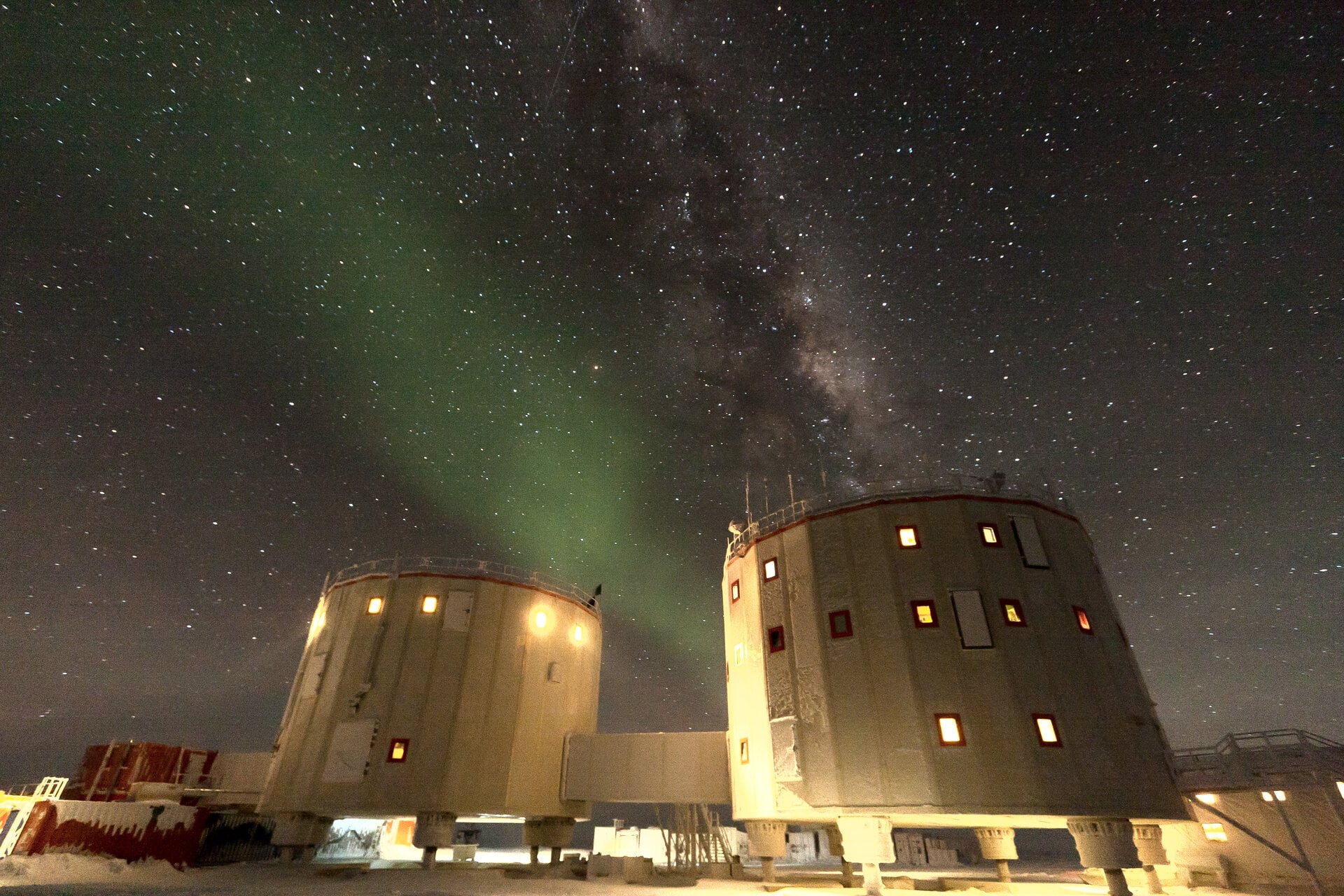
The ASTEP telescope in Antarctica has contributed to the discovery of twenty to thirty transiting exoplanets.
Explain Like I'm Five
"Imagine a small telescope in the coldest place on Earth helping us find planets around other stars! It's like having a super-powered magnifying glass in a giant freezer."
Deep Intelligence Analysis
The telescope's location on the high Antarctic plateau provides access to extended periods of continuous night, a significant advantage for observing transiting exoplanets. The planned upgrades, including a new camera system, mount, and a ten-meter tower, are expected to further enhance its observational capabilities. The potential for a larger telescope in the future could solidify ASTEP's role in exoplanet research.
However, the extreme Antarctic environment poses considerable challenges. Maintaining and operating the telescope requires overcoming logistical difficulties and enduring harsh weather conditions. These factors could potentially limit observational opportunities and increase operational costs. Despite these challenges, ASTEP's contributions to exoplanetary science demonstrate the value of pursuing astronomical research in unconventional locations. The collaboration with other telescopes, such as NASA's TESS, highlights the importance of combining ground-based and space-based observations for a comprehensive understanding of exoplanetary systems.
*Transparency Disclosure: This analysis was generated by an AI model. While efforts have been made to ensure accuracy, the content should be critically evaluated and cross-referenced with reliable sources. The AI is trained on a broad range of data, and its interpretations may reflect prevailing viewpoints in that data.*
_Context: This intelligence report was compiled by the DailyOrbitalWire Strategy Engine. Verified for Art. 50 Compliance._
Impact Assessment
The ASTEP telescope's location provides access to three-month-long continuous night during the Antarctic winter, enabling unique astronomical observations. Its contributions to exoplanet discovery and characterization, particularly of systems like TOI-201, advance our understanding of planetary formation and evolution.
Read Full Story on Universe TodayKey Details
- ● ASTEP is a 40-cm telescope located 1200km inland on the Antarctic plateau.
- ● ASTEP contributed to characterizing TOI-201, a system with a 'super Earth', a gas giant, and a brown dwarf.
- ● The TOI-201 system orbits an F-spectral type star, 30% more massive and bigger than the Sun, and only 600 million years old.
Optimistic Outlook
Future upgrades, including a new camera system, mount, and a ten-meter tower, promise even better observing conditions for ASTEP. A larger telescope in the future could further enhance its capabilities in exoplanet research.
Pessimistic Outlook
The harsh Antarctic environment presents significant challenges for maintaining and operating the telescope. Logistical difficulties and extreme weather conditions could limit observational opportunities and increase operational costs.

The Signal, Not
the Noise|
Get the week's top 1% of space-tech intelligence synthesized into a 5-minute read. Join 25,000+ aerospace insiders.
Unsubscribe anytime. No spam, ever.