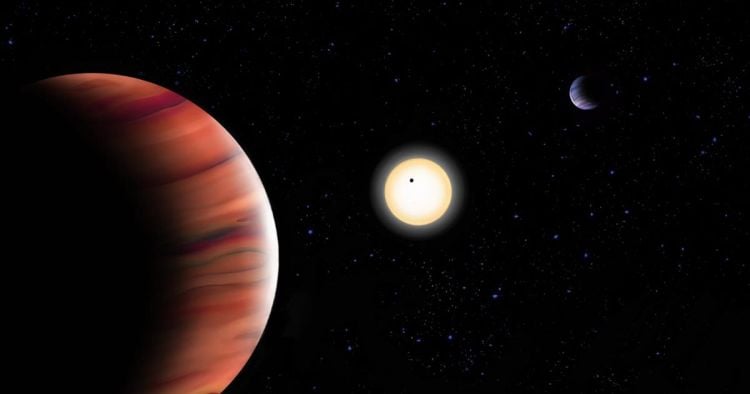
Exoplanet System TOI-201 Exhibits Wobbling Orbits, Changing Transit Times
The Gist
The TOI-201 exoplanetary system, 371 light-years away, shows planets with varying orbital planes and changing transit times due to a highly elliptical orbit of a gas giant.
Explain Like I'm Five
"Imagine planets are like cars racing around a track. In the TOI-201 system, one car's track is super oval-shaped, bumping into the other cars and changing their routes. Eventually, we won't see them racing for a long time!"
Deep Intelligence Analysis
*Transparency Footnote: The AI-generated content in this analysis is based on data provided in the source article. While efforts have been made to ensure accuracy and objectivity, the AI's interpretation may contain nuances or emphases that differ from a human analyst. Readers are encouraged to consult the original source for complete information.*
_Context: This intelligence report was compiled by the DailyOrbitalWire Strategy Engine. Verified for Art. 50 Compliance._
Impact Assessment
Understanding the dynamics of exoplanetary systems like TOI-201 provides insights into planetary formation and evolution beyond our solar system. The observed orbital instability highlights the complex gravitational interactions that can occur in multi-planetary systems, influencing their long-term stability and habitability.
Read Full Story on Universe TodayKey Details
- ● The TOI-201 system hosts an F-type star and three exoplanets: a super-Earth, a gas giant (TOI-201 b), and a massive gas giant (TOI-201 c).
- ● TOI-201 c has a highly elliptical orbit, unlike planets in our solar system.
- ● The orbital periods are approximately 5.8 days (TOI-201 b), 53 days, and 2,900 days (TOI-201 c).
- ● Researchers estimate that the exoplanets will stop transiting in approximately 200 years and will resume in about 10,000 years.
Optimistic Outlook
The ability to observe the evolution of the TOI-201 system in real-time offers unprecedented opportunities to refine models of planetary dynamics. Further observations and simulations could lead to a more comprehensive understanding of how planetary systems form and evolve, potentially informing the search for habitable exoplanets.
Pessimistic Outlook
The observed orbital instability in TOI-201 raises concerns about the long-term habitability of planets in systems with highly eccentric orbits. The changing transit times and eventual cessation of transits pose challenges for long-term observation and characterization of these exoplanets.

The Signal, Not
the Noise|
Get the week's top 1% of space-tech intelligence synthesized into a 5-minute read. Join 25,000+ aerospace insiders.
Unsubscribe anytime. No spam, ever.