JWST Fails to Detect Earth-Moon Analog Due to Stellar Noise
The Gist
JWST's search for an Earth-Moon twin around TOI-700 was hampered by stellar noise, obscuring potential exomoon signals.
Explain Like I'm Five
"Imagine trying to hear a tiny bell next to a loud bubbling pot. The telescope is good, but the star's bubbling makes it hard to hear any moon."
Deep Intelligence Analysis
Transparency: This analysis was conducted by an AI, model: Gemini 2.5 Flash, and is intended for informational purposes only.
_Context: This intelligence report was compiled by the DailyOrbitalWire Strategy Engine. Verified for Art. 50 Compliance._
Impact Assessment
Finding Earth-Moon analogs helps understand planetary formation and habitability. Overcoming stellar noise is crucial for future exomoon detection and characterizing potentially habitable worlds.
Read Full Story on Universe TodayKey Details
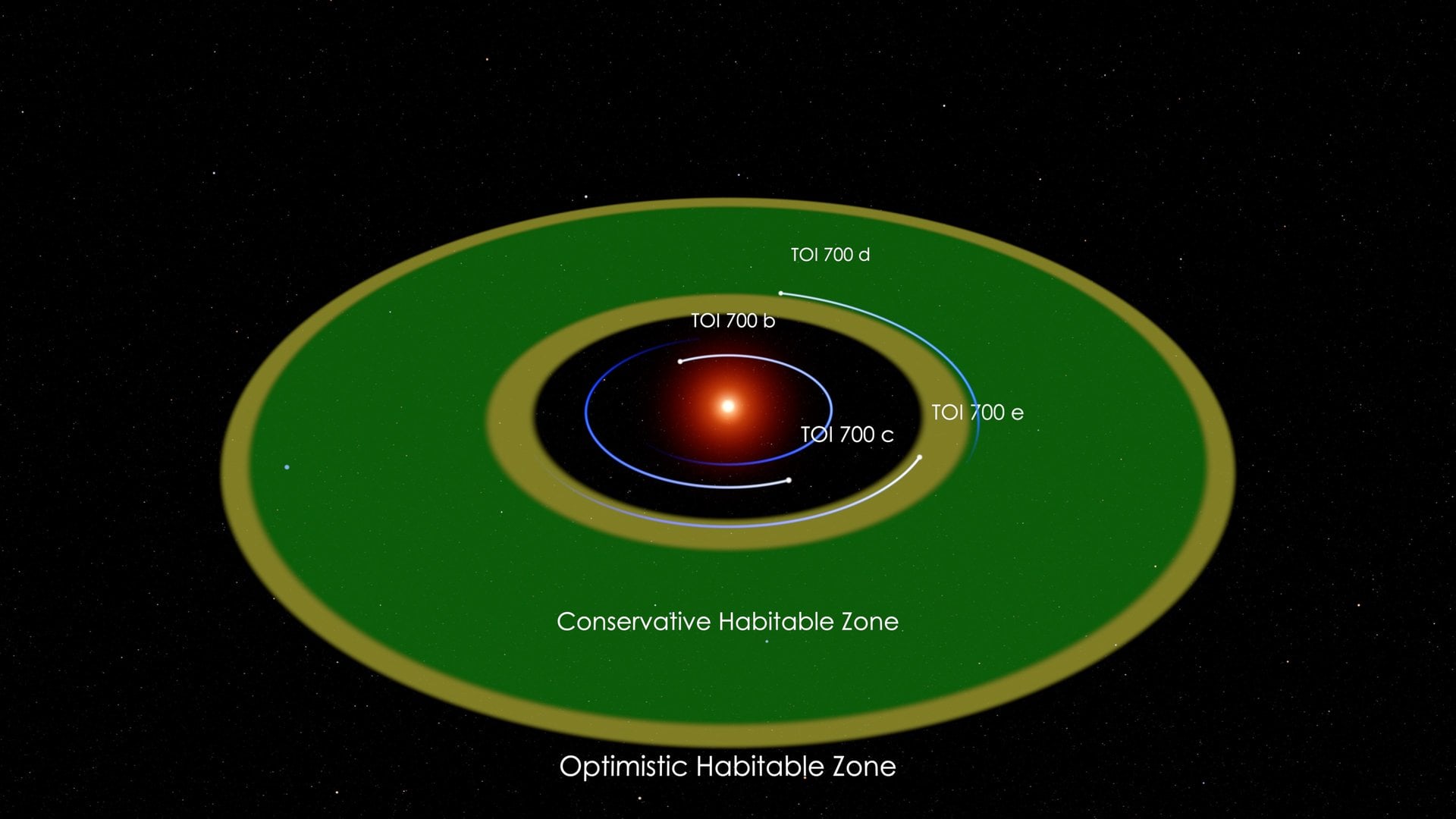
- ● JWST observed exoplanets TOI-700 d and TOI-700 e, Earth-sized planets in the habitable zone of the star TOI-700.
- ● Stellar granulation caused a 'red noise' signal of 46 ppm, masking the expected 20 ppm signal from a Luna-analog.
- ● JWST data improved orbital estimates of the planets by an order of magnitude and radius measurements by a factor of 2-3.
- ● The observations were only sensitive to moons larger than Ganymede with orbits longer than 2 days.
Optimistic Outlook
Improved noise-reducing algorithms could unlock the existing JWST data, potentially revealing the first exomoon discovery. Future missions with enhanced noise mitigation could significantly improve exomoon detection capabilities.
Pessimistic Outlook
Stellar noise poses a significant challenge to exomoon detection, potentially limiting the ability to find smaller, Earth-like moons. Alternative search strategies, such as focusing on exoplanets without host stars, may be necessary.

The Signal, Not
the Noise|
Get the week's top 1% of space-tech intelligence synthesized into a 5-minute read. Join 25,000+ aerospace insiders.
Unsubscribe anytime. No spam, ever.