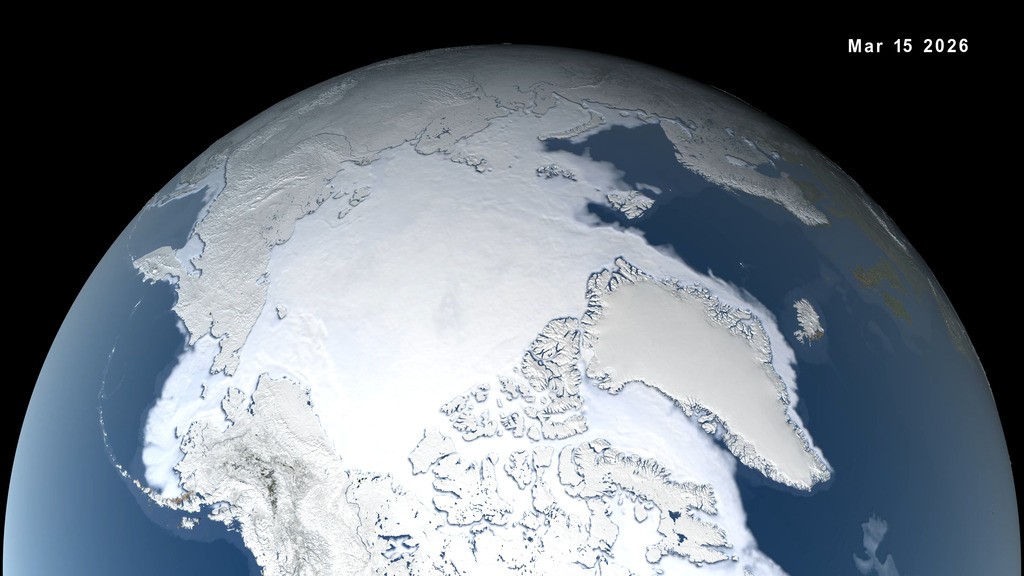
Arctic Winter Sea Ice Matches Record Low, Antarctic Shows Slight Recovery
The Gist
Arctic winter sea ice extent ties the lowest level since 1979, while Antarctic summer sea ice shows a slight increase from recent lows.
Explain Like I'm Five
"Imagine the Arctic is like an ice cube in your drink. This year, the ice cube is one of the smallest we've ever seen. In Antarctica, the ice cube is a little bigger than last year, but still smaller than it used to be."
Deep Intelligence Analysis
_Context: This intelligence report was compiled by the DailyOrbitalWire Strategy Engine. Verified for Art. 50 Compliance._
Impact Assessment
Continued low Arctic sea ice extent impacts weather patterns, shipping routes, and Arctic ecosystems. The slight recovery in Antarctic sea ice offers a glimmer of hope but doesn't negate the overall trend of declining ice cover.
Read Full Story on Hacker News SpaceKey Details
- ● Arctic sea ice reached 5.52 million square miles on March 15, statistically tied with the 2025 peak.
- ● This winter's peak Arctic ice cover was roughly half a million square miles below the 1981-2010 average.
- ● Antarctic summer sea ice reached a low of 996,000 square miles on Feb. 26, higher than the record low in 2023 but still below the 1981-2010 average.
Optimistic Outlook
Advanced monitoring technologies, like JAXA's Advanced Microwave Scanning Radiometer 2, provide increasingly accurate data for understanding and potentially mitigating ice loss. Further research into the dynamics of Antarctic sea ice could reveal factors promoting its relative stability.
Pessimistic Outlook
The long-term downward trend of Arctic sea ice, coupled with thinning ice, suggests a continued decline despite short-term fluctuations. This poses significant challenges for Arctic communities and exacerbates global climate change.

The Signal, Not
the Noise|
Get the week's top 1% of space-tech intelligence synthesized into a 5-minute read. Join 25,000+ aerospace insiders.
Unsubscribe anytime. No spam, ever.