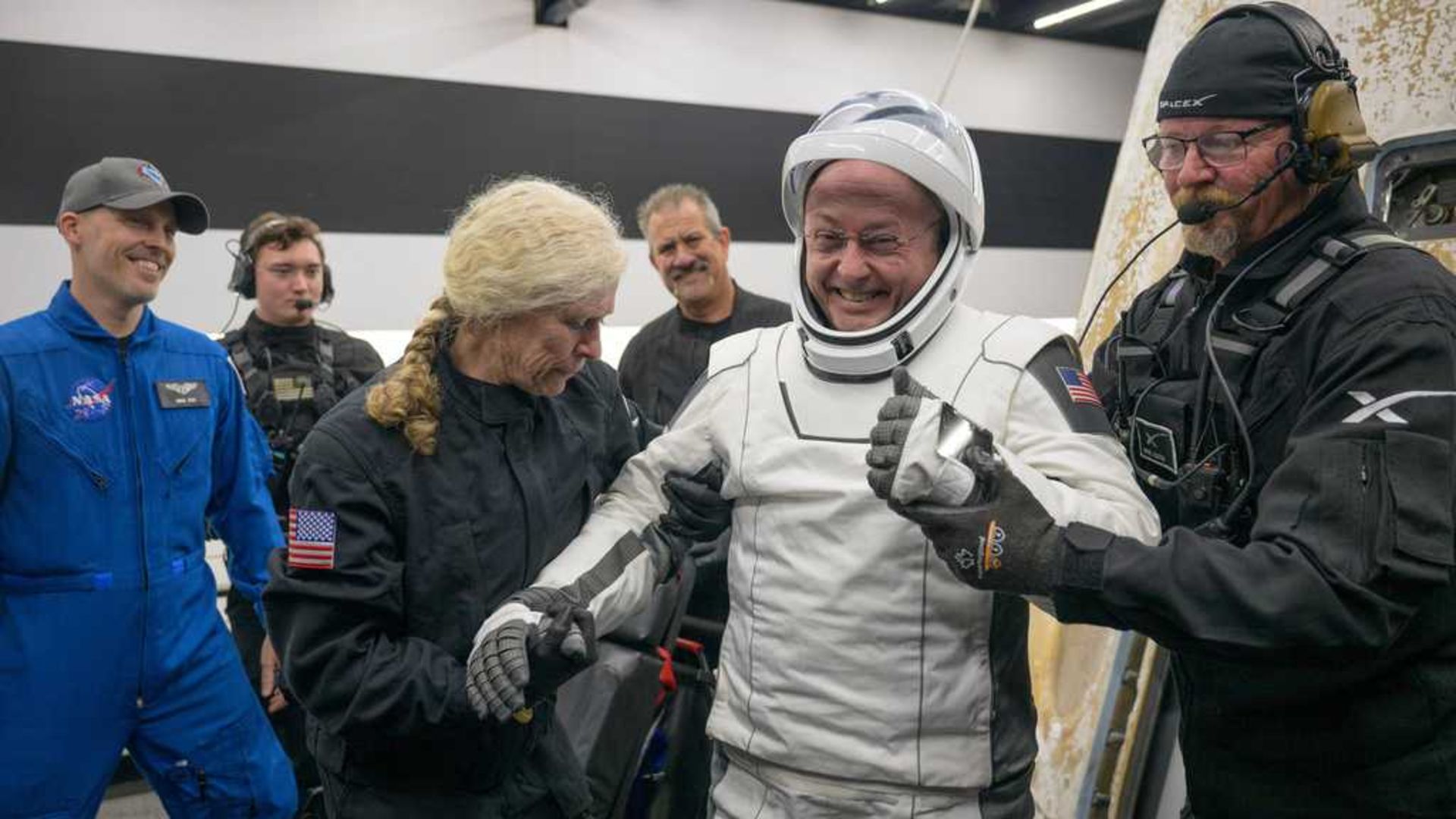
Astronaut's Medical Emergency Highlights Deep-Space Health Risks
The Gist
An astronaut's unexplained speech loss aboard the ISS underscores the critical need for robust medical systems for long-duration space missions.
Explain Like I'm Five
"Imagine you're on a long car trip to the moon, and someone gets sick. This story is about an astronaut who got sick on the space station, and doctors don't know why. It shows we need better ways to help astronauts stay healthy when they're far from Earth."
Deep Intelligence Analysis
NASA's response, which included a medical evacuation and the cancellation of a scheduled spacewalk, demonstrates the agency's commitment to astronaut safety. However, the incident also highlights the logistical complexities and resource constraints involved in providing adequate medical care in space. The fact that doctors have been unable to determine the cause of Fincke's condition raises concerns about the potential for similar, potentially more serious, medical events during future lunar missions, where evacuation options will be significantly more limited.
As NASA moves forward with its plans for a $20 billion lunar base, it is imperative that the agency invests in advanced medical technologies, robust diagnostic capabilities, and comprehensive astronaut health monitoring programs. Furthermore, the development of effective telemedicine solutions and the training of astronauts in basic medical procedures will be crucial for ensuring the health and well-being of crew members during extended lunar stays. The incident involving Fincke serves as a valuable learning opportunity for NASA and the broader space community, emphasizing the need for proactive measures to mitigate the risks associated with astronaut health in deep space.
_Context: This intelligence report was compiled by the DailyOrbitalWire Strategy Engine. Verified for Art. 50 Compliance._
Impact Assessment
This incident highlights the significant risks associated with astronaut health during extended space missions, particularly as NASA plans for long-term lunar habitation. Unexplained medical events could pose a major challenge to the success and safety of future Artemis missions.
Read Full Story on Hacker News SpaceKey Details
- ● Astronaut Michael Fincke experienced a sudden inability to speak aboard the ISS on January 7, 2026.
- ● The medical episode occurred five months into Fincke's mission as part of NASA's SpaceX Crew-11.
- ● NASA performed its first-ever medical evacuation from the ISS due to the incident.
- ● The incident led to the cancellation of a spacewalk and an early return for Crew-11 on January 15, 2026.
Optimistic Outlook
Improved medical monitoring and diagnostic capabilities aboard spacecraft, coupled with advancements in telemedicine, could mitigate risks. Rapid response protocols and enhanced onboard medical resources can ensure astronaut safety during long-duration missions.
Pessimistic Outlook
The inability to diagnose the cause of Fincke's condition raises concerns about unforeseen health risks in space. Limited medical resources and delayed evacuation options during deep-space missions could have severe consequences for astronaut health and mission success.

The Signal, Not
the Noise|
Get the week's top 1% of space-tech intelligence synthesized into a 5-minute read. Join 25,000+ aerospace insiders.
Unsubscribe anytime. No spam, ever.