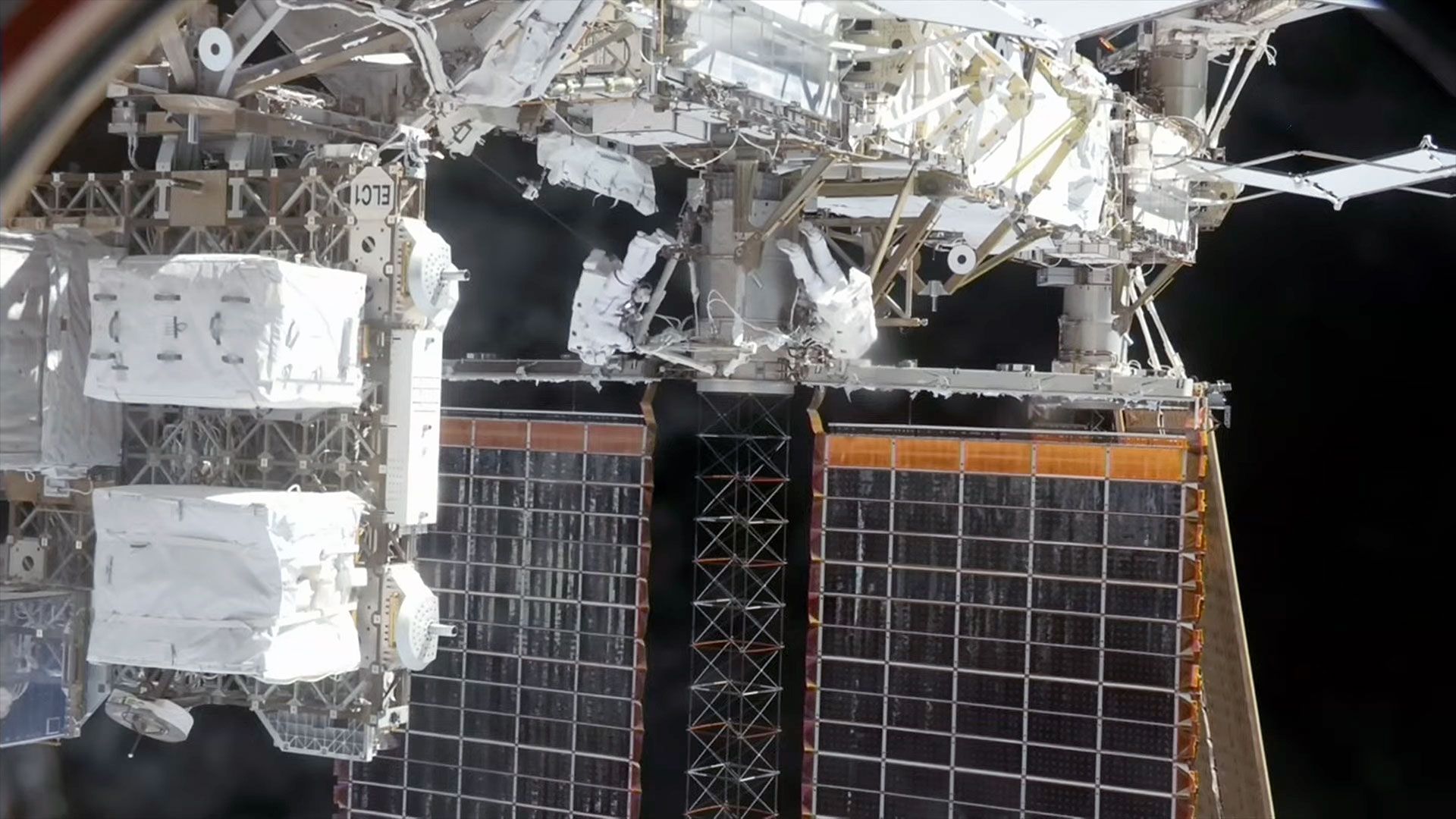
Astronauts Prep ISS for New Solar Array on First NASA Spacewalk in 10 Months
The Gist
Astronauts completed a 7-hour spacewalk to prepare the ISS for a new iROSA solar array.
Explain Like I'm Five
"Imagine the ISS is like a house that needs more electricity. Astronauts went outside to set up a new solar panel so the house can have more power to do cool science experiments!"
Deep Intelligence Analysis
The iROSA arrays are smaller than the legacy solar wings and utilize a unique deployment mechanism, unfurling via stored energy in carbon composite booms, eliminating the need for motors. The upgrade is projected to increase the ISS's electricity supply by 20% to 30%, which is crucial for supporting expanded commercial activities and the upcoming transition to commercially operated space stations. The technology has already been validated by NASA for deep-space missions, including the DART mission.
While the initial plan was to install the iROSA kit in May 2025, the recent spacewalk marks a significant step forward. The additional power will be vital for sustaining the ISS's operations and facilitating future research. However, potential delays in the installation process could impact the station's power capabilities. The future of the Gateway program, which was also slated to use roll-out solar arrays, remains uncertain, potentially affecting the broader application of this technology.
*Transparency Statement: This analysis was generated by an AI language model to provide information on the ISS solar array upgrade. The information presented is based on the provided source content.*
_Context: This intelligence report was compiled by the DailyOrbitalWire Strategy Engine. Verified for Art. 50 Compliance._
Impact Assessment
The installation of new solar arrays is crucial for maintaining the ISS's power supply as the original arrays degrade. This upgrade supports expanded commercial activities and the transition to commercially operated space stations.
Read Full Story on Space.comKey Details
- ● The spacewalk lasted 7 hours and 2 minutes.
- ● The new iROSA arrays will increase the ISS electricity supply by 20% to 30%.
- ● The iROSA assemblies are smaller than the original solar wings and require no motor to unfurl.
- ● The first iROSA kit installation was originally scheduled for May 2025.
Optimistic Outlook
The increased power from the iROSAs will enable more extensive research and commercial activities on the ISS. The technology's success on the ISS could also pave the way for its use in future deep-space missions.
Pessimistic Outlook
Delays in the iROSA installation could impact the ISS's power capabilities, potentially limiting research and commercial activities. The potential cancellation of the Gateway moon-orbiting space station raises concerns about the future applications of this technology.

The Signal, Not
the Noise|
Get the week's top 1% of space-tech intelligence synthesized into a 5-minute read. Join 25,000+ aerospace insiders.
Unsubscribe anytime. No spam, ever.