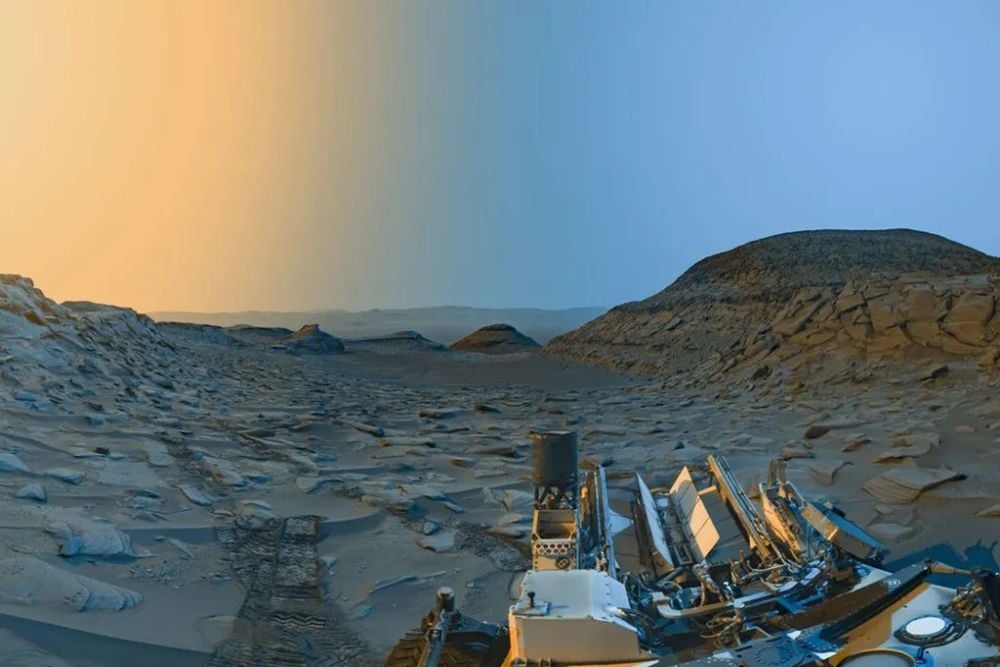
Curiosity Rover Finds Evidence of Ancient Lake on Mars
The Gist
NASA's Curiosity rover discovered high concentrations of metals in Gale Crater, indicating the presence of an ancient, warm, and wet lake environment.
Explain Like I'm Five
"Imagine a bathtub ring, but on Mars! The Curiosity rover found a special ring of rusty stuff that shows there used to be a lake in a big hole called Gale Crater. Maybe tiny Martian bugs lived there!"
Deep Intelligence Analysis
_Context: This intelligence report was compiled by the DailyOrbitalWire Strategy Engine. Verified for Art. 50 Compliance._
Impact Assessment
The discovery provides further evidence that Mars was once habitable and helps scientists understand the planet's transition from a warm, wet environment to its current cold, dry state. This knowledge is crucial for assessing the potential for past or present life on Mars.
Read Full Story on Universe TodayKey Details
- ● Curiosity detected high levels of iron, manganese, and zinc in the Amapari Marker Band in Gale Crater.
- ● The metal deposits are found in preserved ripples, indicating the presence of an ancient lake.
- ● The metals were likely deposited through redox reactions, potentially mediated by microbes.
Optimistic Outlook
Further analysis of the Amapari Marker Band could reveal more detailed information about the ancient Martian environment and the potential for microbial life. This could inform future missions focused on searching for biosignatures on Mars.
Pessimistic Outlook
The metal deposits may not be solely indicative of biological activity, and abiotic processes could explain their formation. Further research is needed to confirm the role of microbes in the deposition of these metals.

The Signal, Not
the Noise|
Get the week's top 1% of space-tech intelligence synthesized into a 5-minute read. Join 25,000+ aerospace insiders.
Unsubscribe anytime. No spam, ever.