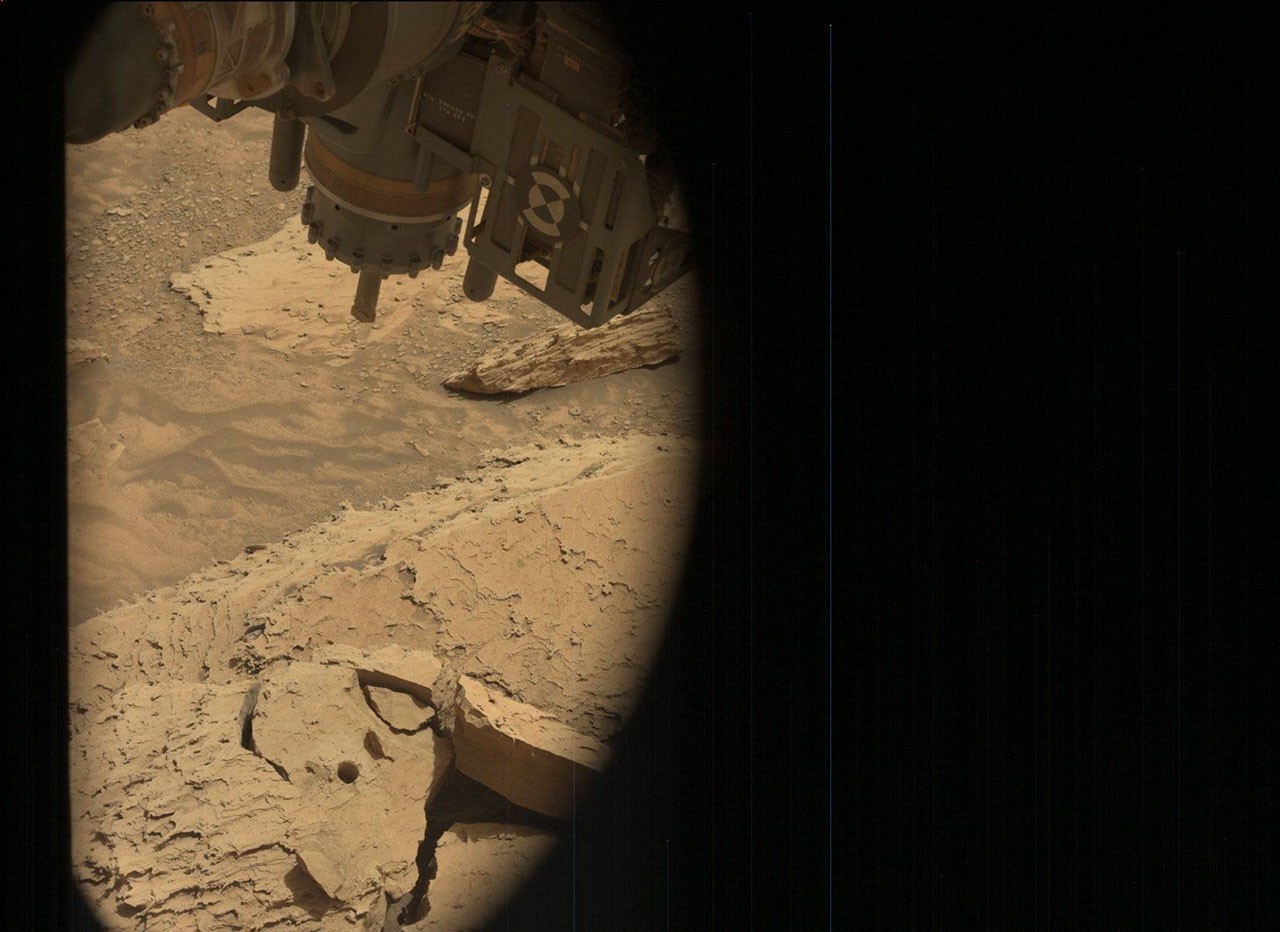
Curiosity Rover Struggles with Martian Rock Sample Collection
The Gist
Curiosity rover faced challenges extracting a drilled rock sample on Mars, leading to adjustments in mission activities.
Explain Like I'm Five
"Imagine you're trying to dig up a rock in your backyard, but it's loose and comes up with your shovel! The Curiosity rover had the same problem on Mars, and scientists had to figure out how to get the rock off the drill."
Deep Intelligence Analysis
This incident has implications for future Mars missions, particularly those focused on ISRU. The loss of the sample material emphasizes the need for robust sampling techniques and equipment designed to handle a variety of geological conditions. Furthermore, the reliance on remote sensing during the drill extraction process highlights the importance of having diverse scientific instruments onboard to compensate for unforeseen circumstances.
Looking ahead, the lessons learned from the Atacama incident can inform the design of future robotic missions and contribute to the development of more reliable and efficient ISRU strategies. This will be crucial for enabling long-term human presence on Mars and utilizing Martian resources for propellant production, construction, and other essential activities. The incident also highlights the importance of redundancy and backup plans in mission design, ensuring that scientific objectives can still be met even in the face of unexpected challenges. The team's ability to recover the drill and continue with remote sensing observations showcases the value of a flexible and adaptable approach to space exploration.
_Context: This intelligence report was compiled by the DailyOrbitalWire Strategy Engine. Verified for Art. 50 Compliance._
Impact Assessment
This incident highlights the challenges of in-situ resource utilization on Mars. Overcoming these obstacles is crucial for future manned missions that will rely on Martian resources.
Read Full Story on NASA Breaking NewsKey Details
- ● The rover successfully drilled into the 'Atacama' target.
- ● The drilled rock was a detached block that came loose during extraction.
- ● The rover team reoriented the drill bit and used percussion to free it.
- ● ChemCam LIBS measurements were taken of various targets, including 'Pichiacani' and 'El Plomo'.
Optimistic Outlook
The rover team's ability to adapt and free the drill demonstrates their problem-solving skills. Future missions can learn from this experience to improve sample collection techniques.
Pessimistic Outlook
The loss of the drill tailings from the Atacama target is a setback for the mission's scientific goals. It underscores the risk of equipment malfunctions in the harsh Martian environment.

The Signal, Not
the Noise|
Get the week's top 1% of space-tech intelligence synthesized into a 5-minute read. Join 25,000+ aerospace insiders.
Unsubscribe anytime. No spam, ever.