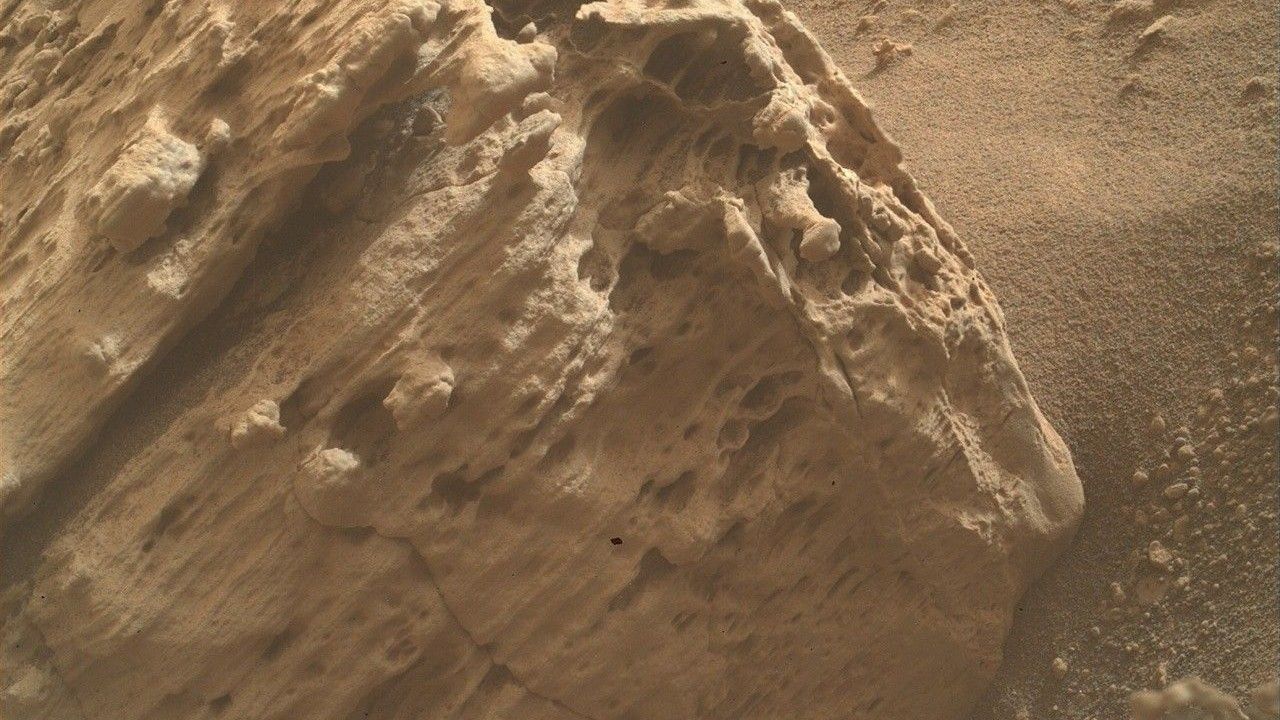
Curiosity Rover Examines Potential Microbial Life Sites on Mars
The Gist
NASA's Curiosity rover is exploring Martian rock formations for evidence of past microbial life.
Explain Like I'm Five
"Imagine Mars used to have water, and tiny bugs might have lived there. A robot car named Curiosity is looking at rocks to see if it can find any signs of those bugs!"
Deep Intelligence Analysis
The implications of this research are significant for several reasons. First, the discovery of definitive evidence of past microbial life on Mars would be a monumental achievement, fundamentally altering our understanding of the potential for life beyond Earth. Second, the extended presence of groundwater could have implications for future in-situ resource utilization (ISRU) efforts, as water is a critical resource for sustaining human settlements and producing rocket propellant. Finally, the detailed analysis of these geological formations provides valuable insights into the Martian climate and geological history, helping us to better understand the planet's evolution over billions of years.
However, it is important to acknowledge the challenges and uncertainties associated with this research. The search for microbial life is inherently difficult, and there is no guarantee that Curiosity will find conclusive evidence. Furthermore, the boxwork formations are subject to ongoing erosion, which could degrade or destroy any potential biosignatures over time. Despite these challenges, the Curiosity rover's ongoing exploration of Mount Sharp represents a crucial step in our quest to understand the potential for life on Mars and the planet's broader geological history. The data collected by Curiosity will inform future missions and shape our understanding of the Red Planet for years to come. The mission scientist Tina Seeger from Rice University noted that the groundwater table had to be pretty high, suggesting that the water needed for sustaining life could have lasted much longer than previously thought.
_Context: This intelligence report was compiled by the DailyOrbitalWire Strategy Engine. Verified for Art. 50 Compliance._
Impact Assessment
The discovery of potential microbial life evidence on Mars would revolutionize our understanding of the planet's history and the possibility of life beyond Earth. This investigation could also provide insights into the duration of water presence on Mars.
Read Full Story on Space.comKey Details
- ● Curiosity is exploring Mount Sharp within Mars' Gale Crater.
- ● The rover is examining 'boxwork formations,' geological features resembling spiderwebs from orbit.
- ● These formations are mineral deposits left by flowing water.
- ● Scientists theorize groundwater may have been present later in Mars' history than previously thought.
Optimistic Outlook
If Curiosity finds evidence of past microbial life, it would significantly boost the prospects for future Mars missions focused on astrobiology and in-situ resource utilization. The extended presence of groundwater suggests more accessible resources for future Martian settlements.
Pessimistic Outlook
The search for microbial life is challenging, and there's no guarantee Curiosity will find conclusive evidence. The boxwork formations are subject to erosion, potentially degrading any biosignatures over time.

The Signal, Not
the Noise|
Get the week's top 1% of space-tech intelligence synthesized into a 5-minute read. Join 25,000+ aerospace insiders.
Unsubscribe anytime. No spam, ever.