Cyanobacteria-Based Fertilizer Shows Promise for Martian Plant Growth
The Gist
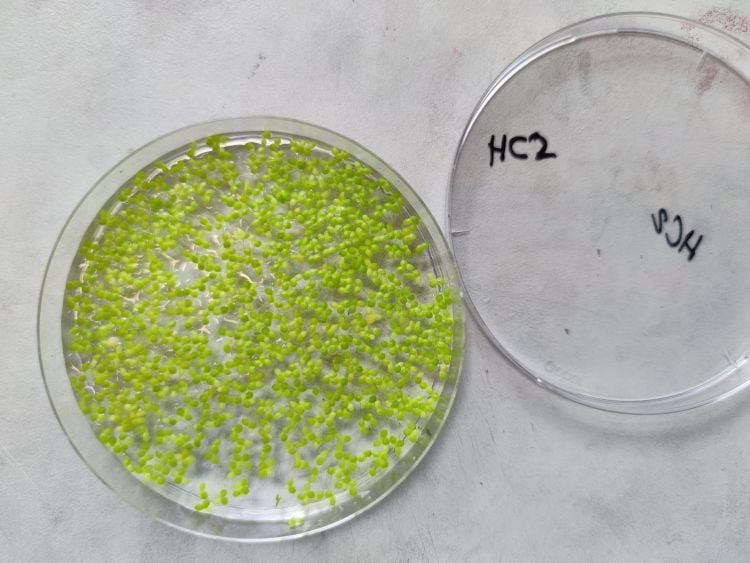
Researchers developed a cyanobacteria-based fertilizer using Martian regolith simulant to grow duckweed, demonstrating potential for sustainable food production on Mars.
Explain Like I'm Five
"Imagine tiny helpers called cyanobacteria eating Martian dirt and making food for plants, so astronauts can grow their own veggies on Mars!"
Deep Intelligence Analysis
_Context: This intelligence report was compiled by the DailyOrbitalWire Strategy Engine. Verified for Art. 50 Compliance._
Impact Assessment
This research supports in-situ resource utilization (ISRU) for long-term Martian settlements, reducing the need to transport resources from Earth. Utilizing local resources like regolith and potentially water ice is crucial for sustainable space exploration.
Read Full Story on Universe TodayKey Details
- ● Researchers used cyanobacteria to consume Martian regolith simulant, converting it into nutrient-rich fertilizer.
- ● Optimal fertilizer production occurred at 35 degrees Celsius with 1 gram of cyanobacteria and 5 mM ammonium.
- ● One gram of cyanobacteria yielded 27 grams of duckweed.
Optimistic Outlook
The study's success in growing duckweed with minimal resources suggests the feasibility of creating self-sufficient Martian gardens. This could significantly reduce mission costs and increase the sustainability of long-duration space missions.
Pessimistic Outlook
Scaling up the cyanobacteria-based fertilizer production for larger-scale agriculture on Mars may present unforeseen challenges. Further research is needed to optimize the process and ensure consistent results in a Martian environment.

The Signal, Not
the Noise|
Get the week's top 1% of space-tech intelligence synthesized into a 5-minute read. Join 25,000+ aerospace insiders.
Unsubscribe anytime. No spam, ever.