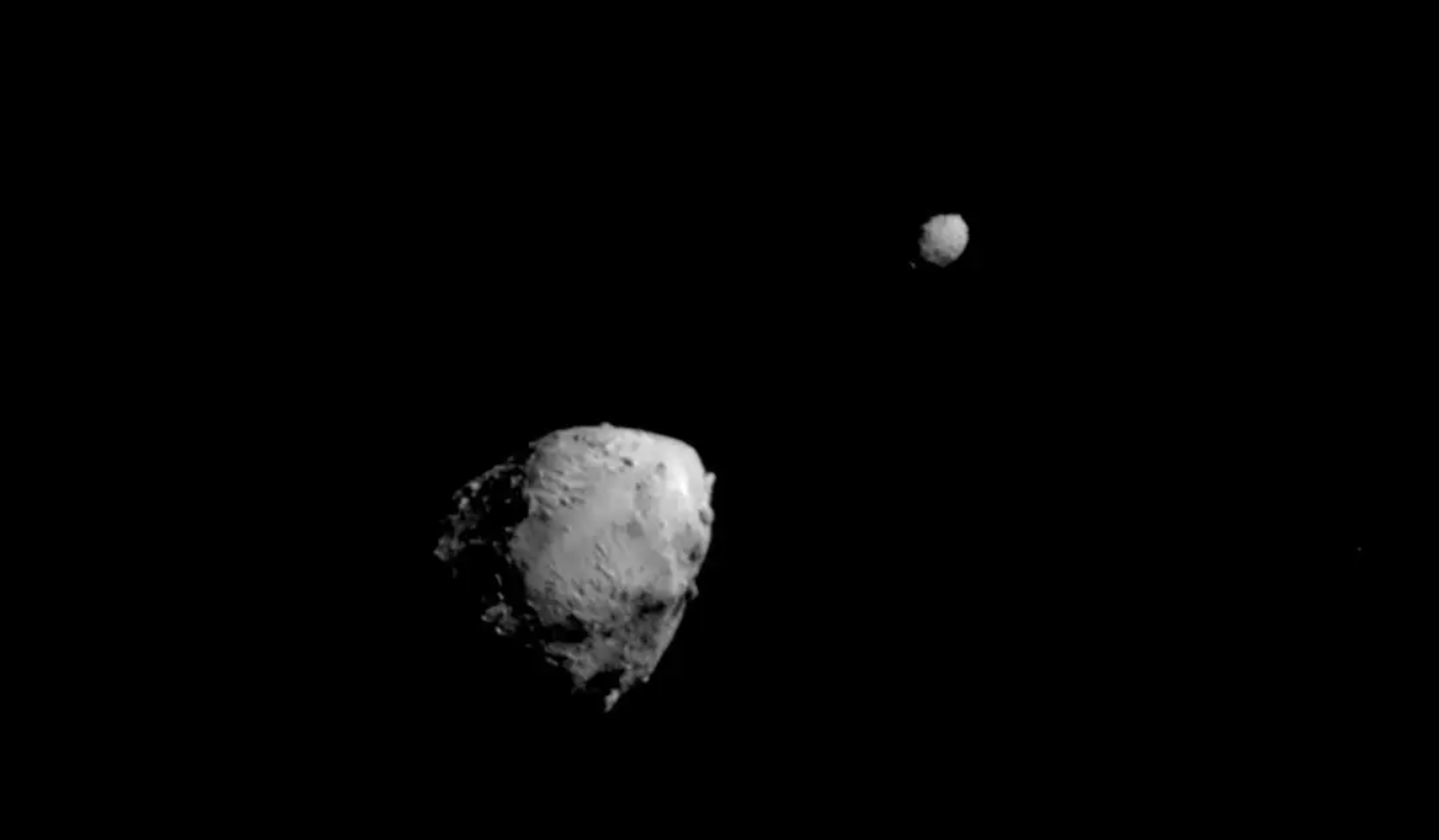
DART Mission Impacted Solar Orbit of Asteroid System
The Gist
NASA's DART mission successfully altered the solar orbit of the Didymos asteroid system, marking the first time humanity has changed a celestial body's path around the Sun.
Explain Like I'm Five
"Imagine throwing a ball at a toy car to change where it goes. NASA did that with a spaceship and an asteroid, and it worked! The asteroid's path around the sun changed a tiny bit."
Deep Intelligence Analysis
The success of DART relied heavily on precise measurements, including stellar occultation observations conducted by volunteer astronomers worldwide. These observations, combined with radar data, allowed researchers to accurately determine the change in Didymos' orbit. This collaborative effort underscores the importance of international cooperation and citizen science in advancing our understanding of the solar system and protecting our planet from potential asteroid threats.
However, the relatively small change in solar orbit also emphasizes the limitations of the kinetic impactor method. Deflecting a truly hazardous asteroid would likely require significant lead time and potentially a larger-scale impact. Further research and development are needed to refine this technique and explore alternative planetary defense strategies. The reliance on volunteer astronomers for critical data also presents logistical challenges that need to be addressed to ensure the reliability of future asteroid tracking efforts. The mission's success provides valuable data for future planetary defense strategies and highlights the importance of continued investment in space exploration and research.
_Context: This intelligence report was compiled by the DailyOrbitalWire Strategy Engine. Verified for Art. 50 Compliance._
Impact Assessment
This demonstrates the viability of kinetic impact as a planetary defense strategy. The change in the solar orbit, though small, validates the technique's potential for deflecting hazardous asteroids over time.
Read Full Story on Universe TodayKey Details
- ● DART impact shortened Dimorphos' orbit by 33 minutes.
- ● The Didymos system's 770-day solar orbit changed by 0.15 seconds.
- ● Momentum enhancement factor from DART's impact was about two.
- ● 22 stellar occultations were recorded by volunteer astronomers between October 2022 and March 2025.
Optimistic Outlook
The successful alteration of Didymos' solar orbit reinforces kinetic impact as a viable planetary defense strategy. Future missions could refine this technique, potentially mitigating the risk of asteroid impacts on Earth.
Pessimistic Outlook
While successful, the change in solar orbit was minimal, highlighting the need for significant lead time and potentially larger-scale interventions for truly hazardous asteroids. Dependence on volunteer astronomers for critical data also presents logistical challenges.

The Signal, Not
the Noise|
Get the week's top 1% of space-tech intelligence synthesized into a 5-minute read. Join 25,000+ aerospace insiders.
Unsubscribe anytime. No spam, ever.