Discovery of Tens of Thousands of Early Galaxy Hydrogen Halos
The Gist
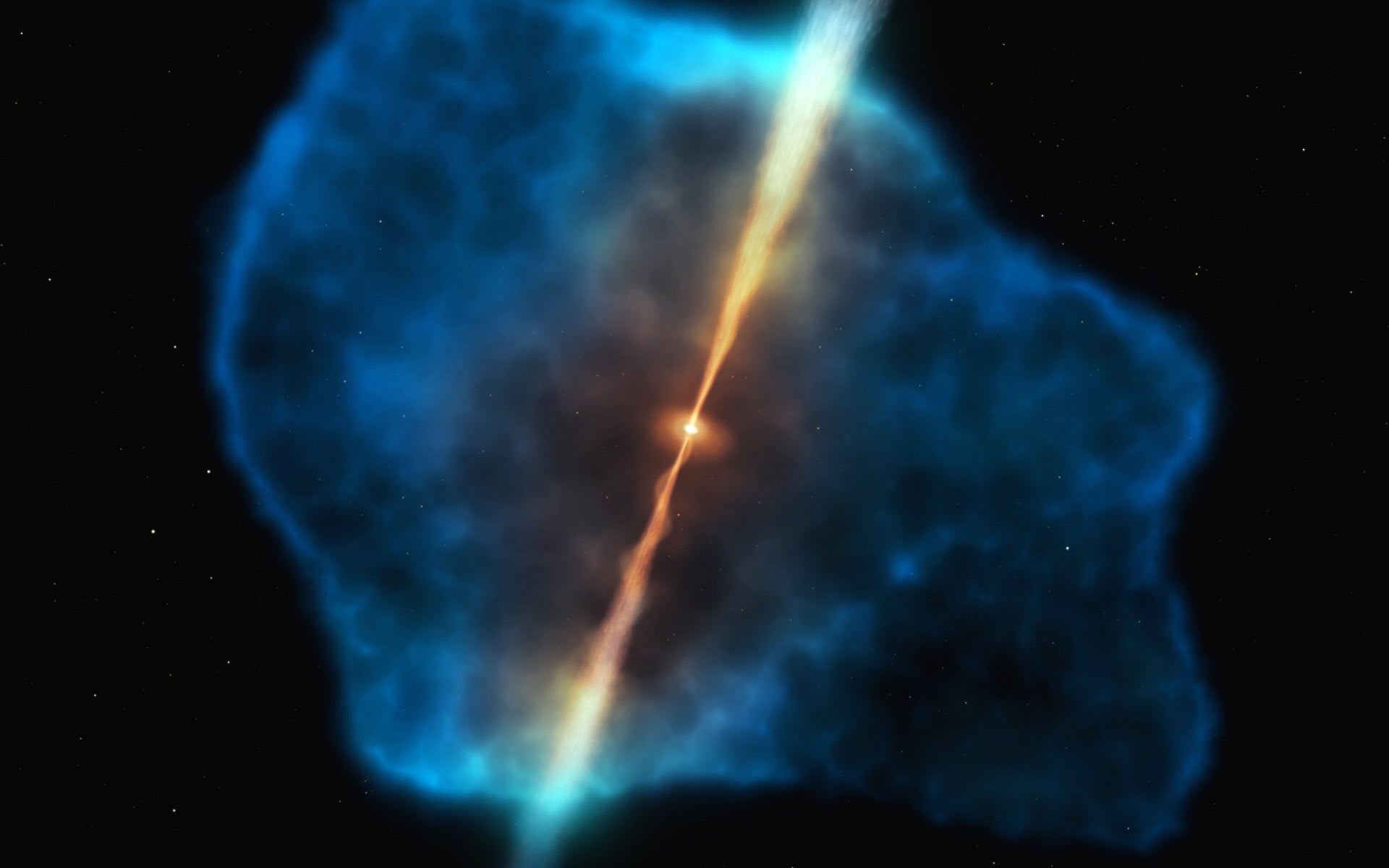
Astronomers discovered tens of thousands of hydrogen halos surrounding early galaxies using the Hobby-Eberly Telescope Dark Energy Experiment (HETDEX).
Explain Like I'm Five
"Imagine the early universe had lots of giant clouds of gas. These clouds helped make the first stars and galaxies. Scientists found tons of these clouds around the early galaxies using a special telescope!"
Deep Intelligence Analysis
The HETDEX project, designed to map the positions of over one million galaxies, employs a technique called 'stacking' to statistically combine the spectra of thousands of distant galaxies. This method allows researchers to detect faint spectral features, such as the glow of hydrogen gas in the presence of UV-emitting galaxies and stars, which would otherwise be undetectable. The team analyzed 70,000 of the brightest early galaxies identified by HETDEX from a pool of 1.6 million.
This breakthrough provides a more comprehensive statistical catalog of these halos, enabling astronomers to measure their shapes and sizes with greater precision. The findings contribute to refining cosmological models and offer new avenues for exploring the conditions that facilitated the rapid formation of early galaxies. Further research into the composition and evolution of these halos promises to unlock deeper insights into the universe's early history. However, challenges remain in mitigating interference from foreground objects and securing the necessary computational resources for analyzing the vast amounts of data generated by these observations.
*Transparency Disclosure: The AI model used to generate this analysis has been trained on a broad range of scientific literature and is intended to provide an objective summary of the provided source material.*
_Context: This intelligence report was compiled by the DailyOrbitalWire Strategy Engine. Verified for Art. 50 Compliance._
Impact Assessment
This discovery provides significant insight into the 'Cosmic Dawn' and the rapid formation of early galaxies. Understanding the distribution and properties of these hydrogen halos helps refine models of the early universe and galaxy formation.
Read Full Story on Universe TodayKey Details
- ● HETDEX discovered tens of thousands of hydrogen halos dating back 10-12 billion years.
- ● The study analyzed 70,000 of the brightest early galaxies identified by HETDEX from a pool of 1.6 million.
- ● HETDEX uses a technique called 'stacking' to combine spectra of thousands of distant galaxies.
Optimistic Outlook
The HETDEX data provides a rich statistical catalog for further analysis of early galaxy formation. Future research could reveal more about the composition and evolution of these halos, potentially leading to breakthroughs in understanding the early universe.
Pessimistic Outlook
Detecting and analyzing these faint spectral features requires significant computational resources and dedicated observatories. Interference from foreground objects remains a challenge in observing early galaxies.

The Signal, Not
the Noise|
Get the week's top 1% of space-tech intelligence synthesized into a 5-minute read. Join 25,000+ aerospace insiders.
Unsubscribe anytime. No spam, ever.