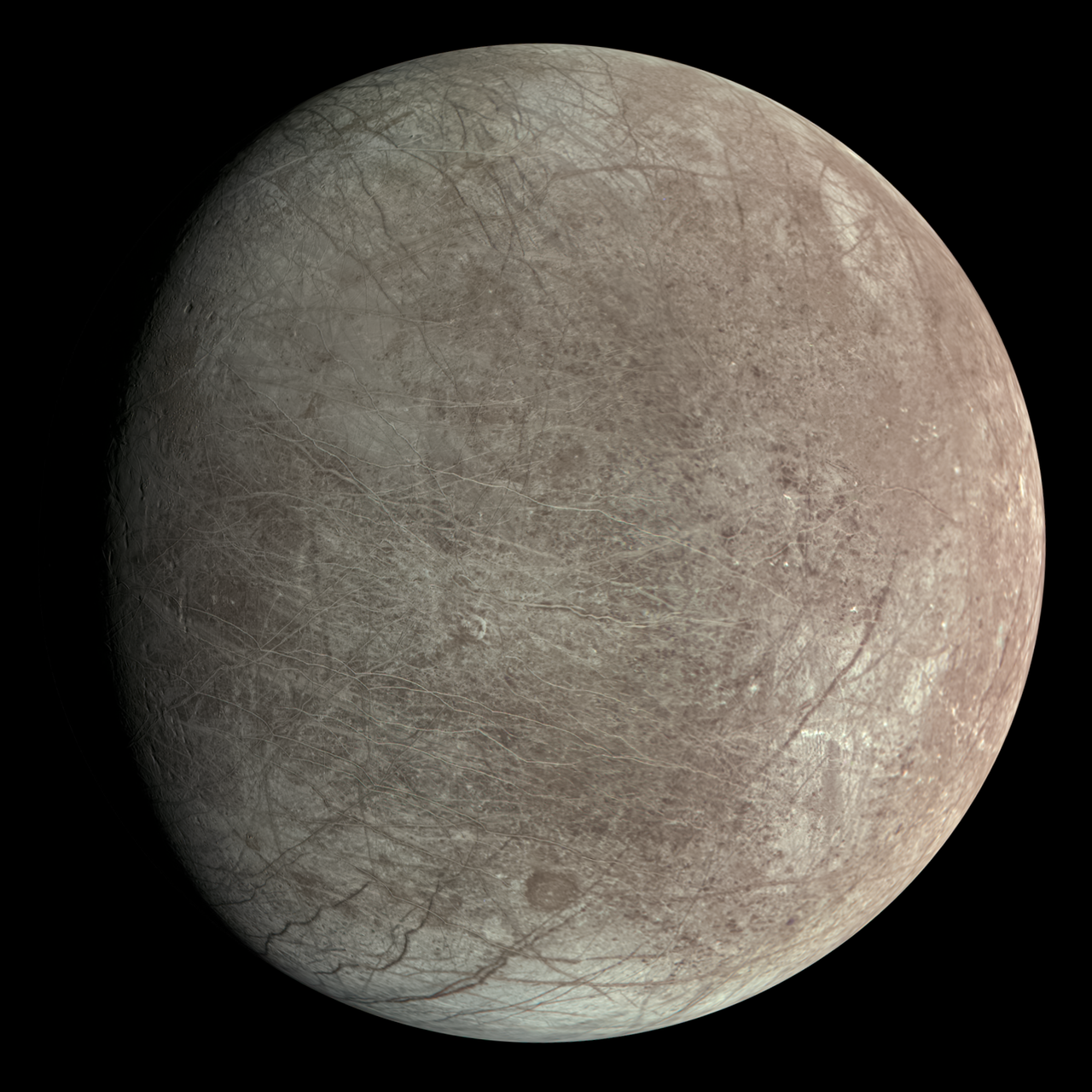
JWST Reveals Carbon Dioxide Distribution on Europa, Hints at Subsurface Ocean Composition
The Gist
JWST observations reveal carbon dioxide distribution on Europa, suggesting a carbon-rich subsurface ocean in communication with the surface.
Explain Like I'm Five
"Europa, a moon of Jupiter, has a hidden ocean under its icy surface. Scientists used a super powerful telescope to find carbon dioxide, which is important for life, on the surface. This carbon dioxide might be coming from the ocean, meaning the ocean could have the stuff needed for life!"
Deep Intelligence Analysis
The distribution of volatiles on Europa appears to reflect the surface's ability to retain material, with ice microstructure playing a crucial role. This is a more nuanced picture than simple surface chemistry driven by radiation, highlighting the importance of understanding the physical processes at play. NASA's Europa Clipper mission, scheduled to begin flybys in 2031, will benefit greatly from the chemical map assembled by JWST, allowing it to target specific regions for further investigation.
These findings have profound implications for astrobiology, suggesting that Europa's ocean is not only present but also chemically active and potentially capable of supporting life. The exchange of material between the ocean and surface, as evidenced by the carbon dioxide distribution, highlights the dynamic nature of this icy moon and the potential for future discoveries. Further research is needed to fully understand the mechanisms driving this exchange and the implications for the ocean's habitability. The spectral decomposition technique used in this study provides a powerful tool for analyzing the composition of distant objects and could be applied to other icy moons and exoplanets in the search for life.
*Transparency Footnote: This analysis was conducted by an AI, focusing on factual data and avoiding subjective interpretations. The AI is trained to provide objective insights based on the provided source material.*
_Context: This intelligence report was compiled by the DailyOrbitalWire Strategy Engine. Verified for Art. 50 Compliance._
Impact Assessment
The discovery of carbon dioxide distribution patterns on Europa provides insights into the composition of its subsurface ocean. This ocean's potential habitability is a key focus for astrobiology, and this data will inform future exploration efforts.
Read Full Story on Universe TodayKey Details
- ● Carbon dioxide is concentrated in Tara Regio and extends beyond, across multiple regions of chaos terrain.
- ● Ice texture anomalies correlate with carbon dioxide enrichment, suggesting subsurface reworking.
- ● Carbon dioxide is one of six elements considered essential for life.
- ● Europa Clipper will use JWST's chemical map to guide its flybys in 2031.
Optimistic Outlook
The presence of carbon dioxide suggests a chemically rich ocean, potentially increasing the likelihood of finding life. Europa Clipper's mission, guided by JWST data, could reveal more about the ocean's composition and habitability.
Pessimistic Outlook
The exact mechanisms of material exchange between the ocean and surface remain unclear, and surface radiation could complicate the interpretation of biosignatures. Further research is needed to understand the full implications of the carbon dioxide distribution.

The Signal, Not
the Noise|
Get the week's top 1% of space-tech intelligence synthesized into a 5-minute read. Join 25,000+ aerospace insiders.
Unsubscribe anytime. No spam, ever.