Exobiosphere and Voyager Partner for ISS Biotech Research
The Gist
Exobiosphere partners with Voyager Technologies to send its automated lab to the ISS for biotech research.
Explain Like I'm Five
"Imagine a tiny lab that can do experiments in space all by itself! This lab can help us learn about diseases faster and find new medicines, and it's going to the space station with the help of some space friends."
Deep Intelligence Analysis
The integration with Vast's Haven-1 space station and the contract with ESA further validate Exobiosphere's technology and business model. These partnerships provide access to diverse research opportunities and funding streams, strengthening the company's position in the emerging space biotech market. However, the success of Exobiosphere's long-term vision hinges on attracting significant investment from the pharmaceutical industry and demonstrating the tangible benefits of space-based research.
The expansion to lunar and Martian environments presents both opportunities and challenges. Studying disease progression on the Moon and Mars could provide critical insights into the effects of long-duration spaceflight on human health, informing the development of countermeasures and ensuring astronaut safety. However, the logistical and technical complexities of operating research facilities on these celestial bodies will require significant advancements in robotics, automation, and in-situ resource utilization.
_Context: This intelligence report was compiled by the DailyOrbitalWire Strategy Engine. Verified for Art. 50 Compliance._
Impact Assessment
This partnership accelerates space-based biotech research by automating experiments and reducing astronaut involvement. Studying disease progression in space could lead to faster therapeutic discoveries, benefiting hospitals, academic institutions, and pharmaceutical companies.
Read Full Story on Payload SpaceKey Details
- ● Voyager Technologies Europe will integrate Exobiosphere's mission to the ISS.
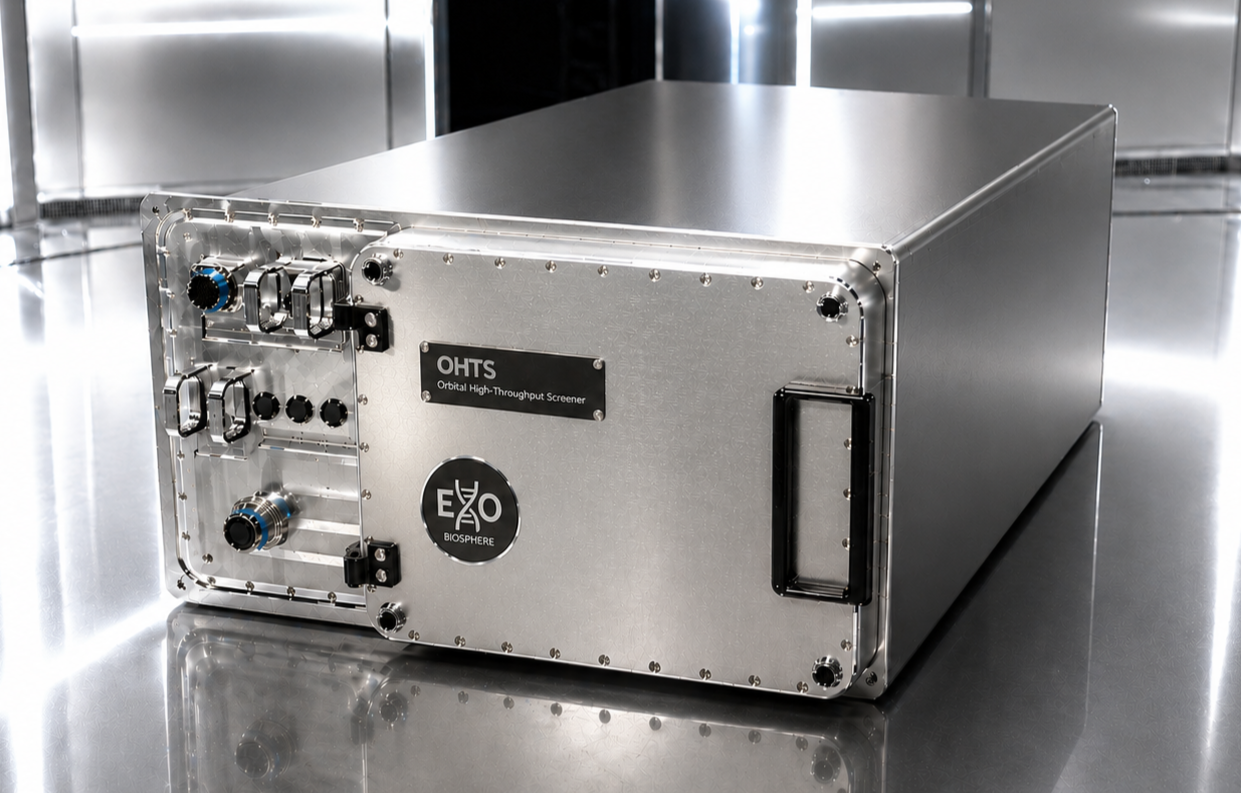
- ● Exobiosphere's device is an automated mini lab that fits into standard mid-deck lockers.
- ● The device can autonomously keep organ cells alive and deliver therapeutics.
- ● Exobiosphere is integrated into Vast’s Haven-1 space station.
- ● Exobiosphere signed a contract with ESA to operate biotech experiments aboard Haven-1.
Optimistic Outlook
Increased access to space-based research could revolutionize drug discovery and personalized medicine. Exobiosphere's expansion to lunar and Martian environments could provide critical insights into long-duration spaceflight and human survival on other planets.
Pessimistic Outlook
The reliance on commercial space stations like Haven-1 introduces potential risks related to launch delays and operational uncertainties. Attracting significant investment from big pharma may prove challenging until the value proposition of space-based research is clearly demonstrated.

The Signal, Not
the Noise|
Get the week's top 1% of space-tech intelligence synthesized into a 5-minute read. Join 25,000+ aerospace insiders.
Unsubscribe anytime. No spam, ever.