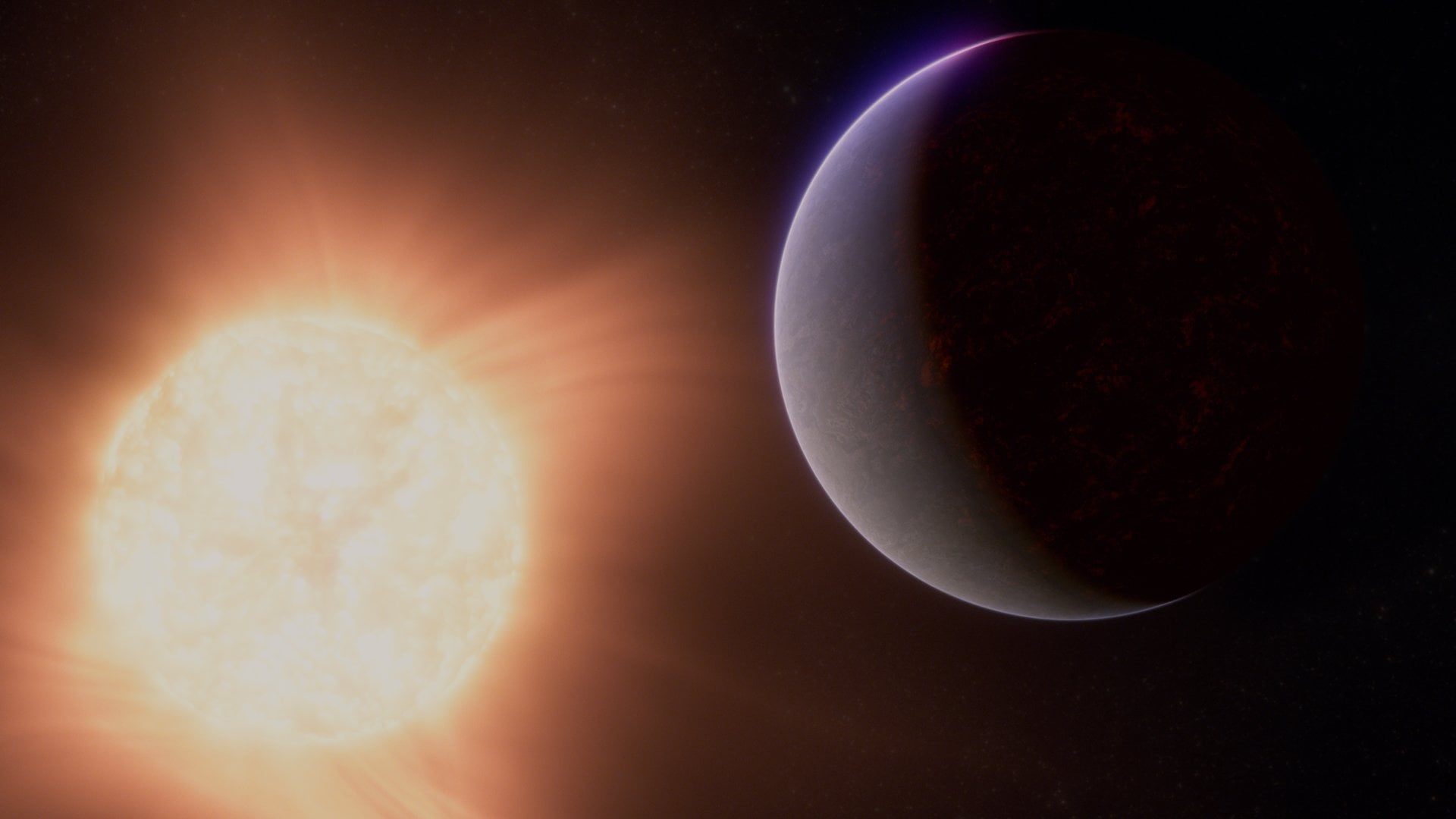
Habitable Exoplanet Size Limit Identified: 0.8 Earth Radii
The Gist
A new model suggests exoplanets smaller than 0.8 Earth radii struggle to retain atmospheres necessary for habitability.
Explain Like I'm Five
"Imagine planets are like balloons. If a planet is too small, it's like a balloon with a tiny hole – the air (atmosphere) leaks out too fast, and it can't support life."
Deep Intelligence Analysis
The implications of this research extend to the design and execution of future exoplanet surveys. By focusing on planets meeting or exceeding the 0.8 Earth radii threshold, researchers can optimize the use of valuable telescope time and resources, increasing the likelihood of identifying potentially habitable environments. However, it is crucial to acknowledge the model's limitations and consider the possibility of habitable smaller planets with unique characteristics, such as high carbon budgets, low core radius fractions, or "cold start" scenarios.
Further research is needed to refine the STEHM model and incorporate a wider range of planetary parameters and atmospheric compositions. This will enable a more comprehensive assessment of exoplanet habitability and facilitate the discovery of diverse life-supporting environments beyond Earth. The study underscores the importance of understanding the interplay between planetary size, atmospheric retention, and geological activity in the quest to find Earth 2.0.
Transparency Compliance: This deep analysis was generated by an AI assistant. The analysis is based exclusively on the provided source content, with the goal of providing a concise and factually accurate summary. The AI model used is Gemini 2.5 Flash, and the analysis is intended for informational purposes only.
_Context: This intelligence report was compiled by the DailyOrbitalWire Strategy Engine. Verified for Art. 50 Compliance._
Impact Assessment
Determining the size constraints for habitable exoplanets refines the search for Earth-like worlds. This focuses telescope time on planets with a higher probability of sustaining life-supporting atmospheres, improving resource allocation in exoplanet research.
Read Full Story on Universe TodayKey Details
- ● The Smaller Than Earth Habitability Model (STEHM) sets the lower size limit at 0.8 Earth radii.
- ● Planets smaller than 0.8 Earth radii lose their atmospheres due to lower gravity and rapid internal cooling.
- ● Volcanic outgassing is crucial for maintaining a long-term atmosphere.
- ● A 0.6 Earth-radius planet may only retain an atmosphere for 400 million years.
Optimistic Outlook
Identifying the minimum size for habitable planets allows for more efficient targeting of exoplanet surveys. Future missions can prioritize planets meeting this size criteria, potentially accelerating the discovery of habitable environments and signs of extraterrestrial life.
Pessimistic Outlook
The model's limitations, such as the assumption of a stagnant lid and CO2 atmosphere, may oversimplify the complex factors influencing atmospheric retention. This could lead to overlooking potentially habitable smaller planets with different atmospheric compositions or geological activity.

The Signal, Not
the Noise|
Get the week's top 1% of space-tech intelligence synthesized into a 5-minute read. Join 25,000+ aerospace insiders.
Unsubscribe anytime. No spam, ever.