Jupiter's Stronger Magnetic Field Explains Larger Moon Count Compared to Saturn
The Gist
Research suggests Jupiter's stronger magnetic field created a cavity, capturing more large moons than Saturn.
Explain Like I'm Five
"Jupiter has more big moons than Saturn because it has a stronger magnet that caught them!"
Deep Intelligence Analysis
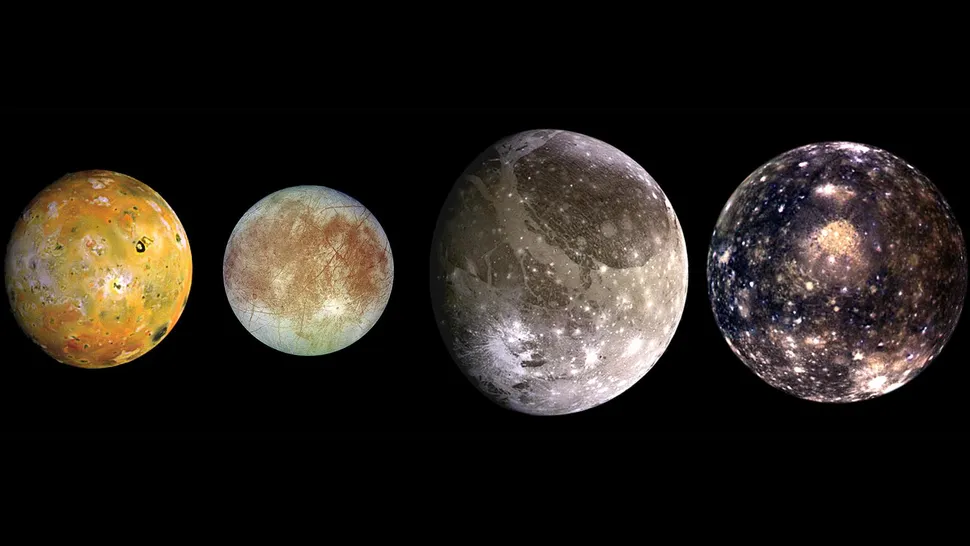
The team's simulations suggest that Jupiter's significantly stronger magnetic field (417 microteslas) created a magnetospheric cavity within its circumplanetary disk. This cavity acted as a trap, capturing moons like Io, Europa, and Ganymede. In contrast, Saturn's weaker magnetic field (21 microteslas) was insufficient to form such a cavity, preventing the capture and survival of migrating moons within its disk. This model also offers a potential explanation for Callisto's lack of orbital resonance with the other Galilean moons.
These findings have implications for understanding planet formation and the dynamics of satellite systems. The research provides a framework for future exoplanet studies, particularly in the search for exomoons and the characterization of circumplanetary disks around young gas giants. By understanding the role of magnetic fields in shaping satellite systems, scientists can gain valuable insights into the processes that govern the formation and evolution of planetary systems beyond our own. This research highlights the importance of considering magnetic fields in models of planet and moon formation.
*Transparency Disclosure: This analysis was conducted by an AI model and reviewed by human experts to ensure accuracy and relevance.*
_Context: This intelligence report was compiled by the DailyOrbitalWire Strategy Engine. Verified for Art. 50 Compliance._
Impact Assessment
Understanding the differing moon systems of gas giants provides insights into planet formation and the role of magnetic fields. This knowledge can inform future exoplanet studies, including the search for exomoons and circumplanetary disks.
Read Full Story on Universe TodayKey Details
- ● Jupiter possesses four large moons (Io, Europa, Ganymede, Callisto), while Saturn has one (Titan).
- ● Jupiter's magnetic field measures 417 microteslas, significantly stronger than Saturn's 21 microteslas.
- ● Simulations suggest Jupiter's strong magnetic field created a magnetospheric cavity, capturing moons.
- ● The research was published in Nature Astronomy on April 2nd.
Optimistic Outlook
Future exoplanet studies, informed by this research, could reveal new insights into gas giant formation and moon capture mechanisms. Observing exomoons and circumplanetary disks around young gas giants may validate these findings.
Pessimistic Outlook
The model relies on simulations and may not fully capture the complexities of gas giant and moon formation. Further research is needed to validate these findings with observational data from other planetary systems.

The Signal, Not
the Noise|
Get the week's top 1% of space-tech intelligence synthesized into a 5-minute read. Join 25,000+ aerospace insiders.
Unsubscribe anytime. No spam, ever.