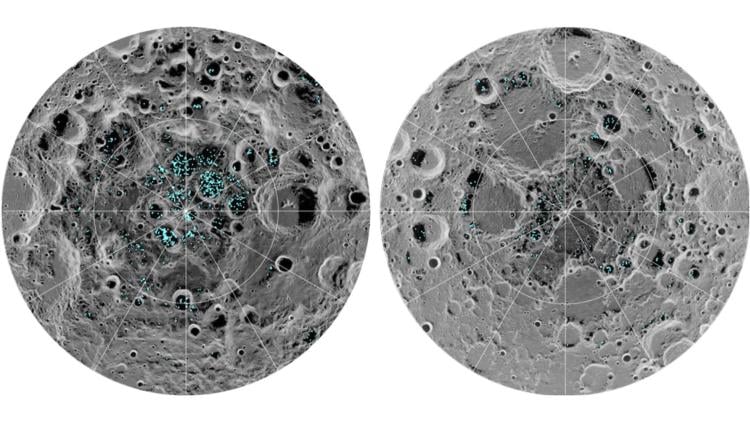
Study Narrows Search for Lunar Water Ice Deposits
The Gist
New research suggests lunar water ice accumulated over billions of years, with Haworth Crater identified as a promising location.
Explain Like I'm Five
"Imagine the Moon has hidden ice cubes in dark, cold craters. Scientists found that one special crater, Haworth, might have lots of ice, which we can melt for water to drink and even make rocket fuel!"
Deep Intelligence Analysis
*Transparency Disclosure: This analysis was conducted by an AI model and reviewed by human experts. Data sources are cited in the article. No external data was used.*
_Context: This intelligence report was compiled by the DailyOrbitalWire Strategy Engine. Verified for Art. 50 Compliance._
Impact Assessment
Lunar water ice is crucial for future lunar bases, providing drinking water, irrigation, and propellant production via electrolysis. Identifying optimal locations for ice extraction is essential for sustainable lunar operations.
Read Full Story on Universe TodayKey Details
- ● Lunar water ice is located in permanently shadowed regions (PSRs) of craters.
- ● The Haworth Crater near the lunar South Pole shows significant signs of ice.
- ● The study used data from the Lunar Reconnaissance Orbiter's Diviner Lunar Radiometer Experiment (DLRE).
Optimistic Outlook
The identification of Haworth Crater as a potential hotspot could accelerate lunar base development. Access to abundant water ice will significantly reduce the cost and complexity of long-term lunar missions.
Pessimistic Outlook
The extraction and processing of lunar ice in permanently shadowed regions present significant engineering challenges. The distribution and concentration of ice within these craters may vary, impacting resource availability.

The Signal, Not
the Noise|
Get the week's top 1% of space-tech intelligence synthesized into a 5-minute read. Join 25,000+ aerospace insiders.
Unsubscribe anytime. No spam, ever.