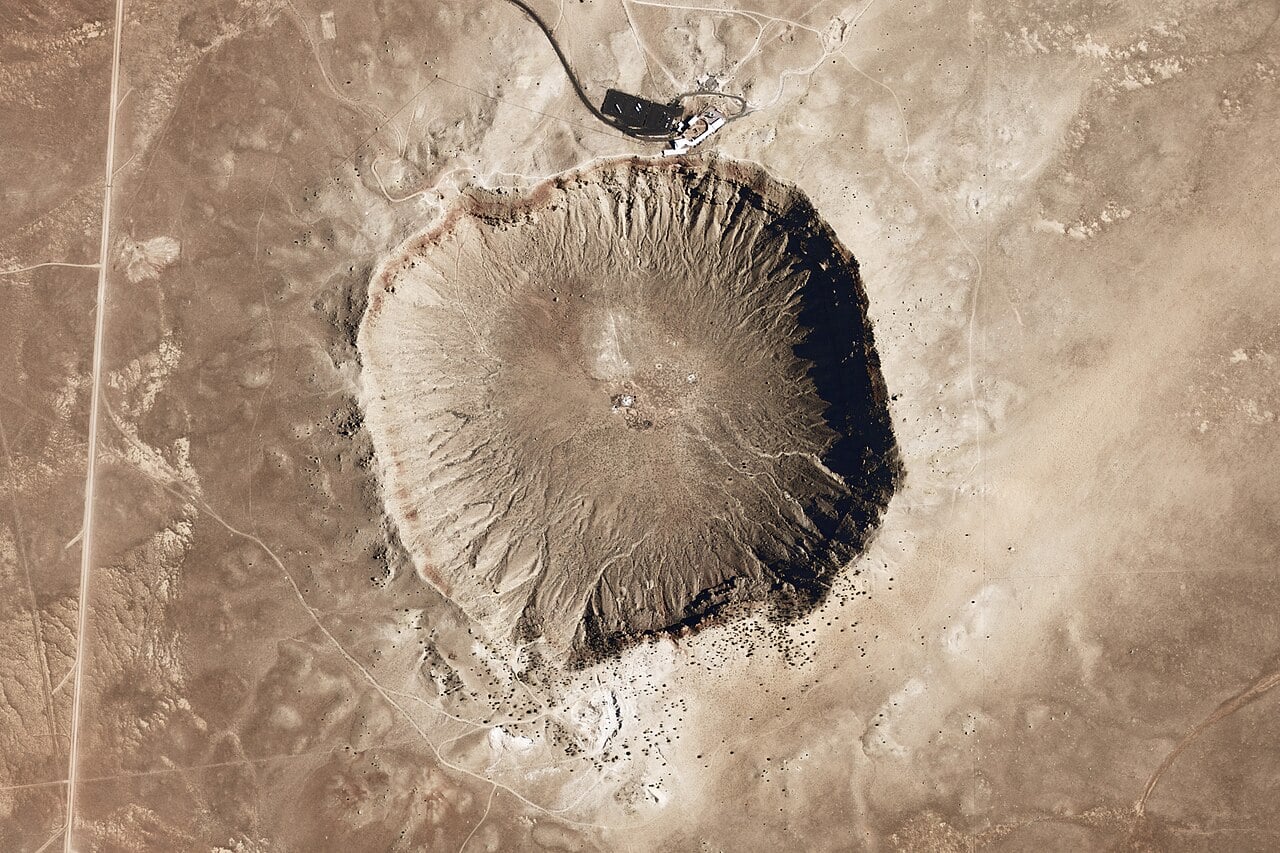
Meteor Impact Craters: Potential Birthplaces of Life on Earth
The Gist
New research suggests meteor impact craters, with their hydrothermal systems, may have been crucial to the origin of life on Earth.
Explain Like I'm Five
"Imagine when a big rock from space hits Earth, it makes a hot pool of water with lots of yummy stuff for tiny creatures. Maybe that's where life started!"
Deep Intelligence Analysis
Shea Cinquemani's study examined three well-documented crater sites—Chicxulub, Haughton, and Lonar Lake—revealing that all hosted long-lasting hydrothermal systems. These systems persisted for thousands to tens of thousands of years, providing ample time for complex chemistry to occur. Early Earth experienced significantly more frequent meteor impacts, suggesting that these impact-generated hydrothermal systems were widespread.
Furthermore, impact crater systems may address the 'water paradox,' which posits that excessive water can disrupt the molecular structures essential for life. The evolving wet and dry phases within impact craters might offer a more conducive environment than deep-sea vents. Hydrothermal activity is believed to exist beneath the icy surfaces of Europa and Enceladus and may have once existed in Martian impact craters. If these environments on Earth were indeed cradles of life, they become compelling targets in the search for life beyond Earth. This research shifts the focus of astrobiological exploration, emphasizing the importance of impact craters as potential habitats for life's origins.
_Context: This intelligence report was compiled by the DailyOrbitalWire Strategy Engine. Verified for Art. 50 Compliance._
Impact Assessment
Understanding the origins of life on Earth informs the search for extraterrestrial life. Impact crater hydrothermal systems are now compelling targets for astrobiological exploration on other planets and moons.
Read Full Story on Universe TodayKey Details
- ● Hydrothermal systems in impact craters can last for thousands to tens of thousands of years.
- ● Early Earth experienced more frequent meteor impacts than today.
- ● The Chicxulub, Haughton, and Lonar Lake craters all hosted long-lasting hydrothermal systems.
- ● Impact crater systems may better handle the 'water paradox' than deep sea vents.
Optimistic Outlook
If impact crater hydrothermal systems fostered life on Earth, similar environments on Europa, Enceladus, and Mars become prime targets for discovering extraterrestrial life. This could revolutionize our understanding of life's prevalence in the universe.
Pessimistic Outlook
The conditions required for life to emerge in these impact crater systems are still poorly understood. Further research is needed to confirm their role and assess the likelihood of similar environments hosting life elsewhere.

The Signal, Not
the Noise|
Get the week's top 1% of space-tech intelligence synthesized into a 5-minute read. Join 25,000+ aerospace insiders.
Unsubscribe anytime. No spam, ever.