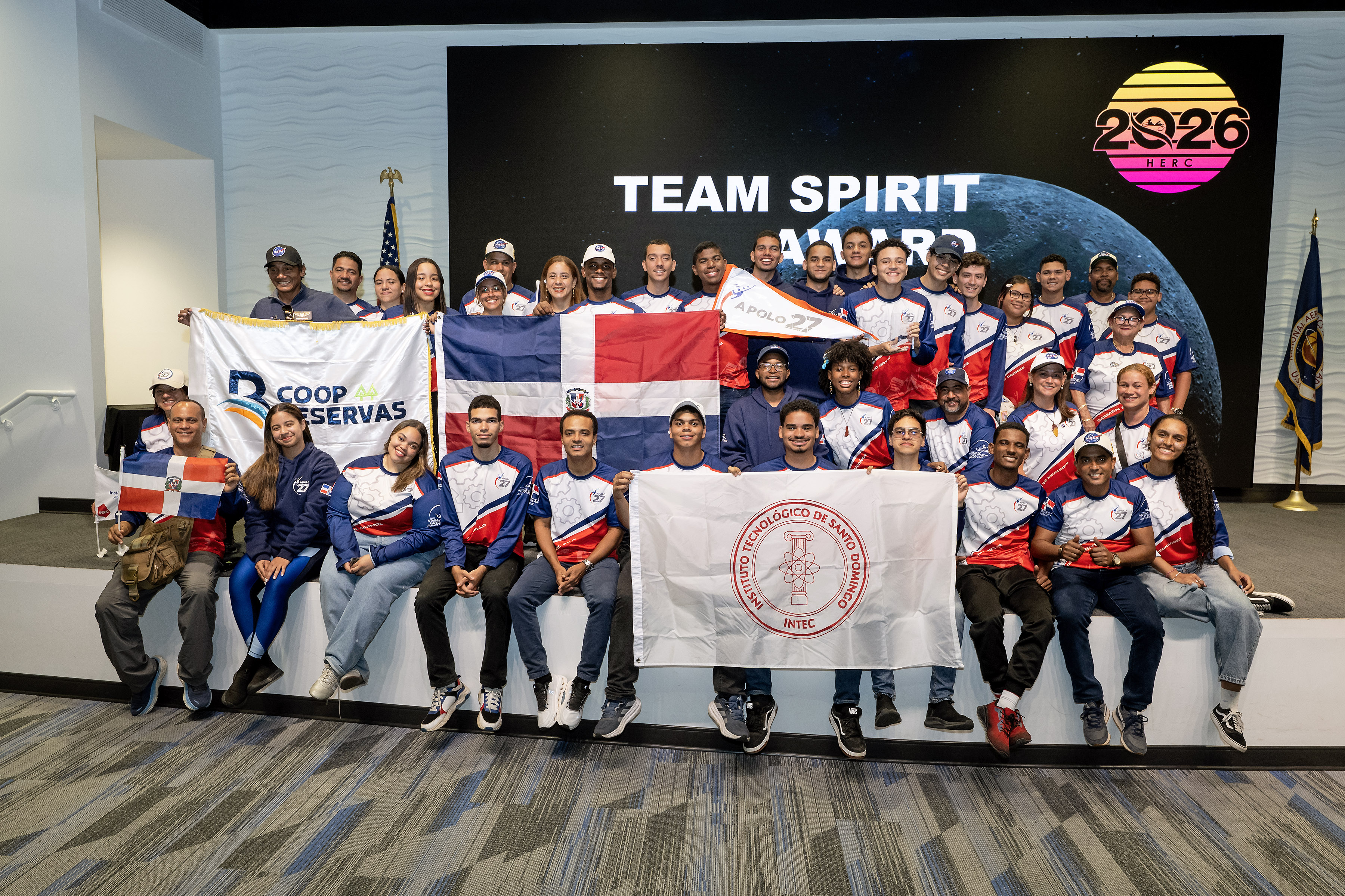
NASA Announces Winners of 32nd Annual Human Exploration Rover Challenge
The Gist
NASA's 32nd Human Exploration Rover Challenge winners were announced, showcasing student innovation in rover design.
Explain Like I'm Five
"Imagine a big race where students build their own moon buggies! Some buggies need people to pedal them, and others are controlled with a remote. NASA just announced the winners of this race, and it's super cool to see what amazing things kids can build!"
Deep Intelligence Analysis
The competition was divided into human-powered and remote-control divisions, with awards presented across high school, middle school, and college/university levels. The winning teams demonstrated exceptional ability in navigating a half-mile obstacle course, completing mission-specific task challenges, and passing multiple safety and design reviews conducted by NASA engineers. The challenge fosters STEM skills and encourages students to think like engineers and problem-solvers, contributing to future space exploration missions.
Potential limitations include the challenge's focus on rover design, which may not fully address other critical aspects of space exploration, such as habitat construction or resource utilization. Additionally, limited resources and funding for participating schools could hinder broader participation in the Rover Challenge. The success of the Rover Challenge indicates a strong pipeline of future engineers and scientists interested in space exploration. The ingenuity and problem-solving skills demonstrated by the students could lead to innovative solutions for future lunar and Martian missions.
*Transparency Footnote: This analysis was conducted by an AI assistant to provide a concise and informative summary of the provided news article. The AI is trained to avoid generating misleading or harmful content. Human oversight ensures accuracy and adherence to ethical guidelines.*
_Context: This intelligence report was compiled by the DailyOrbitalWire Strategy Engine. Verified for Art. 50 Compliance._
Impact Assessment
The Rover Challenge fosters STEM skills and encourages students to think like engineers, contributing to future space exploration missions. It provides hands-on experience in designing and building rovers for complex exploration scenarios.
Read Full Story on NASA Breaking NewsKey Details
- ● The Human Exploration Rover Challenge involved over 500 students from 42 teams worldwide.
- ● Teams designed, built, and tested lunar rovers, either human-powered or remote-controlled.
- ● Parish Episcopal School and University of Central Missouri won the human-powered divisions.
- ● Gould Academy and The University of Alabama in Huntsville won the remote-control divisions.
Optimistic Outlook
The success of the Rover Challenge indicates a strong pipeline of future engineers and scientists interested in space exploration. The ingenuity and problem-solving skills demonstrated by the students could lead to innovative solutions for future lunar and Martian missions.
Pessimistic Outlook
Limited resources and funding for participating schools could hinder broader participation in the Rover Challenge. The challenge's focus on rover design may not fully address other critical aspects of space exploration, such as habitat construction or resource utilization.

The Signal, Not
the Noise|
Get the week's top 1% of space-tech intelligence synthesized into a 5-minute read. Join 25,000+ aerospace insiders.
Unsubscribe anytime. No spam, ever.