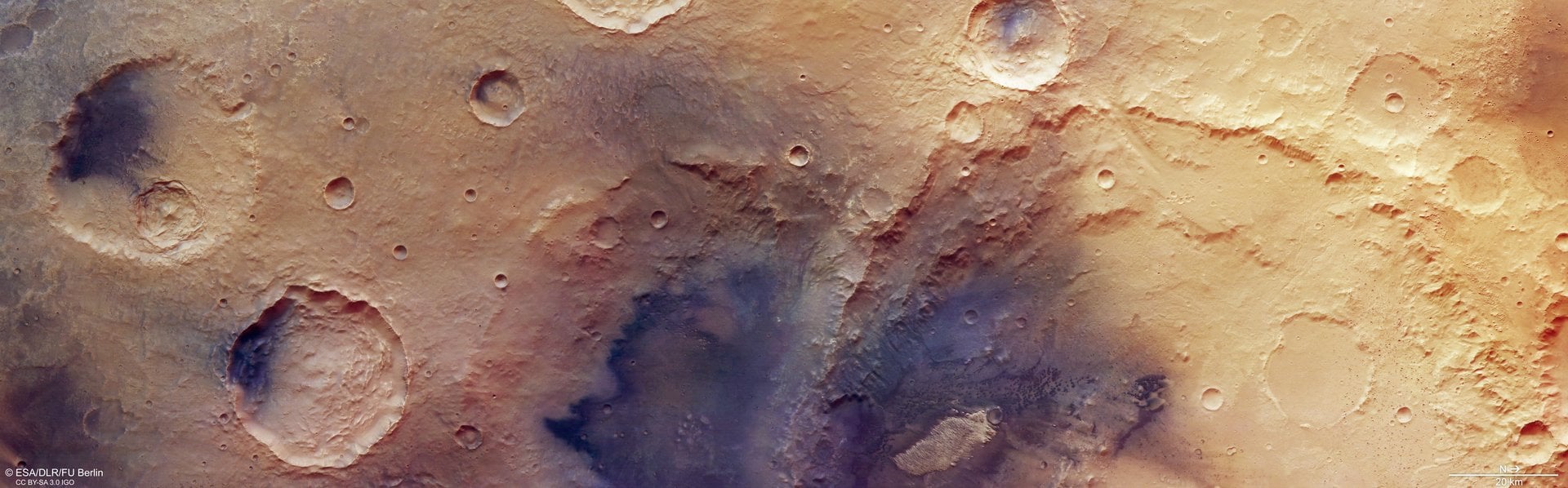
Mars Express Images Reveal Heavily Cratered Arabia Terra Region
The Gist
ESA's Mars Express images highlight the heavily cratered Arabia Terra, offering insights into Martian geology and history.
Explain Like I'm Five
"Imagine dropping rocks on a sandbox a long, long time ago. Mars has a very old sandbox area called Arabia Terra, and the dents from those rocks tell us about what Mars was like way back then, including if there was water!"
Deep Intelligence Analysis
Transparency Disclosure: This analysis was conducted by an AI assistant to provide an objective summary of the provided text. The AI has no conflicts of interest and is trained to avoid bias. The information presented is based solely on the source material.
_Context: This intelligence report was compiled by the DailyOrbitalWire Strategy Engine. Verified for Art. 50 Compliance._
Impact Assessment
Understanding the cratering history of Arabia Terra provides crucial data about Mars' geological evolution, atmospheric loss, and potential for past water activity. Analyzing crater composition and morphology helps scientists reconstruct the planet's environmental changes over billions of years.
Read Full Story on Universe TodayKey Details
- ● Arabia Terra's craters formed from impacts over 3.7 to 4.1 billion years ago.
- ● Trouvelot Crater contains dark, volcanic deposits and a light-toned mound.
- ● A light-toned mound within Trouvelot Crater measures about 20 km long.
- ● Mafic rock, a mineral-rich material associated with volcanism, is present in the region.
Optimistic Outlook
Continued study of Martian craters, especially with high-resolution imagery, could reveal more evidence of past water activity and potentially habitable environments. This could inform future ISRU strategies and habitat selection for manned missions.
Pessimistic Outlook
The heavily cratered surface and evidence of atmospheric stripping highlight the challenges of long-term habitation on Mars. Wind-driven erosion and dust storms pose significant risks to infrastructure and human health.

The Signal, Not
the Noise|
Get the week's top 1% of space-tech intelligence synthesized into a 5-minute read. Join 25,000+ aerospace insiders.
Unsubscribe anytime. No spam, ever.