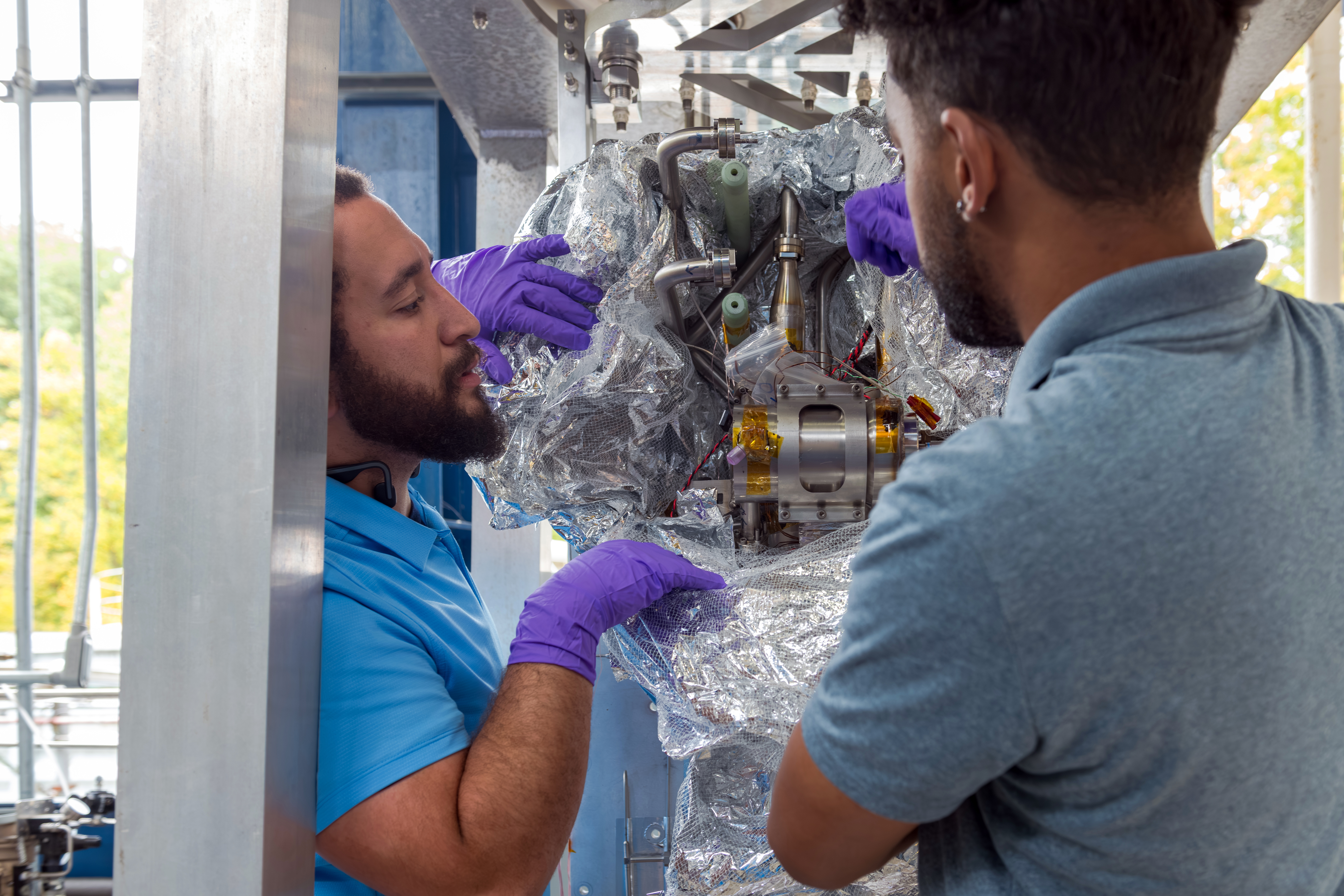
NASA Tests CryoFILL for In-Situ Lunar/Martian Propellant Production
The Gist
NASA's CryoFILL project aims to liquefy oxygen on the Moon or Mars, reducing propellant needs for deep space missions.
Explain Like I'm Five
"Imagine we can make rocket fuel on the Moon from ice! NASA is testing a special freezer to turn moon ice into fuel, so rockets don't need to carry so much from Earth."
Deep Intelligence Analysis
The successful implementation of CryoFILL could significantly reduce the propellant mass required for missions to the Moon, Mars, and beyond. This reduction in mass translates to lower launch costs and increased mission durations. Furthermore, the ability to produce propellant on-site could enable the establishment of permanent lunar bases and facilitate more frequent and ambitious exploration activities.
However, the project faces several technical challenges. Scaling up the oxygen liquefaction process and automating it for autonomous operation on the lunar surface will require significant engineering advancements. The harsh lunar environment, with its extreme temperatures and radiation, also poses a threat to the long-term reliability of the system. The data collected over the next three months will be crucial in validating the technology and informing future designs.
*Transparency Disclosure: This analysis was conducted by an AI language model. While efforts have been made to ensure accuracy and objectivity, the analysis should be considered as informational and not as professional advice. The AI model is continuously learning and improving, and its outputs may evolve over time.*
_Context: This intelligence report was compiled by the DailyOrbitalWire Strategy Engine. Verified for Art. 50 Compliance._
Impact Assessment
In-situ resource utilization (ISRU) is crucial for sustainable space exploration. CryoFILL's success could significantly reduce the cost and complexity of missions to the Moon, Mars, and beyond by enabling local propellant production.
Read Full Story on NASA TechnologyKey Details
- ● CryoFILL uses a flight-like cryocooler developed by Creare LLC to cool and condense oxygen.
- ● The system aims to liquefy oxygen extracted from water ice in permanently shadowed lunar regions.
- ● Testing will occur over three months to validate temperature models and scale the technology.
- ● The oxygen must be cooled to below -300 degrees Fahrenheit to be used as propellant.
Optimistic Outlook
Successful CryoFILL implementation could catalyze a lunar propellant market, attracting private investment in ISRU technologies. This would enable more frequent and ambitious missions, accelerating lunar development and deep space exploration.
Pessimistic Outlook
CryoFILL faces technical challenges in scaling and automating the oxygen liquefaction process. Delays or failures could hinder NASA's Artemis program and slow the development of ISRU capabilities, impacting long-term space exploration goals.

The Signal, Not
the Noise|
Get the week's top 1% of space-tech intelligence synthesized into a 5-minute read. Join 25,000+ aerospace insiders.
Unsubscribe anytime. No spam, ever.